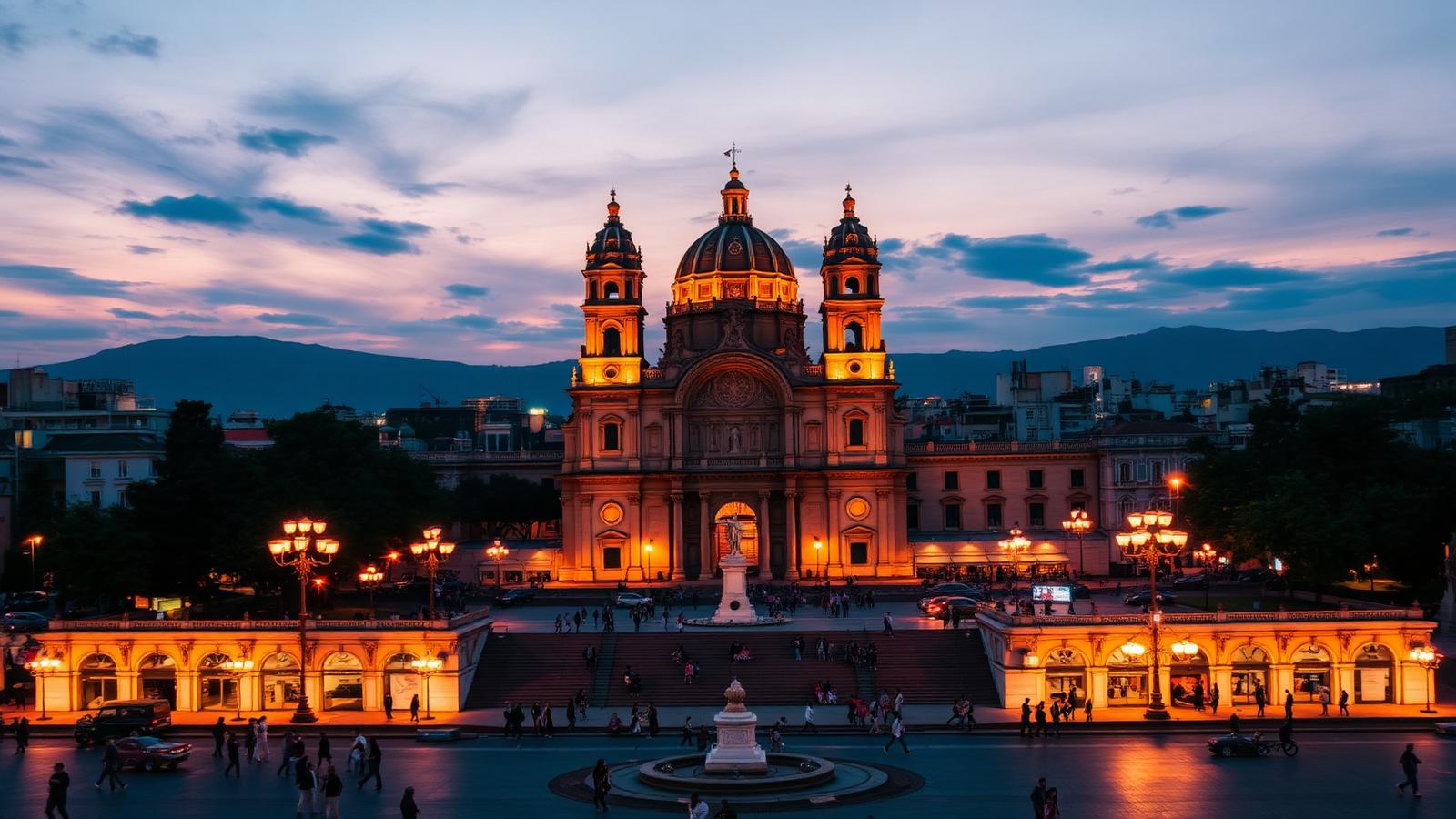
At the intersection of Avenida Cinco de Mayo and Eje Central, the air vibrates with the roar of six-lane traffic and the persistent shouting of organ grinders. Most pedestrians hurry past the heavy bronze doors of the Banco de México, assuming it is merely a fortress of fiscal policy. But behind the Italian Renaissance facade of this 1920s monolith lies a cathedral of Art Deco design that remained largely off-limits to the public for nearly a century. This is a space where the scent of old money—literally, the metallic tang of circulating currency—mingles with the spiritual weight of Mexico’s muralist movement.
The Architecture of Stability
The main building, known as the Edificio Principal, was designed by Carlos Obregón Santacilia, a man who understood that a central bank must look like it could survive the end of the world. After the volatility of the Mexican Revolution, the bank needed to project an image of unshakeable permanence. The result is a masterclass in controlled opulence.
Inside the grand vestibule, the chaos of Mexico City vanishes. The floor is a polished expanse of black and white marble, leading to a central hall where the high ceiling is punctuated by a massive stained-glass skylight. This isn't the chaotic, polychromatic glass of a cathedral, but a geometric, honey-hued Art Deco masterpiece. It casts a golden glow over the brass railings and the monumental clocks that still tick with terrifying precision. The aesthetic is strictly "Machine Age": symmetrical, streamlined, and unyieldingly orderly.
Fermín Revueltas and the Spirit of Labour
While Diego Rivera and David Alfaro Siqueiros were painting grand, politically charged frescoes on the walls of public palaces, Fermín Revueltas was commissioned to bring the soul of the Mexican worker into the literal vault of capitalism. Revueltas, a key figure in the Stridentist movement, was obsessed with the intersection of technology and humanity.
His murals, located in the stairwells and upper reaches of the bank, are a revelation for those accustomed to the heavy-handed didacticism of larger-than-life muralism. Revueltas’ work here is more architectural, using sharp lines and a palette of ochre and steel-blue to depict the industrial might of a developing nation. His figures are muscular and stoic, integrated into the machinery of progress. These aren't just decorations; they are an attempt to reconcile the revolutionary ideals of the 1920s with the rigid requirements of a national treasury.
The Vault: A Descent into the Subterranean
Until 2021, the basement of the Banco de México was one of the most guarded secrets in the capital. Now, visitors can descend into the high-security bowels of the building to see the original vault. The door alone is a piece of industrial art—a multi-ton wheel of gleaming steel and intricate clockwork mechanisms manufactured by the Mosler Safe Company in Hamilton, Ohio.
Inside, the atmosphere is hushed. This was where the nation’s gold reserves were once held. The bank has transformed this space into a permanent exhibition that explains the evolution of the peso, but the real draw is the sensory experience of the room itself. The coldness of the steel and the sheer thickness of the walls create a profound silence that feels entirely disconnected from the street life above. It is perhaps the only place in the city where one can truly hear the weight of history.
Art Deco Details and Hidden Symbols
The beauty of the Banco de México is found in the minutiae. Note the custom-designed fonts used on the signage throughout the building—bold, sans-serif lettering that feels modern even a hundred years later. Look for the stylized eagles, a national symbol reimagined through a Cubist lens, which appear on the bronze grilles and elevator doors.
Wait for the top of the hour to hear the bells of the central clock. The sound echoes through the marble hall, a reminder of the bank’s role as the "heartbeat" of the Mexican economy. Even the wooden panelling in the meeting rooms is of the highest quality mahogany, polished to such a shine that it reflects the glow of the Art Deco lamps. These fixtures, often overlooked, are some of the finest examples of early 20th-century lighting design in Latin America.
A Sanctuary of Quiet Power
Mexico City is a place of sensory overload, but the Banco de México offers a rare moment of architectural composure. It is a "free museum" in the truest sense, requiring no ticket but offering an experience far more exclusive than the crowded galleries of the Palacio de Bellas Artes nearby.
Standing in the main hall, one realizes that this building was intended to be a secular temple. The fusion of Revueltas’ murals with Santacilia’s rigid Art Deco lines creates a tension that defines modern Mexico: the struggle between the wild, revolutionary spirit of the people and the cold, necessary logic of the state. It is a quiet, clandestine beauty that rewards the curious traveller who knows where to look.
If you go
The Museo Banco de México is located at Avenida Cinco de Mayo No. 2, Centro Histórico. Admission is free, but you must book a time slot in advance via the official website (museobancodemexico.mx). Visitors are required to pass through a security screening similar to an airport. The museum is closed on Mondays. After your visit, walk two blocks to the Bar Mancera for a traditional Tequila Caballero in a room that matches the bank's Belle Époque grandeur.