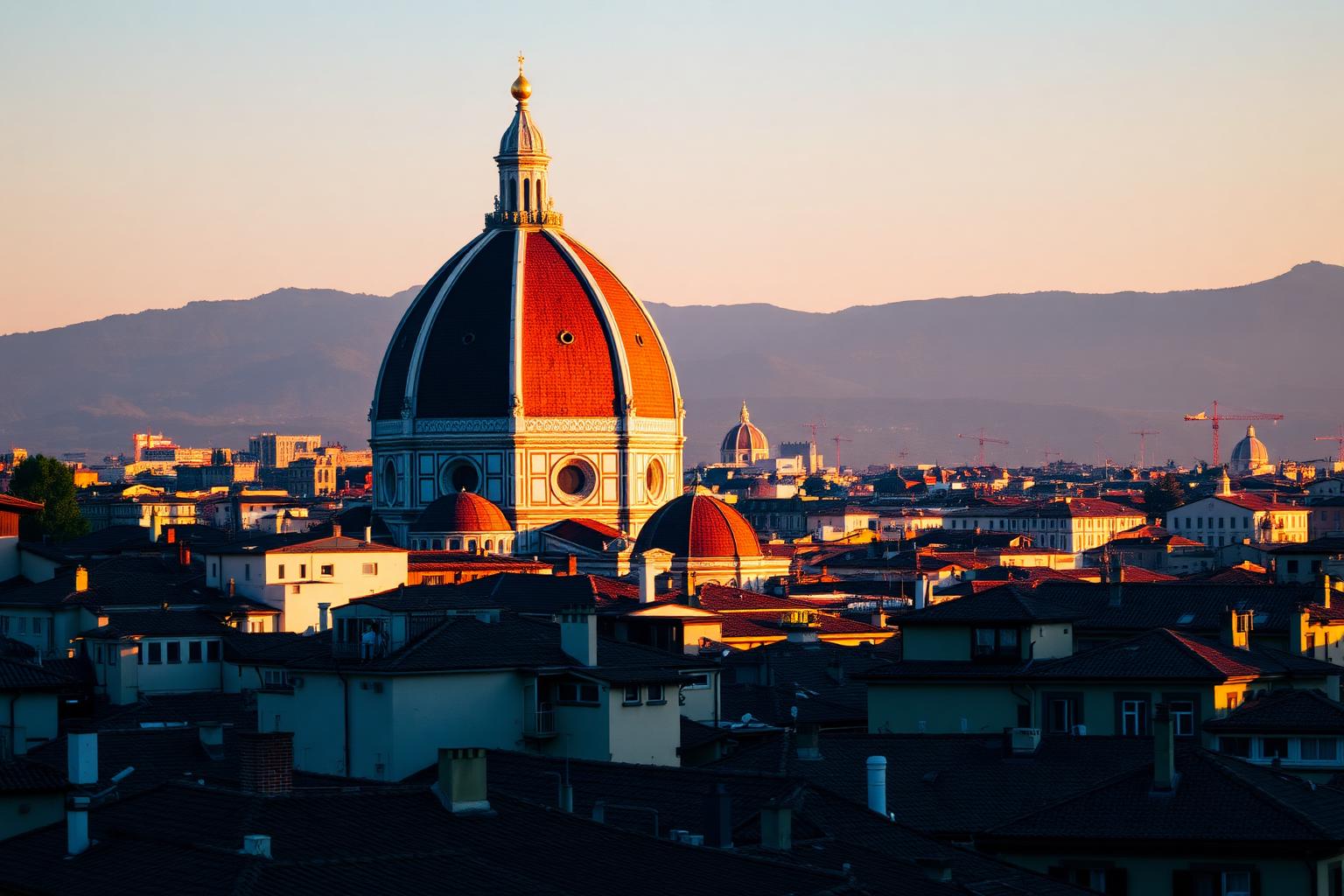
The morning mist hangs low over the Arno as the first metal shutters of the Oltrarno rattle upward. In the shadow of the Palazzo Pitti, a cyclist leans a vintage Bianchi against a sandstone wall and taps on a tiny wooden shutter. This is not the entrance to a café, nor a service entrance for deliveries. It is a portal barely larger than a dinner plate, arched at the top and framed in heavy pietra serena stone. A hand emerges from the darkness inside, accepts a contactless payment, and returns moments later with a ceramic cup of oat-milk flat white.
This is the revival of the buchetta del vino—the wine window. Born out of the agricultural tax loopholes of the 1500s and refined by the paranoia of the Black Death, these miniature architectural quirks fell into centuries of disuse, serving as nothing more than convenient places to post letters or discard cigarette butts. Today, they are the functional heart of a Florentine coffee revolution, where sixteenth-century plague-proof design meets the exacting standards of third-wave roasting.
The Medici Loophole and the Plague
To understand why a barista is handing out lattes through a hole in a wall, one must look to 1559. Cosimo I de' Medici, seeking to appease the city’s powerful aristocratic families, issued a decree allowing noblemen to sell wine produced on their country estates directly from their urban palaces. Crucially, they could do so without paying taxes to the local innkeepers or guilds, provided the wine was sold through a specific aperture: a buchetta.
These windows were designed with a distinct silhouette—a miniature version of the grand palatial doors that sheltered the Florentine elite. They were positioned at chest height, allowing a worker inside to slide a single fiasco (the traditional straw-covered glass bottle) to a patron on the street. When the Bubonic Plague struck Florence in the 1630s, the windows became essential. They provided the ultimate socially distanced transaction; wine was passed through the hole, and coins were dropped into a bowl of vinegar for disinfection. It is a historical irony that four centuries later, a global pandemic would once again make these windows the most sought-after real estate in the city.
Babae and the Modern Renaissance
The revival began in earnest in the Santo Spirito district at Babae (Via de' Geppi, 11r). While several windows had been reopened for novelty tourist photos, Babae was the first to reintegrate the buchetta into the daily rhythm of the neighbourhood. During the "Ora del Vino" in the early evening, the small wooden door swings open, and glasses of local Sangiovese are handed out to the crowd gathered on the pavement.
However, the morning shift at Babae is where the shift to coffee culture is most evident. The transition from wine to caffeine is a natural evolution for a city that treats the espresso machine with the same reverence as a Renaissance fresco. At Babae, the coffee is a serious affair, sourced with care and served to locals who prefer the briskness of the window over sitting in a crowded interior. The clinking of porcelain against the stone ledge has become the soundtrack of the Via de' Geppi, a sound that echoes the clink of glass bottles from five centuries ago.
The Speciality Architecture of Vivoli
While many wine windows are found on the facades of crumbling palazzos, some have found a second life within the city’s most storied institutions. Vivoli (Via Isola delle Stinche, 7r) is world-renowned for its gelato—specifically the crema and the intense pear sorbet—but its history is inextricably linked to the buchetta.
Vivoli’s wine window is one of the most meticulously preserved in the city, framed by elegant stonework that matches the interior of the historic shop. During the height of the summer heat, the window bypasses the queues of tourists inside, serving shots of espresso poured over a scoop of vanilla bean gelato. It is the Florentine affogato in its most efficient form. The window serves as a reminder that these portals were always about commerce and convenience; they were the original drive-thrus, designed for a city of pedestrians rather than cars.
Ditta Artigianale and the Third Wave
To see the buchetta fully embraced by the modern speciality coffee movement, one must head to the various outposts of Ditta Artigianale. Founded by Francesco Sanapo, Ditta has been the vanguard of "third-wave" coffee in Italy, a country where the traditional dark-roast espresso was long considered untouchable.
Ditta Artigianale’s approach to the wine window is one of irreverent respect. On Via dello Sprone, the architecture is quintessentially Florentine, but the coffee inside is a rotating selection of light-roast Kenyan or Ethiopian beans. Here, the buchetta is not just a gimmick for selling cheap wine; it is a point of delivery for meticulously weighed V60 pour-overs. Watching a barista navigate the narrow space behind a 500-year-old stone aperture to hand out a precisely extracted Geisha coffee is to witness the seamless blending of Florence’s two golden ages: the 1500s and the present.
Hidden Portals of the Oltrarno
The true joy of the buchetta is the hunt. While the Association of Wine Windows (Associazione Buchette del Vino) has mapped over 150 of them within the old city walls, only a fraction are functional. Walking through the Oltrarno—the "other side" of the river—reveals windows in various states of repurposing.
On Via Santo Spirito, look for the window at Palazzo Guadagni. On Via delle Belle Donne, the buchetta is famous for its marble inscription detailing the opening hours and the types of wine once available. The transformation into coffee windows has saved many of these from being filled with concrete, a common fate during the 20th-century renovations. By using the windows to serve lattes and cappuccinos, business owners are providing the financial incentive required to preserve the delicate wood and masonry that define this unique Florentine vernacular.
Beyond the Espresso Shot
The revival of the wine window has sparked a broader conversation about how Florence utilizes its public spaces. In a city that often feels like a museum, the buchetta is a living, breathing part of the infrastructure. It bypasses the "coperto" (cover charge) and the formality of sitting at a tabled terrace.
Newer establishments are pushing the boundaries of what can be served through a hole in the wall. At Osteria Belle Donne, the window intermittently offers small bites—crostini topped with liver pâté or lardo—to accompany the morning coffee. This "buchetta-to-go" culture is a rejection of the slow, stagnant tourism of the past, offering instead a high-speed, high-quality interaction that fits the pace of modern Florentine life while staying rooted in the city's architectural dna.
If You Go
Timing: Most wine windows serving coffee operate alongside the standard breakfast hours, usually from 08:30 to 11:00. Those serving wine typically open the shutters from 18:00 to 20:00 for the aperitivo crowd.
Etiquette: Do not hammer on a closed buchetta. If the shutter is closed, the service is not active. If it is open, have your payment ready (most now accept cards, but small change is always appreciated for an espresso).
Key Locations:
- Babae: Via de' Geppi, 11r. Best for the "Ora del Vino" and early morning espresso.
- Vivoli: Via Isola delle Stinche, 7r. Best for coffee-gelato hybrids.
- Pietrabianca: Piazza di Santo Spirito. A prime spot for observing the local morning rush through the stone frame.
- Buca Lapi: Via del Trebbio, 1r. One of the oldest and most famous windows, located near the Palazzo Antinori.