The Bondi to Coogee coastal walk is the undisputed heavyweight of Sydney’s outdoor itinerary, but it suffers from its own success. On a Saturday morning, the cliffs are a bottleneck of activewear and elbows. For those seeking the salt air without the scrum, the eastern suburbs hold a quieter, more sophisticated secret. The Hermitage Foreshore track—a 1.8-kilometre ribbon of sandstone and salt scrub—stretches from the end of Rose Bay to the lawns of Nielsen Park. It is a walk that feels less like an exercise circuit and more like an invitation into the private backyards of the city's old money, where the ghost of 19th-century Sydney lingers in the heavy scent of wild jasmine and damp stone.
The Architecture of the Earth: Sandstone and Salt
The track begins at the end of Bayview Hill Road. Immediately, the cacophony of New South Head Road fades, replaced by the rhythmic slap of Sydney Harbour against the rocks. The geology here is the star. Sydney is built on Hawkesbury sandstone—a golden, porous rock that the tides have carved into surreal, gravity-defying shapes.
Along this stretch, the "sculptures" are largely natural. Overhanging honeycombed cliffs create shallow caves where the air is five degrees cooler. Look closely at the ground beneath the boardwalks; the track weaves around ancient angophora trees with gnarled, salmon-coloured bark that looks like muscular limbs frozen in mid-stretch. This isn't a manicured parkland; it is a rugged transition zone where the bush meets the tide.
The Ghost of Strickland House
Halfway through the walk, the bush opens up to the manicured, sloping lawns of Strickland House. This Italianate mansion, completed in 1856 and originally known as Carrara, serves as a grand silent sentinel over the harbour. Once a convalescent home and later a women’s hospital, it is now a public heritage site that feels perpetually paused in time.
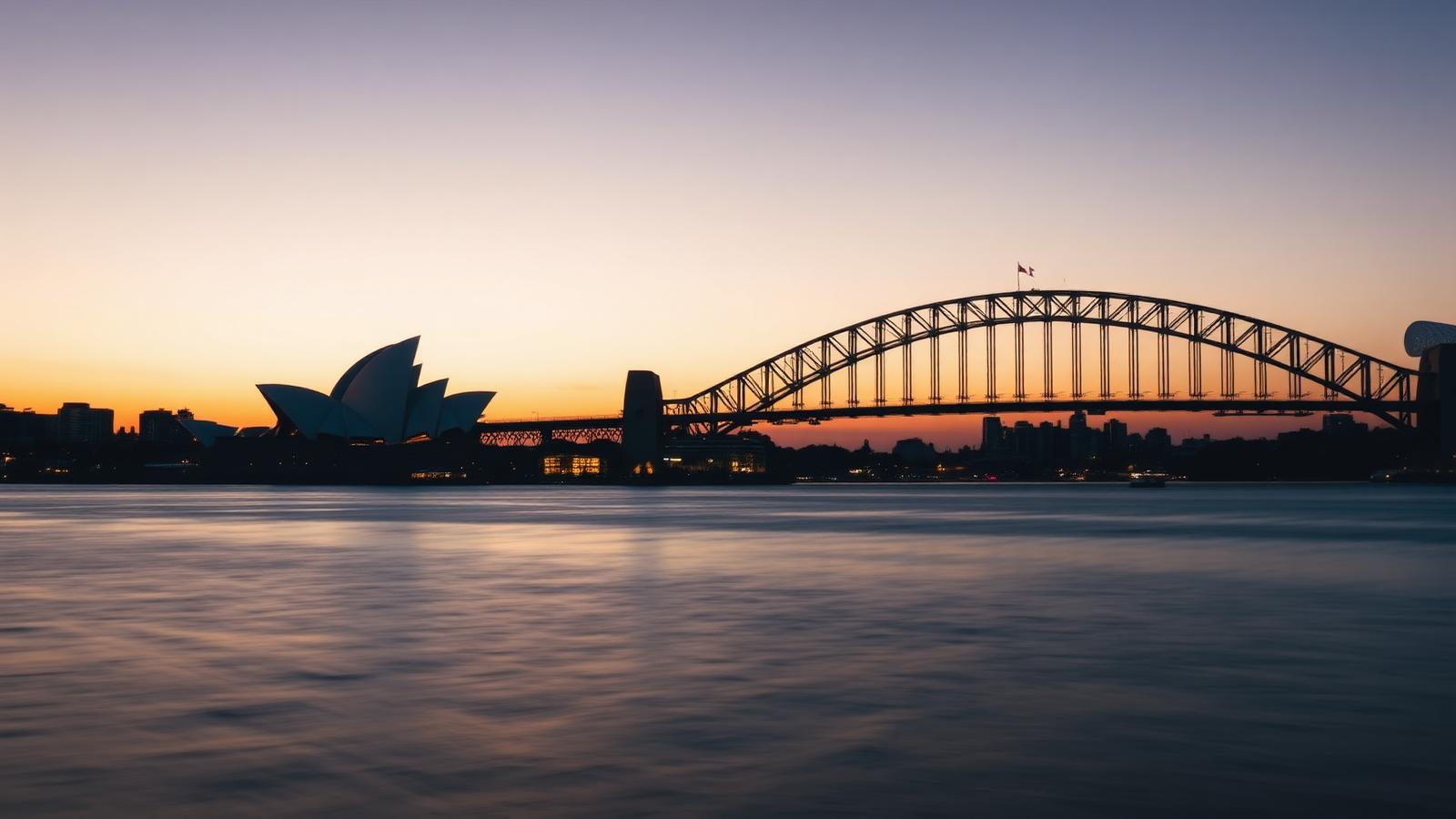
The house itself is often closed to the public, but the grounds are free to roam. Standing on the wide lawn, the view to the west is unobstructed. The harbour bridge and the distant white petals of the Opera House are framed by Norfolk Island pines. Unlike the vantage points at Mrs Macquarie’s Chair, you won't find a tour bus here. It is the best place in the city to sit on the grass with a book and watch the wooden ferries churn the blue water into white foam.
Secret Sands: Milk Beach and Queens Beach
While the rest of the city fights for a square metre of sand at Bondi, the Hermitage Foreshore offers a series of "strip-beaches"—tiny pockets of sand accessible only by foot or boat.
Milk Beach is the most storied. Located at the base of Strickland House, it is a narrow crescent of white sand with arguably the most expensive view in the Southern Hemisphere. It is shallow, calm, and perfect for a slow wade. Further north, Queens Beach offers a similar seclusion. These are not beaches for surfing; they are for floating on your back while staring at the skyline of the CBD. Even on a hot afternoon, the crowd here is sparse, consisting mostly of locals who have walked down from the mansions of Vaucluse.
Victorian Ruins and Coastal Scrub
Between the beaches, the track ducks back into the canopy. The Hermitage Foreshore is an ecological remnant of what the harbour looked like before the concrete took over. The "sculptures" here are the ruins of Victorian-era garden features—retaining walls of hand-cut stone and overgrown staircases that lead to nowhere.
Keep an ear out for the residents of the scrub. The Eastern Water Dragon, a prehistoric-looking lizard, is a frequent sight on the sun-baked rocks. In the trees, the chatter of Rainbow Lorikeets competes with the occasional mourning call of a Pied Currawong. The air carries the distinct Australian perfume of crushed eucalyptus and sea spray, a scent that remained unchanged while the city across the water grew into a metropolis of glass and steel.
The Finale: Shark Beach and Steele Point
The path concludes at Nielsen Park, a grand expanse of green that serves as the gateway to Shark Beach. Do not let the name deter you; the bay is protected by a permanent netted enclosure, making it one of the safest swimming spots in the harbour.
Before heading to the kiosk for a flat white or a bag of chips, walk out to Steele Point. High on the headland, you’ll find the remains of colonial fortifications and gun emplacements. These stone structures were built in the 1870s to defend Sydney from a feared Russian invasion that never arrived. Today, the only thing breaching the water's surface is the occasional kayaker or a racing yacht leaning hard into the wind. It is an end-point that rewards the wanderer with a 180-degree panorama of the heads, where the harbour finally gives way to the vast, dark blue of the Pacific.
If you go
Getting there: Take the 324 or 325 bus from Town Hall to the corner of New South Head Road and Bayview Hill Road. Alternatively, take the Rose Bay Ferry from Circular Quay and walk 15 minutes north along the shore to reach the trailhead. What to bring: There are no water fountains between the start and Nielsen Park. Bring a bottle, a towel for a dip at Milk Beach, and sturdy shoes—the track is mostly boardwalk and gravel, but can be slippery after rain. Best time: Late afternoon. The sun sets directly behind the Harbour Bridge, casting the sandstone cliffs in a deep, burnt orange glow. Cost: Entirely free. Use the money saved on an ice cream at the Nielsen Park Kiosk.