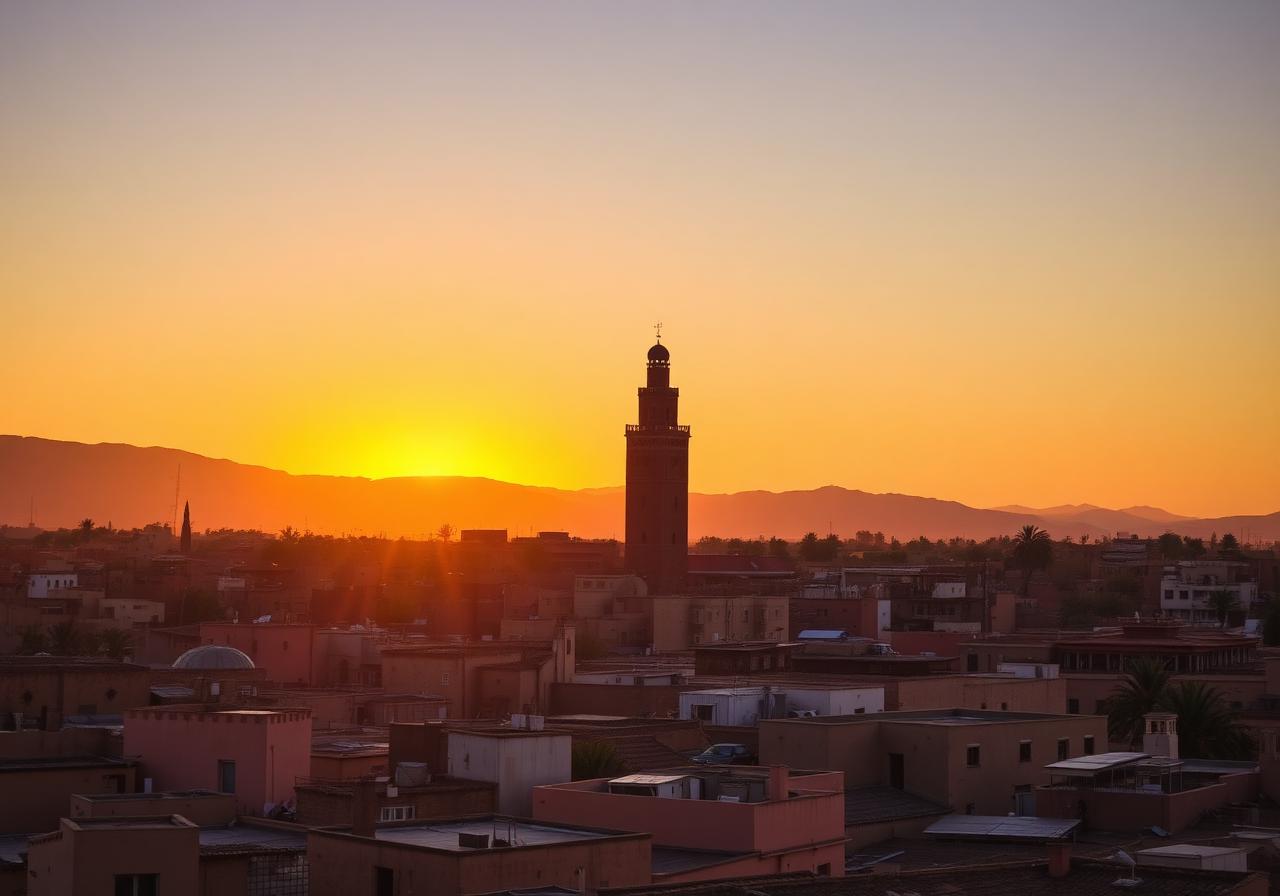
The first rule of the Marrakech Medina is that the map is a lie. Navigation here is a matter of muscle memory and smell: the metallic tang of the copper-beaters’ souk, the thick scent of cedarwood shavings, the stinging dust of the tanneries. On the street, the air is a chaotic soup of moped exhaust and donkey carts. Then, a heavy cedar door swings open. You step over a high threshold and the noise vanishes instantly, replaced by the rhythmic drip of a marble fountain and the cool breath of a shaded garden. This is the Riad—a building designed as an architectural lung for a city that never stops exhaling.
The Architecture of Inversion
To understand a Riad, one must understand the Moroccan philosophy of the batin, or the interior life. Unlike European mansions, which broadcast wealth through grand facades and street-facing windows, the Riad is a windowless fortress. From the outside, a multi-million-pound restoration looks identical to a humble family home: red tadelakt mud walls and a single, unassuming doorway.
The design is intentional. In the 17th and 18th centuries, these homes were built to protect the privacy of the family and to offer a micro-climate against the Saharan heat. The courtyard is the heart of the structure, open to the sky to allow hot air to rise and escape, while thick lime-plaster walls lock in the morning chill. In the most traditional examples, like Le Jardin Secret, the space is divided into four quadrants—a layout known as a char-bagh—representing the four rivers of paradise described in the Quran. Standing in the centre of a courtyard, looking up at a square of cerulean sky, the sensory overload of the Derb Dabachi market feels like a different continent, despite being only thirty feet away.
El Fenn: The Art of the Modern Restoration
For the first-time visitor, El Fenn is the blueprint for how ancient architecture can pivot into the 21st century. Spearheaded by Howell James and Vanessa Branson, this sprawling complex of interconnected mansions is a masterclass in scale and colour. There is no beige here. Instead, rooms are saturated in midnight blues, saffron yellows, and oxblood reds, achieved through the traditional tadelakt method—a lime-based plaster polished with black soap and river stones to a waterproof sheen.
At El Fenn, the communal spaces are as vital as the suites. The rooftop terrace, one of the largest in the Medina, offers a cinematic view of the Koutoubia Mosque’s minaret. At sunset, as the Adhan (call to prayer) echoes across the rooftops from dozens of speakers simultaneously, the sound creates a polyphonic vibration that you feel in your chest. On the ground level, the colonnaded walkways are lined with mid-century furniture and a rotating collection of contemporary African art, proving that a 300-year-old building needn't be a museum piece.
The Rituals of the Courtyard Morning
The true reason to choose a Riad over a sprawling resort in the Palmerie is the breakfast ritual. In a Riad, there are no buffet lines or heat lamps. Instead, morning begins on the terrace or by the fountain with a glass of thé à la menthe—poured from a height to create a head of froth.
Specific regional delicacies define the table. You will find msmen, a square, laminated flatbread fried until flaky, served with honey and amlou, a rich paste made from toasted almonds, argan oil, and honey. Then there are the baghrir—'thousand-hole pancakes'—spongy discs that soak up the local orange flower butter. At Riad Farnatchi, the service is a choreographed exercise in quietude. Within these walls, the morning moves at the pace of the tortoise that likely lives in the garden. For a newcomer, this slow-motion start is the only way to build the psychological stamina required to negotiate the prices of hand-loomed rugs later in the afternoon.
Zellij, Cedar, and the Craft of Quiet
Every surface of a well-restored Riad tells a story of the Maâlem (master craftsmen). Look down, and you will see zellij—geometric mosaics of hand-chipped terracotta tiles. At L’Hôtel Marrakech, Jasper Conran’s five-suite sanctuary, the tiles are a muted, sophisticated counterpoint to the lush greenery of the courtyard. The geometry is never perfect by accident; Islamic art often includes a deliberate flaw, a nod to the belief that only the divine can achieve perfection.
Look up, and you encounter the zouak—hand-painted cedarwood ceilings. The scent of the wood acts as a natural insect repellent and infuses the rooms with a dry, peppery aroma. In the suites of Riad Idra, the woodwork is so intricate it looks like lace. These materials are more than just decorative; they are acoustic baffles. The porous plaster and soft wood absorb the sounds of the city, turning the roar of a passing Vespa into a distant, muffled hum.
The Hammam: A Purification Rite
Most high-end Riads, such as La Sultana, house their own private hammams. For a first-timer, this is an essential rite of passage. It is not a gentle Swedish massage; it is a rigorous, hot-steam scrub-down that borders on the transformative.
The process begins in a domed marble room where you are coated in savon noir—a thick, olive-oil-based black soap. After twenty minutes of steaming, a tellak (attendant) scrubs your skin with a kessa glove, removing layers of city grit and dead skin you didn't know you possessed. This is followed by a ghassoul clay mask mined from the Atlas Mountains. Emerge from the hammam and return to the courtyard garden, and the contrast is startling: your skin is cold against the warm Moroccan air, and your senses are sharpened for the night ahead.
Dining Behind Closed Doors
The best food in Marrakech is rarely found in the restaurants that have signs on the main streets. It is found in the Riad kitchens, where dadas (traditional female chefs) prepare dishes that take all day to simmer. A Riad dinner is an intimate affair, often lit by dozens of pierced iron lanterns that cast 'shadow lace' across the walls.
Order the tangia—not to be confused with a tagine. This is a worker's dish, traditionally a mutton stew slow-cooked in a clay urn in the embers of the local furnace that heats the neighbourhood hammam. At Riad de Tarabel, the dining experience feels like a private dinner party in second-Empire France, but the flavours are pure Maghreb: lemon-confit chicken, lamb with prunes and toasted almonds, and salads of roasted peppers and cumin-dusted carrots. Eating here, you realise the chaos of the city is purely external; inside the Riad, the culture is one of extreme grace and hospitality.
If You Go
When to visit: October to May offers the most comfortable temperatures. Avoid the height of August, when the Medina's heat can be claustrophobic.
Arrival: Always arrange a transfer through your Riad. Navigating the nameless alleys of the Mouassine or Kennaria districts with luggage is an impossible task for a first-timer. A porter with a wooden handcart will meet you at the nearest taxi drop-off point to navigate the final 200 yards.
Packing: Pack earplugs if you are a light sleeper (the dawn call to prayer is loud) and slip-on shoes, as it is customary to move between the dusty streets and the pristine Riad floors frequently.
Etiquette: When entering a Riad, it is polite to spend a moment admiring the courtyard before being led to your room. This space is the pride of the house. Always accept the first glass of mint tea offered; it is the universal signal of welcome.