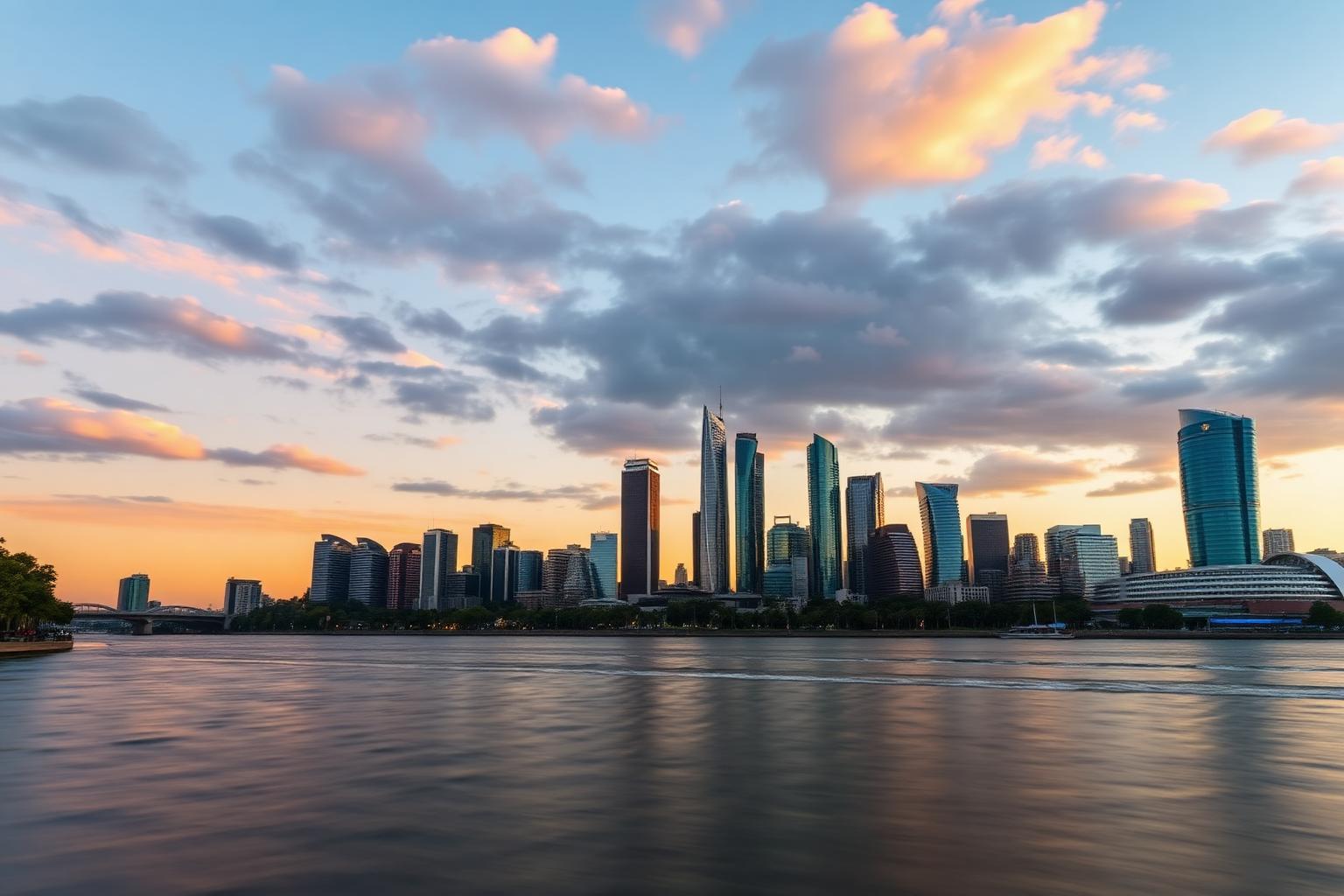
The southern stretch of the Mandjoogoordap Road ends where the Indian Ocean spills into a complex network of shallow basins and serpentine canals. For decades, Mandurah was defined by the binary rhythms of the retired lifestyle and the blue swimmer crab season. It was the quintessential "shack" town, a place of fibro-walled holiday homes and weathered jetties. To arrive today via the Mandurah Line—a fifty-minute streak of electric steel from Perth Underground—is to find a landscape caught in a surreal midpoint between its maritime past and a high-concept future. The smell is still the same: salt spray, decaying seagrass, and the vinegar-tang of professional bait, but the silhouettes on the shoreline have grown significantly stranger.
The Architecture of the In-Between
The Mandurah railway station sits slightly back from the water, acting as a gateway to a city that has traded its sleepy village status for a meticulously planned coastal aesthetic. Moving from the station toward the Eastern Foreshore, the transition from suburban fringe to marine hub is abrupt. Mandurah’s layout is defined by its canals—suburbs like Wannanup and Halls Head are carved into the limestone, creating a Venetian-style grid where the garage is often replaced by a private mooring.
The design here is unapologetically modern. The Mandurah Performing Arts Centre (ManPAC) dominates the waterfront with sleek, curved lines that mimic the sand dunes of the Peel-Harvey Estuary. Walk along Ormsby Terrace to see how the "old" Mandurah—single-storey cottages with sprawling frangipani trees—rubs shoulders with glass-fronted apartments overlooking the Mandjar Bay. This is a town built on the liquid real estate of the estuary, a 134-square-kilometre playground that is twice the size of Sydney Harbour but rarely deeper than two metres.
Hunting Giants in the Tuart Forest
The primary draw for the modern traveller isn’t the malls or the marinas, but the presence of the Giants of Mandurah. Created by Danish recycle-artist Thomas Dambo, these massive wooden sculptures are scattered throughout the wetlands and bushland, part of a global project that merges folklore with environmentalism.
To find Santi Ikto, one must navigate the saltmarshes of Halls Head. These are not static museum pieces; they are built from salvaged timber and hidden with deliberate obscurity. Finding them requires a map from the local Visitor Centre and a willingness to trek through the paperbark trees and peppermint scrub. Each giant tells a story of the local Bindjareb Noongar people, the traditional custodians of the land. The scale is disorienting—a five-metre-tall wooden figure sitting cross-legged amongst the banksias turns a standard bushwalk into a fever dream of folk-horror and whimsical design.
The Blue Swimmer Ritual
Despite the high-art installations, Mandurah’s soul remains firmly tethered to the Portunus armatus—the Blue Swimmer Crab. Between December and April, the estuary becomes a theatre of pursuit. The tradition is most visible at the Old Mandurah Bridge, where locals drop drop-nets from the pylons, or at the shallow flats of Coodanup, where "scoopers" wade waist-deep into the tea-coloured water.
For a specific taste of the local bounty, skip the generic fish and chip shops and head to Flics Kitchen on the terrace. While the menu rotates, the emphasis is consistently on the estuary’s yield—think blue manna crab linguine with plenty of chilli and lemon. For a more tactile experience, several operators like Mandurah Cruises offer "Catch and Eat" expeditions. These aren't polished luxury tours; they are muddy, hands-on affairs that involve hauling pots and learning the precise thumb-placement required to avoid a painful nip from a "bluey."
Thrombolites and the Living Rocks
At the southern edge of the estuary system lies Lake Clifton, part of the Yalgorup National Park. Here, the design is not human, but biological. The lake is home to one of the few remaining colonies of thrombolites in the world—clumpy, rock-like structures formed by complex microbial communities. They represent some of the oldest life forms on Earth, oxygenating the planet for billions of years.
The boardwalk at Lake Clifton allows visitors to hover over these "living rocks" without disturbing the fragile ecosystem. Visually, they are alien—grey, rounded protrusions that look like petrified brains emerging from the brine. The silence here is a stark contrast to the jet-ski hum of the central canals. It is a place of deep time, where the white salt crust of the lake shore meets the dark green of the ancient Tuart forest.
The Art of the Foreshore
The return to the city centre reveals a community that has embraced public art as a core pillar of its identity. The "Rhythm of the Estuary" mural near the bridge and the various sculptures along the Mandjar Square boardwalk illustrate the town's transition from a fishing outpost to a cultural destination.
Stop at Mataya Eatery on Sholl Street for a flat white and a look at the local photography often pinned to its walls. The aesthetic here is "Coastal Industrial"—poured concrete floors, exposed timber, and plenty of light. It reflects a new generation of Mandurah locals who are staying behind after the summer crowds vanish, building a year-round culture that prioritises craft beer at Thorny Devil Brewing and independent boutiques over the generic franchises of the northern suburbs.
If you go
Transport: Take the Mandurah Line from Perth Underground or Elizabeth Quay. The journey takes approximately 50 minutes. From the station, the Mandurah Shuttle (Bus 588 or 589) connects to the foreshore.
Timing: Visit between January and March for the peak crabbing season and the best weather for the Giants trail.
Equipment: If planning to see the Giants, wear enclosed shoes and carry plenty of water; some are located a 2km walk from the nearest car park. For crabbing, a recreational fishing license is not required for wire nets used from a bridge, but strict size and bag limits apply—consult the Western Australia Department of Primary Industries and Regional Development (DPIRD) website for current rules.
Dining: Flics Kitchen for elevated local produce; Sharky’s for traditional waterfront fish and chips; Boundary Island Brewery for craft pours overlooking the Erskine canals.