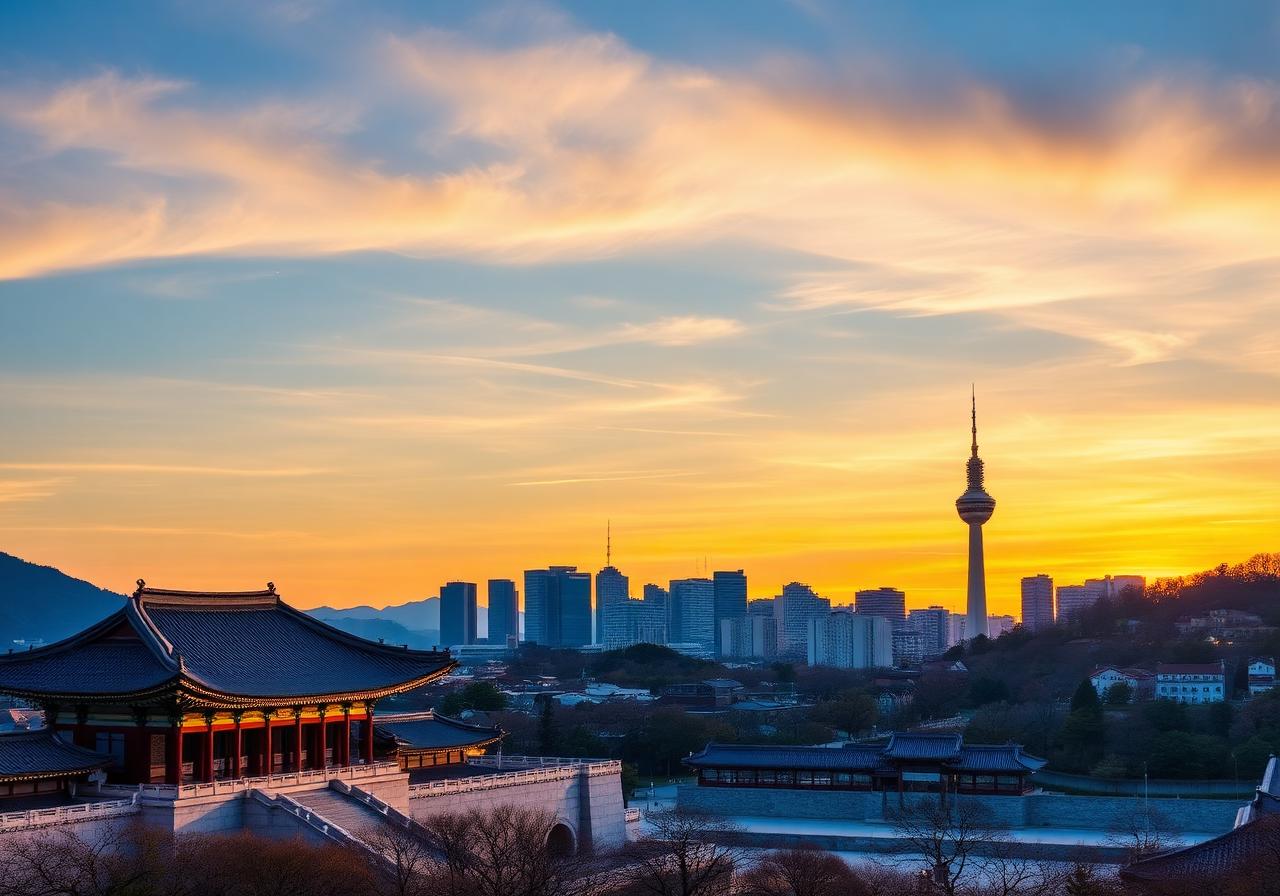
The neon sprawl of Seoul does not do subtlety during December. Beneath the looming, curvilinear shadow of the Dongdaemun Design Plaza and along the banks of the Cheonggyecheon stream, the city ignites in a frenzy of LED-wrapped trees and synthetic snow. Yet, the true gravity of a Seoul winter pulls toward Seoul Square. Here, in the shadow of City Hall’s glass façade, the traditional European Christmas chalet is reimagined through the steam of a hansik (Korean food) kitchen. The air doesn't smell of pine needle and old clove; it smells of toasted sesame oil, scorched sugar, and the sharp, medicinal bite of ginger.
This is where the high-gloss aesthetic of K-style meets the stubborn authenticity of the Gwangjang Market stalls. It is a festival of heat—both literal and culinary—designed to combat the sub-zero winds that whip across the Han River.
The Hotteok Ritual at the City Hall Gate
The queue for hotteok is the pulse of the Seoul Square market. While the German markets of Dresden or Nuremberg offer gingerbread, Seoul offers these yeast-doughed pancakes, fried on a flattop griddle until the exterior is as brittle as parchment. The secret is the molten core: a dark slurry of brown sugar, cinnamon, and crushed walnuts that liquefies under the heat.
Look for the stalls near the Seoul Metropolitan Library. The technique here is precise. The vendor uses a circular stainless steel press to flatten the dough, creating a disc that traps steam inside. Unlike the greasy versions found in subway exits, the festive hotteok here often incorporates heukmi (black rice) or green tea powder into the dough, lending an earthy depth to the sweetness. It is a tactile experience; you hold it in a thick paper cup, waiting for the sugar to cool just enough to avoid a blister, watching the skaters on the Seoul Plaza Ice Rink glide past in a blur of padded jackets.
Smoked Persimmons and the Scent of Winter
In the Korean lunar calendar, winter is the season of the gotgam (dried persimmon). At the market's artisan stalls, this fruit is treated with the reverence of a fine truffle. Traditionally hung out to dry in the wind until the sugars crystallise into a white powder on the skin, the festive version at Seoul Square is often lightly warmed or stuffed with cream cheese and toasted walnuts.
The flavour is concentrated autumn—rich, jammy, and slightly smoky. Vendors from Sangju, the nation’s persimmon capital, set up shop here to sell skewers of these fruits alongside bags of roasted chestnuts (gunbam). These aren't the soft, boiled-tasting chestnuts of London’s Southbank; these are roasted in rotating metal drums over open flames until the shells burst, yielding a dry, potato-like starchiness that is the ultimate palate cleanser between the market’s heavier, fried offerings.
The Seoul Mulled Wine Strategy
Europe has Glühwein, but Seoul has Vin Chaud with a distinctively local apothecary twist. The signature "Seoul Mulled Wine" found at the timber-clad huts near the main Christmas tree swaps out cheap brandy for a base of soju or cheongju (clear rice wine). To this, they add yuja—the thick-skinned, intensely aromatic citron from the southern islands of Geoje and Goheung.
The result is a drink that is brightly acidic and deeply warming. Instead of the heavy, syrupy finish of traditional mulled wine, this version features sliced ginger, dried jujubes (red dates), and sticks of cinnamon. It is served in mugs that you take to the "Media Façade" area, where a massive digital display transforms the City Hall building into a shifting canvas of falling ornaments and traditional Korean patchwork patterns (jogakbo). The ginger provides a lingering burn that outlasts the actual temperature of the liquid.
Tteokbokki and the Savoury Counterpoint
To survive a Seoul winter night, one needs more than sugar. The savoury anchor of the market is tteokbokki—cylindrical rice cakes simmered in a thick, vibrant red chili paste (gochujang). At the Seoul Square market, the vendors often elevate the humble street snack for the holiday season, adding shavings of brisket or a crown of melted mozzarella.
The heat is cumulative. For those who find the spice levels of the "Red Bull" stalls too aggressive, the alternative is eomuk (fish cake). These are served on long wooden skewers, folded like ribbons, and kept submerged in a vat of boiling broth flavoured with radish, kelp, and dried anchovies. The etiquette is simple: you take a skewer, pour a cup of the hot broth from the communal ladle, and stand by the heater. It is the cheapest, most effective central heating system in South Korea.
K-Craft and the Modern Manger
The market isn't solely defined by what you can eat. Between the food stalls, local designers from the nearby Insadong district showcase a modern take on Korean craft. You won't find many nutcrackers here; instead, look for delicate 'hanji' (handmade paper) lamps shaped like lotus flowers or Christmas trees, and miniature 'hagyeok' (white porcelain) ornaments.
The soundtrack is a surreal mix. One moment you might hear a K-pop idol’s saccharine Christmas ballad blaring from the speakers; the next, a live busker at the edge of the square playing a haegeum (a two-stringed vertical fiddle) to perform a haunting, melodic version of "Silent Night." This collision of the hyper-modern and the profoundly traditional is exactly what makes the Seoul Square market feel essential. It is a celebration that acknowledges the global holiday while remaining stubbornly, deliciously Korean.
If you go
The Seoul Square Christmas Market typically runs from mid-December through to New Year's Eve. The stalls open in the late afternoon, but the atmosphere peaks after 6:00 PM when the office towers of Sogong-dong light up. To reach it, take Seoul Subway Line 1 or 2 to City Hall Station (Exit 5 or 6). Dress in layers; the wind tunnel effect between the skyscrapers can be brutal. While many vendors now accept international credit cards or Kakao Pay, it is wise to carry small denominations of Korean Won (KRW) for the smaller snack stalls. Check the official Seoul Metropolitan Government website for the specific launch date of the Seoul Plaza Ice Rink, which usually coincides with the market opening.