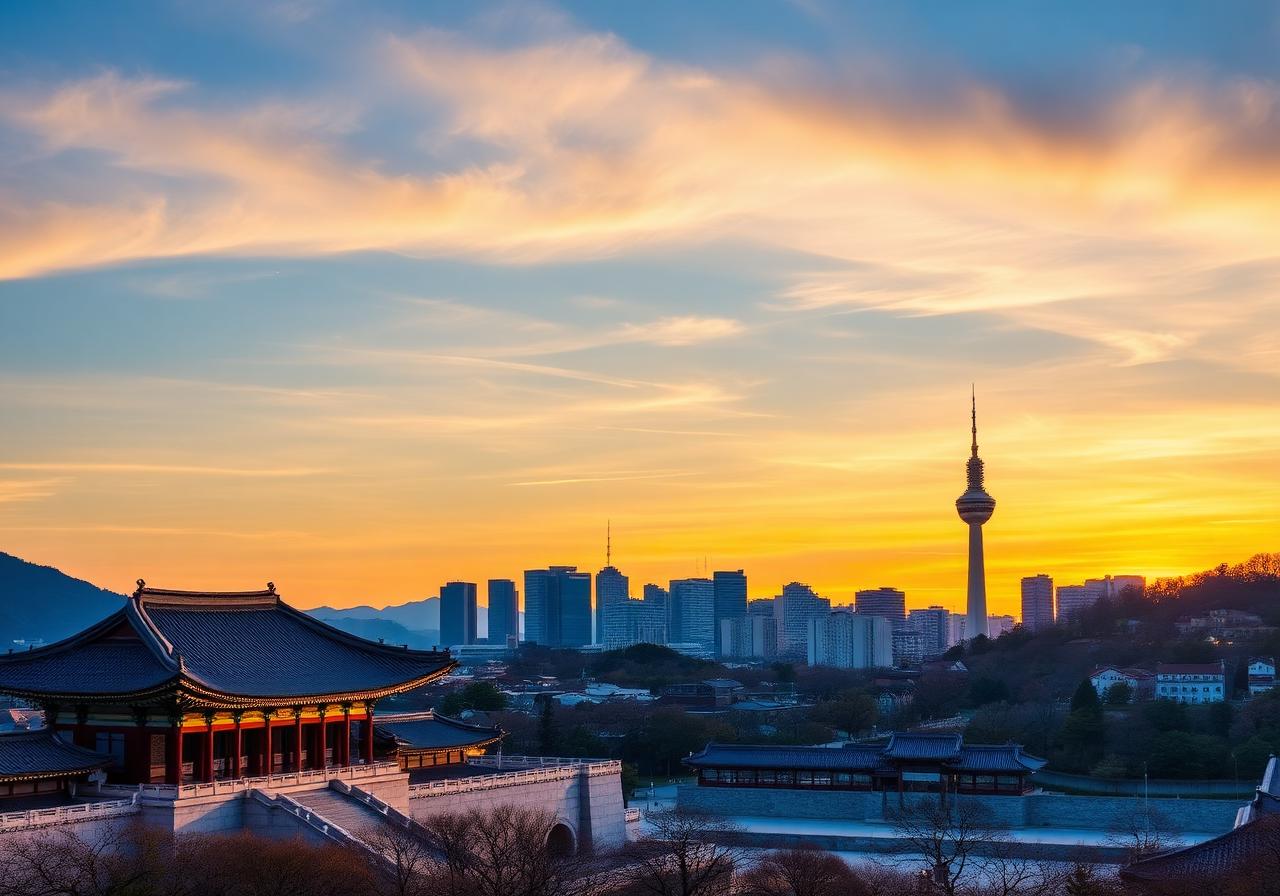
The cold in Seoul behaves differently than a London frost. It is a dry, biting wind that whistles down the glass canyons of Taepyeong-ro, turning the breath of commuters into thick plumes of silver steam. But beneath the glow of the 16-metre-tall LED coniferous tree at Seoul Square, the air smells of caramelised sugar and charred wood. Here, the traditional European Christmas formula—tinned music and overpriced baubles—is traded for Hansik, the Korean culinary canon, adapted for the sub-zero nights. It is a sensory collision where the staccato rhythm of cast-iron spatulas and the hiss of deep-fat fryers provide the soundtrack to the solstice.
The Hotteok Hustle at the City Hall Gate
The queue for the hotteok stall near the front of the Seoul Metropolitan Library acts as a human thermometer; the longer the line, the deeper the temperature has plummeted. Unlike the pancakes found in Western bakeries, these yeast-risen dough balls are stuffed with a mixture of dark brown sugar, cinnamon, and ground peanuts before being pressed flat on a glistening griddle.
At the Seoul Square market, look for the vendors using black rice dough. The result is a chewy, purple-hued exterior that acts as a structural vessel for the "lava"—the molten sugar centre that develops a viscous, maple-like consistency. It is a tactile experience of high stakes; the goal is to bite through the crisp crust without allowing the boiling syrup to scald your chin. In Seoul, this is the definitive taste of December: a handheld heater that costs 2,000 won and tastes of burnt honey.
Roasted Persimmons and the Scent of Toasted Silk
While German markets rely on the chestnut (Marroni), the South Korean festive palate is defined by the gotgot—the dried persimmon. In the heart of the market, vendors take the cheongdo variety, known for its lack of seeds and high sugar content, and lightly roast them over charcoal. The heat softens the exterior, turning the fruit into something resembling a natural jam encased in a thin, dusty skin.
Beside the fruit stalls, the classic gun-bam (roasted chestnuts) are shucked by hand and served in paper bags. These are not the soggy, grey nuggets often found in Hyde Park. In Seoul, they are roasted in rotating drums with small stones to ensure an even char, resulting in a firm, nutty bite that pairs perfectly with the market’s soundtrack of classic trot music and K-pop carols.
The Evolution of Seoul Mulled Wine
The most significant departure from the European blueprint is found at the "Seoul Mulled Wine" station. While the base remains red wine, the spice profile shifts from the heavy clove-and-star-anise profile of the West to something sharper and more medicinal. Local producers infuse the brew with yuja (yuzu) from the southern coast, ginger, and daechu (dried jujube).
For a truly local kick, seek out the vendors spiking the mixture with a high-proof Andong Soju. Traditional soju, distilled from fermented grain rather than the diluted industrial versions found in green bottles, adds a clean, toasted-rice finish to the drink. It is a beverage designed for stamina, intended to be sipped while standing near the industrial heaters that line the ice rink, watching skaters navigate the circular track under the shadow of the Gothic-style old City Hall building.
Savoury Solace: Tteokbokki and Fish Cake Broth
No festive gathering in Seoul is complete without the pervasive crimson glow of tteokbokki. At the kiosks along the square's eastern edge, the thick cylinders of rice cake are simmered in a gochujang sauce that leans heavily on the sweet-and-spicy side for the holiday crowd.
The true secret to surviving a three-hour stint at the market, however, is the eomuk-tang (fish cake soup). Skewers of folded fish cake are submerged in a vat of broth brewed from dried anchovies, kelp, and radish. It is free-flowing and functional; patrons are encouraged to use a communal ladle to fill a paper cup with the scalding, savoury liquid. It is a palate cleanser between the sweet hotteok and a salty remedy for the biting wind.
The Light Plaza and the Digital Forest
Beyond the food stalls, the market extends into a curated light show. The "Seoul Wintry World" installation often features massive luminaries shaped like traditional bojagi wrapping cloths. Walking through the plaza towards the Gwanghwamun Gate, the greenery is replaced by "digital trees"—structures of white light that mirror the minimalist aesthetic of Seoul’s modern architecture.
The shopping here avoids the mass-produced plastic of many global markets. Instead, focus on the Hanbok-clad artisans selling maedup (traditional Korean knots) resized as Christmas tree ornaments, or small-batch ceramicists from the Insa-dong district offering celadon-glazed cups perfect for that ginger-infused mulled wine. It is a sophisticated take on craft that feels tethered to the city’s history while firmly planted in its high-tech present.
If You Go
Timing: The Seoul Square Christmas Market typically runs from mid-December through to the end of the month. Stalls open at 4:00 PM, but the atmosphere peaks at 7:00 PM when the office towers of the Jung-gu district light up.
Transport: Take Seoul Subway Line 1 or 2 to City Hall Station. Exit 5 leads directly onto the square.
Currency: While most vendors accept T-Money cards (the local transit card) or credit cards, keep 10,000 won in small notes for the smaller street food carts which may prefer cash.
What to Wear: This is a standing-only affair. Professional-grade thermal layers and heat packs (available at any 7-Eleven or CU convenience store for 1,000 won) are non-negotiable.