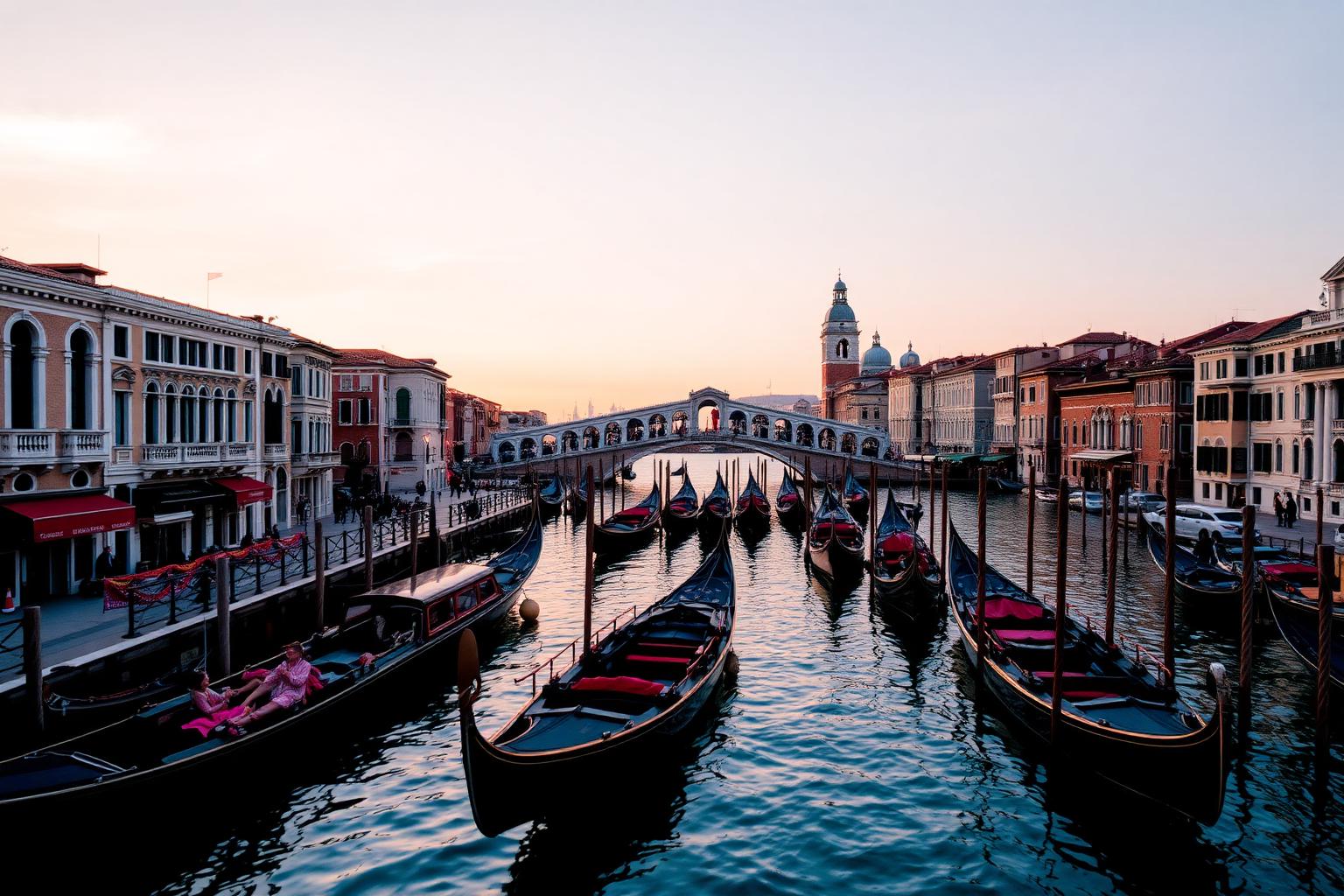
The heavy iron bells of Santo Stefano strike ten, and the mist still clings to the grey-green surface of the Grand Canal. In the Campo San Maurizio, the silence of a Venetian morning is broken not by tourists searching for the Accademia Bridge, but by the rhythmic clatter of wooden boards. This is the sound of the Mercatino dell'Antiquariato, a nomadic institution that appears only five weekends a year. Here, thirty of Italy’s most meticulous pickers assemble a temporary museum under the open sky. Unlike the bric-a-brac found at mainland car boot sales, San Maurizio is a repository of the Serenissima’s attic: heavy tarnished silver, Murano glass from the era of the Grand Tour, and the stiff, ivory-coloured lace of Burano.
The Geography of the Stall
The square itself is a slanted rectangle framed by the leaning bell tower of Santo Stefano and the neoclassical facade of the church of San Maurizio. The market layout is intentional, designed to be navigated in a clockwise spiral. The prime real estate sits under the shadows of the Palazzo Molin, where the 'heavy' antiques reside. Start here for the 18th-century furniture—walnut credenzas and hand-painted Venetian marriage chests (cassoni) that smell of beeswax and century-old dust.
Towards the centre of the square, the items become portable. This is the territory of the specialist bibliophile. Look for the stalls managed by local legends who stock 17th-century cartography and hand-coloured botanical prints. The paper here is thick and fibrous, often bearing the watermarks of long-defunct mills in the Veneto. If a specific map of the Mediterranean catches the eye, check the edges for wormholes—a sign of authenticity in the humid lagoon air.
Silver Gondolas and Grand Tour Relics
Venice was the original tourist trap, and the Mercatino is where the souvenirs of the 1820s come back to haunt the present. One can almost always find a collection of silver gondola ornaments—miniature, intricately carved vessels once sold to English lords on their gap year. These are not the plastic replicas found near the Rialto; these are hallmarked pieces with moving felze (cabin covers) and oars no larger than a toothpick.
Keep a sharp eye for millefiori glass beads. These 'thousand flowers' trade beads were once used as currency, but at San Maurizio, they appear as heavy necklaces or loose collections in velvet-lined trays. The discerning collector looks for 'vetro battuto'—glass that has been ground on a wheel to create a honeycombed texture. It is a tactile experience that modern mass-production cannot replicate. When a piece catches the light, ask the vendor about the 'molatura' (the grinding process); showing technical knowledge often leads to a more favourable price.
The Art of the Venetian Haggle
To shop at San Maurizio is to engage in a theatrical performance. The vendors, many of whom have held these spots for three decades, expect a level of decorum. Do not approach a stall and immediately ask for the 'best price'. Instead, begin with a 'Buongiorno' and a genuine inquiry about the provenance of an object.
The local Veneziani have a specific rhythm. They arrive early, coffee in hand from Bar Paolin nearby, and scout the perimeter three times before touching a single item. Bargaining is conducted in low tones. If an Art Deco brooch is marked at €200, a counter-offer of €150 is respectful; anything lower is considered an insult to the object’s history. Prices tend to soften as the sun dips behind the rooftops on Sunday afternoon, but by then, the museum-quality ephemera—the 1920s Fortuny silk fragments or the signed Peggy Guggenheim exhibition posters—are usually long gone.
Searching for 19th-Century Textiles
Venice was built on the silk trade, and the textile stalls at the back of the Campo are where the city’s tactile history is best preserved. Look for heaps of heavy damask and velvet remnants from the Rubelli and Bevilacqua mills. These are often fragments of theatrical curtains or aristocratic wall coverings, thick with metallic threads that have turned a regal, smoky grey over time.
Vintage fashion collectors should hunt for 'merletto di Burano'. This needle lace is notoriously difficult to authenticate, but at San Maurizio, the reputable dealers will point out the 'punto in aria' (stitches in the air) technique. A genuine 19th-century lace collar should feel like a spiderweb but have the structural integrity of linen. If the lace is true white, it has likely been bleached; seek out the creamy, tea-stained hues of antiquity. These pieces are often sold in plain paper envelopes, hidden beneath piles of less significant linen.
The Ephemera of the Lagoon
The most evocative finds are often the smallest. Hidden among the larger stalls are dealers specialising in 'piccola antiquariato'. Here, one finds brass door knockers in the shape of lions' heads, heavy iron keys to palazzos that may no longer exist, and 'santini'—tiny, hand-painted devotional cards of saints that Venetians once carried in their breast pockets for protection against the high tide.
Do not overlook the vintage photography. Baskets of black-and-white snapshots show the Piazza San Marco flooded in the 1950s, or families picnicking on the Lido in woollen swimwear. These fragments of social history cost mere euros but offer a connection to the city that no guidebook can provide. They represent the soul of the market: a collection of things that were once loved and subsequently lost to the tide, now waiting to be rescued.
If You Go
The Mercatino dell'Antiquariato di Campo San Maurizio typically takes place in March, June, September, October, and December. Dates shift annually to align with the Venetian calendar, so check the official Associazione Mercanti Professionali San Maurizio schedule before booking travel. The market runs from Friday to Sunday, 9:00 to 19:00.
Arrival: Take the Vaporetto Line 1 or 2 to the Santa Maria del Giglio stop. From there, it is a three-minute walk through the Calle Gritti.
Refuelling: For a mid-market break, avoid the overpriced cafes on the main thoroughfares. Head to Bar Paolin in the adjacent Campo Santo Stefano. It has been serving the market’s vendors since the event’s inception; their spritz al bitter is the traditional choice for a post-purchase celebration. For a quick snack, the tramezzini (crustless sandwiches) at Bar Alla Toletta are widely considered the best in the Dorsoduro district.
Logistics: Most major dealers now accept cards, but for the smaller stalls and better bargaining power, cash is essential. There is an ATM (Bancomat) located in nearby Campo Sant'Angelo. If purchasing large furniture, vendors can arrange for a trasporti (water taxi delivery) to your hotel or directly to an international shipping agent.