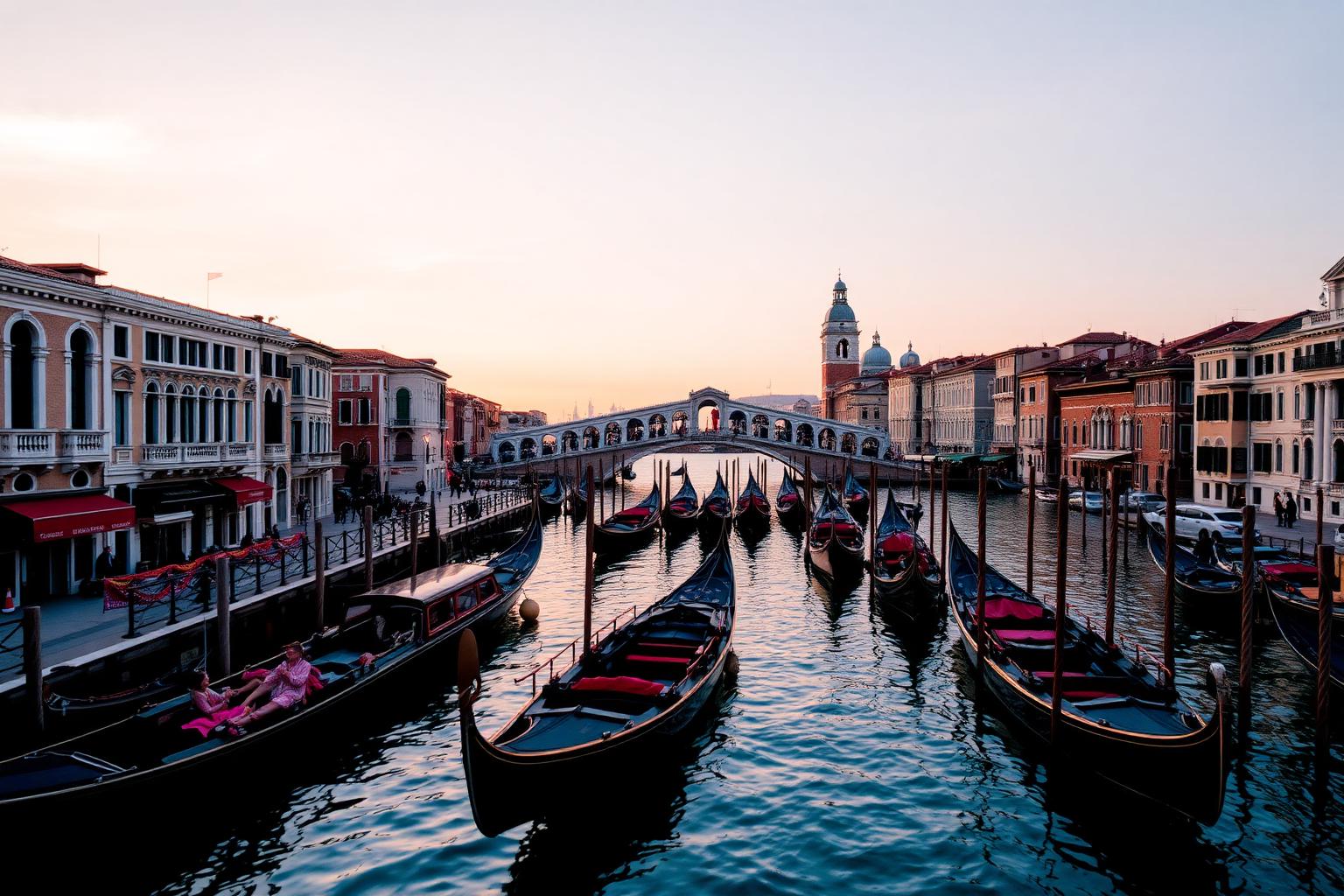
The grey-green water of the Grand Canal laps against the stone steps of the Accademia Bridge, but the real movement is two streets over. In the wide, Istrian-stone expanse of Campo San Maurizio, the silence of a Venetian morning is broken by the rhythmic clink of silver spoons and the unfolding of heavy linen tablecloths. For only five weekends a year, this square transforms into an open-air museum where the exhibits are for sale. There are no plastic masks or mass-produced glass trinkets here. Instead, there is the smell of aged paper, the glint of Mid-century tortoiseshell, and the quiet, fierce negotiation of collectors who know that a specific 18th-century copper jelly mould is worth missing lunch for.
The Rhythm of the Mercatino
The Mercatino dell'Antiquariato di Campo San Maurizio is a guarded secret among the city’s remaining permanent residents. Established in 1970, the market operates on a strictly seasonal calendar—usually falling on weekends in March, April, June, September, and December. Unlike the chaotic flea markets of the mainland, the stalls here are uniform wooden kiosks, arranged in a precise grid that encourages a slow, methodical circuit.
The vendors are professionals, many travelling from across the Veneto and Tuscany to showcase curated collections. To navigate the market like a true Veneziano, arrive at 9:00 am when the mist is still lifting off the canal. This is when the "ghosts" of Venice appear—the interior designers and private collectors who snap up the museum-quality ephemera before the day-trippers have finished their first espresso at Caffè Florian. Look for stallholders like Antichità Al Girasole, known for sourcing rare ecclesiastical silver and delicate Murano glass from the 1920s that lacks the garishness of modern souvenirs.
Silver Gondolas and Grand Tour Relics
The charm of San Maurizio lies in its specificity to the Adriatic. While a London market offers Victoriana and a Paris market focuses on Art Deco, Venice offers the spoils of the Grand Tour. You will find an abundance of "Grand Tour" bronzes—miniature replicas of the Lion of St. Mark or the horses of San Marco—originally sold to 19th-century English aristocrats.
Search specifically for vintage silver gondola ornaments. These were once traditional gifts for Venetian weddings, featuring intricate filigree work and tiny moveable "felze" (the cabin cover used in winter). Another high-demand item is the forcola—the sculptural, walnut oar-rest used by gondoliers. While new ones are commissioned from maestros like Paolo Brandolisio, the market often yields weathered, retired versions that serve as striking wall-mounted sculptures.
If the afternoon heat or the winter Adriatic chill begins to bite, take a strategic pause at Bar Da Gino on the nearby Calle de le Boteghe. It is a classic wood-panelled hole-in-the-wall where the tramezzini are crustless and the Spritz Select—the local’s preferred, bitterer alternative to Aperol—is served without fanfare.
The Textile Trade: Burano Lace and Fortuny Silk
Venice was the gateway for silk and spice, and that heritage is draped over the tables at San Maurizio. Specialist textile dealers often bring 1920s lace from the island of Burano—pieces so fine they look like spun sugar. When inspecting lace, look for the 'Punto in Aria' (stitch in the air) technique; it should feel slightly stiff, a testament to the thousands of tiny knots.
Keep a sharp eye out for remnants of Fortuny fabric. Mariano Fortuny’s factory on the Giudecca still produces these world-renowned hand-printed textiles, but vintage offcuts found at the market possess a patina that new silk cannot replicate. These scraps, often in deep pomegranate reds or tarnished golds, are ideal for framing or repurposing into cushions. Unlike the boutiques near San Marco, the prices here reflect the item's condition rather than its proximity to a luxury hotel, though "bargain" is a relative term in a square surrounded by 15th-century palazzi.
Paper Trails and Forgotten Libraries
Towards the centre of the campo, the focus shifts from the tactile to the cerebral. Venice has a long history of printing, dating back to Aldus Manutius in the 15th century, and the market is a haven for bibliophiles. Look for stalls specializing in vedute—18th-century copperplate engravings of the city's skyline by artists influenced by Canaletto or Guardi.
Beyond the framed prints, rummage through the boxes of "ephemera." You will find hand-tinted postcards from the Belle Époque, opera programmes from the Teatro La Fenice dated 1950, and handwritten maritime logs that detail the cargo of ships arriving from the Levant. For those with a musical bent, old sheet music of Vivaldi concertos or traditional Venetian villote (folk songs) can be found for a few Euros. These paper treasures are the easiest items to transport home, requiring nothing more than a stiff envelope and a bit of space in a carry-on.
The Art of the Venetian Deal
Negotiation at Campo San Maurizio is an exercise in restraint. This is not a Moroccan souk; the vendors are often the owners of esteemed galleries and value a quiet, knowledgeable approach. Start by asking about the provenance—Da dove viene questo? (Where did this come from?). Showing an interest in the history of a piece often leads to a more favourable price than aggressive haggling.
Cash is still king, although many stalls now accept cards. Having a roll of Euro notes tucked into a jacket pocket allows for a faster transaction when you spot a "must-have" item. It is also worth noting that the market doesn’t pack up at the first sign of a light drizzle; the stalls are covered, and the damp pavement only adds to the atmospheric reflection of the surrounding architecture, including the leaning bell tower of Santo Stefano that looms over the square.
If You Go
Dates: The market typically runs in March, April, June, September, and the weekend before Christmas. Exact dates change annually; check the Associazione Mercanti Venezia website or local posters (locandine) around the San Marco district. Hours: Friday to Sunday, roughly 9:00 am to 7:00 pm. Sunday afternoon is best for "last-minute" price drops, but Friday morning has the best selection. Location: Campo San Maurizio, Sestiere San Marco. It is a five-minute walk from the Santa Maria del Giglio vaporetto stop. Pro Tip: Bring a sturdy tote bag. Venetian streets are unforgiving to flimsy plastic, and you do not want to be navigating the narrow "calli" with a delicate 19th-century decanter in a supermarket sack.