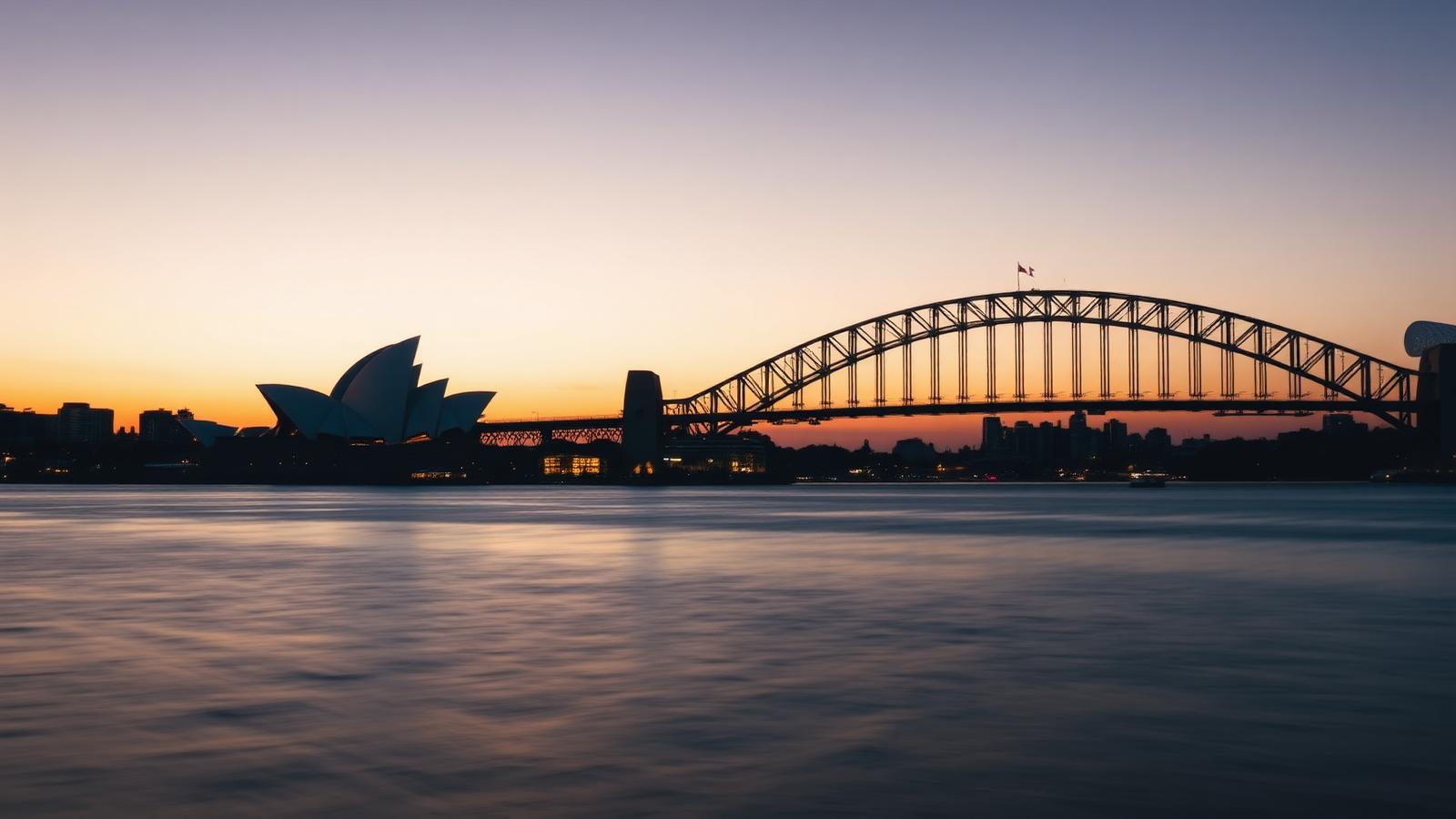
The first light over Sydney Harbour usually belongs to the joggers on the Opera House forecourt or the early commuters on the F1 Manly ferry. But in a quiet fold of the lower North Shore, the sun finds a different audience. Here, tucked between the sandstone arches of the Lavender Bay railway line and the steep rise of Clark Road, lies a tangled, vertical forest that shouldn’t exist. There are no signs on the Pacific Highway pointing the way; there is no ticket booth. Instead, there is the smell of damp earth, the sharp cry of a kookaburra, and the rustle of giant bird-of-paradise leaves. This is Wendy’s Secret Garden, a piece of guerrilla landscape architecture that turned a grief-stricken dump into the city’s most poignant public space.
A Grief-Stricken Alchemy
In 1992, Wendy Whiteley, the muse and former wife of the late Australian artist Brett Whiteley, faced a void. Brett had died from a drug overdose in a motel in Thirroul, and Wendy was left with a sprawling house in Lavender Bay and a view of a derelict, rubbish-strewn gully owned by the New South Wales government. It was an eyesore of rusted railway sleepers, overgrown lantana, and discarded refrigerators.
Without asking for permission, Wendy began to dig. She spent decades and millions of her own money hauling out debris and planting whatever felt right. There was no master plan, no landscape architect, and certainly no council approval. What emerged was a masterpiece of "accidental" gardening. Paths meander with a painterly logic, descending through tiers of ferns and palms to the water’s edge. It is a space born of mourning, yet it pulses with a quiet, defiant life.
The Morning Architecture of Sound
To visit at midday is to share the space with wedding parties and picnic baskets. To visit at 6:30 am is to witness the "Dawn Chorus." As the sun climbs over the pylons of the Harbour Bridge, the garden wakes up. The sound is an orchestral cacophony: the liquid warble of magpies, the raucous laughter of kookaburras, and the low, mournful whistle of the pied currawong.
In the early morning humidity, the garden feels like a private jungle. The moisture hangs heavy on the fronds of the Bangalow palms. Unlike the manicured lawns of the Royal Botanic Garden across the water, Wendy’s is dense and tiered. The canopy is thick enough to muffle the hum of the city, leaving only the sound of distant ferry engines and the scratching of bush turkeys in the thick mulch of the Bangalow and Alexander palms.
Hidden Altars and Found Objects
The garden is an outdoor gallery of the found and the gifted. As you descend the timber-sleeper stairs, you stumble upon bronze sculptures, weathered birdbaths, and oddities like an old tractor seat or a rusted anchor. Each piece is placed with a curator’s eye for silhouette and shadows.
Near the centre of the garden, a massive Moreton Bay Fig provides a natural cathedral ceiling. Beneath it, wooden benches—some carved with names of lost loved ones—offer views of the harbour framed by Port Jackson Figs and silver-leafed jacarandas. Look for the "whale bone" archway and the small, unassuming headstone for the family’s beloved dogs. These are the small, personal touches that remind a visitor this was never meant to be a municipal park; it is a private sanctuary that the owner simply forgot to lock.
Stepping Stones to the Harbour
The garden’s geography is a lesson in Sydney’s industrial bones. At its base, the garden borders the Lavender Bay Rail Siding. If you follow the path through the lower gate, you find yourself on the Peter Kingston Walkway. This timber boardwalk skirts the edge of the water, lined with miniature bronze sculptures of characters from May Gibbs’ Snugglepot and Cuddlepie.
Turning left leads towards the Luna Park face—a giant, grinning relic of 1930s art deco amusement—while turning right brings you to the quiet inlet of Quibaree Park. On a clear morning, the water here is like glass, reflecting the hulls of the yachts moored in the bay. It is one of the few places in the city where one can stand at the water’s edge without the interference of glass railings or concrete crowds.
The Art of the Free View
Sydney is a city that usually charges a premium for a vista. Here, the view is a gift. From the upper terraces, the Sydney Harbour Bridge is stripped of its postcard cliché status. You see it through the lace of a tree fern or the violent orange burst of a clivia flower.
There is a specific bench, positioned under a canopy of Illawarra Flame Trees, that offers what might be the best "free" seat in the Southern Hemisphere. From here, the bridge looks like a dark steel ribcage against the pale morning sky, and the white sails of the Opera House peek over the Kirribilli shoreline. It is a place for meditation, for nursing a coffee carried in from a cafe in nearby Milsons Point, and for appreciative silence.
If You Go
The garden is open seven days a week, 24 hours a day, and admission is free. Access is via Clark Road or the stairs leading up from the Lavender Bay foreshore path.
Transport: Take the train to Milsons Point Station. From there, it is a ten-minute walk through the Lavender Bay tunnels. Alternatively, take the F5 or F6 ferry to Milsons Point or North Sydney Wharf.
Refreshments: There are no kiosks in the garden to preserve the atmosphere. Stop at Bay Ten Espresso in Middlemiss Street for a flat white or a sourdough pastry before you enter.
What to pack: A sketchbook or a book of poems by Kenneth Slessor. The paths can be steep and uneven, so wear sturdy shoes if you intend to explore the lower gullies. Remember that while the garden is now maintained by the local council and a team of volunteers, it remains a site of personal significance; keep noise to a minimum to respect the morning stillness.