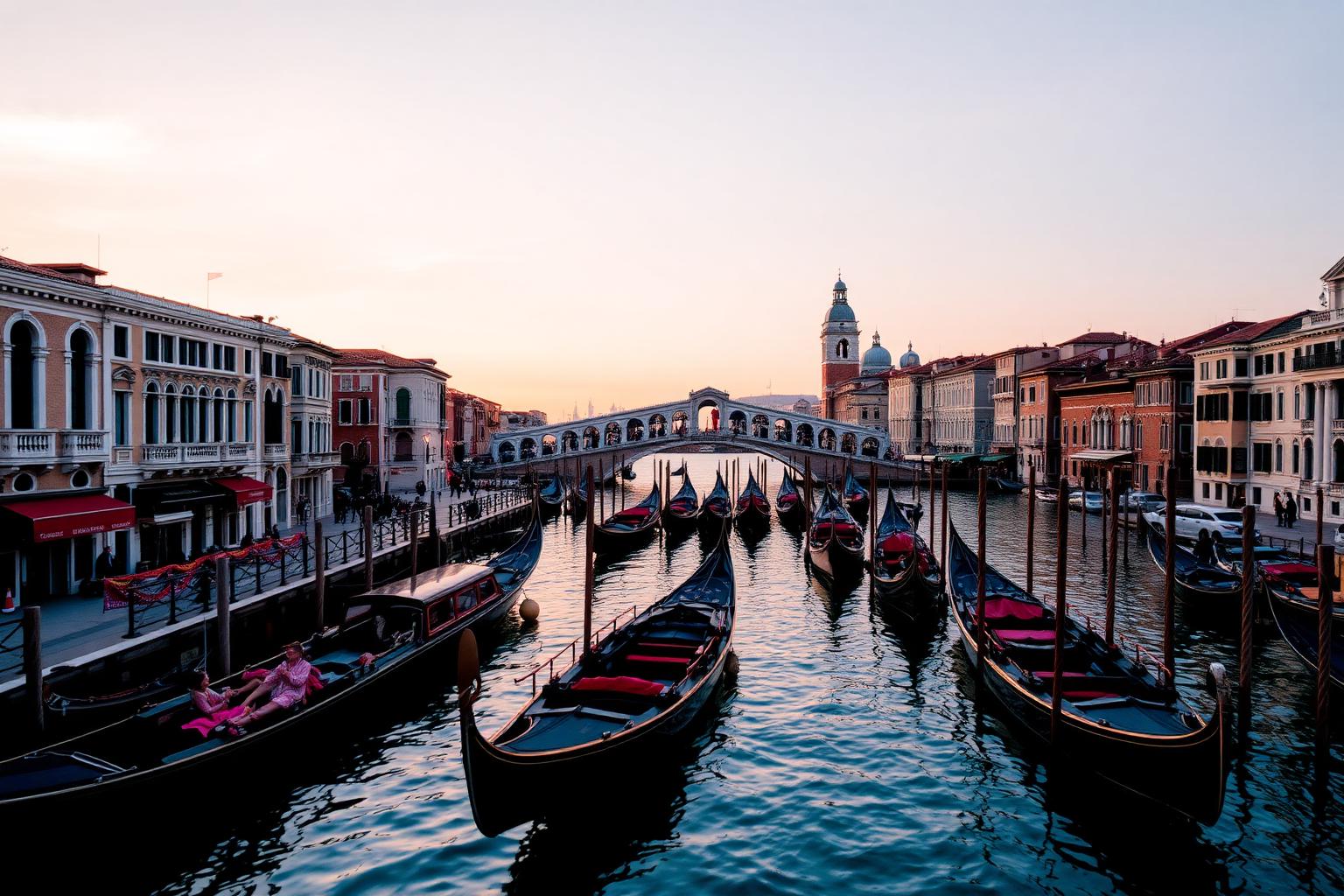
The fog usually sits heavy over the Rio di Santa Maria Formosa, blurring the lines between the green canal water and the Istrian stone of the fondaco. In this corner of Castello, away from the synthetic neon of the Rialto stalls, the history of Venetian fashion is held in a state of suspended animation. To enter the realm of the late Giuliana Coen—better known by her professional moniker, Roberta di Camerino—is to step into a 1950s fever dream of silk velvet, heavy brass hardware, and a specific shade of navy blue that Coen insisted matched the depths of the lagoon. This is not a boutique experience; it is a tactical hunt through the archive of a woman who turned a refugee’s necessity into an aristocratic empire.
The Trompe L’Oeil Revolution on Calle della Testa
Giuliana Coen did not merely design bags; she engineered optical illusions. Having fled to Switzerland during the second world war, Coen returned to Venice with a radical mandate: to treat leather like a canvas. The flagship space, still a pilgrimage site for those tracking the history of the "Bagonghi" handbag—famously carried by Grace Kelly—remains a masterclass in the trompe l’oeil style.
The archive pieces found near the Campo Santa Maria Formosa reveal the technical rigour of the 1950s. Look for the "Doctor" bags where buckles, straps, and pockets are not physical attachments but intricate weaves or prints on velvet. These pieces were created on traditional Venetian looms, the same used for the vestments of the Doges. The texture is dense, cool to the touch, and carries a weight that modern luxury houses have long since abandoned in favour of lightweight synthetics. Collectors should examine the "Caravel" models, which utilize dark ribbed velvet to create shadows that don't exist, tricking the eye into seeing depths where there is only a flat, exquisite surface.
Sourcing the Murano "Antille" Beads
While the velvet is the soul of the house, the hardware is its skeleton. Coen was the first designer to commission local craftsmen to treat handbag clasps as fine jewellery. In the backrooms and specialised vintage dealers like Venezia Vintage Art or the private appointments at the Camerino atelier, one finds the "Antille" series. These are evening bags encrusted with glass beads sourced from the furnace of Pauly & C. on Murano.
Unlike the mass-produced glass found in the tourist traps of the San Marco district, these mid-century beads have a "lattimo" (milky) quality or are infused with 24-karat gold leaf. Each bead was hand-sewn into patterns that mimicked the mosaics of St. Mark’s Basilica. When sourcing these, check the interior frames. A genuine 1950s piece features heavy brass hinges that click with a definitive, metallic snap—a sound Coen famously obsessed over, claiming it was the sound of true quality.
The Silk Scarf: A Map of the Lagoon
The silk scarves found in the archive are less about floral motifs and more about the architectural geometry of Venice. Coen’s patterns often feel like a blueprint of the city’s Rialto bridge or the geometric marble flooring of the Scuola Grande di San Rocco. The silk is heavy—20 momme or higher—printed with a richness that ensures the "R" logo remains sharp even after seventy years.
The most coveted finds are the "belt" prints, where Coen meticulously illustrated leather straps and buckles onto the silk. These are often discovered in the high-end consignment shops of the San Polo district, such as L'Armadio di Coco. Here, the scarves are not just accessories but historical documents of a time when Venice was a hub of avant-garde textile technology. Look for the 1960s palettes: scorched orange, deep forest green, and the signature "Camerino red," a hue inspired by the frescoes of Titian.
Velvet Waistcoats and the Aristocratic Silhouette
Beyond the leather goods, the archive contains the remnants of Coen’s foray into "Easy Wear." In the late 60s, she pioneered the idea of the jersey dress and the structured velvet waistcoat. These pieces were designed to be folded into a suitcase without wrinkling—a necessity for the jet-set crowd moving between the Lido and the Gritti Palace.
The waistcoats found in the private vaults are masterpieces of construction. Using soprarizzo velvet (piled velvet), these garments feature high armholes and a nipped waist that reflects the rigorous tailoring of the Italian aristocracy. To wear one of these today is to inhabit the posture of the Countess herself. They are often found in deep, monochrome tones, allowing the texture of the cut velvet to provide the only ornamentation. Seek out versions with the heavy brass buttons shaped like miniature ship’s wheels, a nod to Venice’s maritime supremacy.
The Hidden Workshops of Castello
To understand the provenance of a Roberta di Camerino piece, one must walk the perimeter of the Campo Santa Maria Formosa toward the Bevilacqua textile mill. While the Camerino archive is a finished gallery, the "clatter-clack" of the 18th-century looms at Luigi Bevilacqua is where the raw materials were born.
Many of the vintage velvet bags found in local auctions were produced using Bevilacqua’s "soprarizzo" velvet. If a vintage find feels unusually soft yet stiff enough to hold its shape without an internal frame, it likely originated here. This is the secret of the Venetian fashion hierarchy: the leather provided the structure, but the lagoon’s ancient weaving traditions provided the skin. For the serious collector, visiting the Bevilacqua showroom on the Canal Grande provides the tactile context needed to identify an authentic Coen velvet from a modern imitation.
If you go
The Archive: Access to the private Roberta di Camerino archives is predominantly by appointment or through specialized high-fashion auction houses in Venice. The flagship boutique is located at San Marco 5422.
Key Dealers: For verified 1950s and 60s pieces, visit Venezia Vintage Art (Calle de la Mandola) or L'Armadio di Coco (Calle di Miracoli). These shops specialise in the provenance of Venetian luxury goods.
Timing: September and January, coinciding with the Biennale or the low-season fog, are the best times for sourcing. The humidity in the air actually helps the vintage velvet "breathe" and recover its pile after years of storage.
Authentication: Genuine 1950s-70s Roberta di Camerino pieces will always feature a "Made in Italy" stamp burned directly into the leather lining, accompanied by a heavy brass "R" or a trompe l’oeil printed hardware detail. Raw edges should be finished with a thick, hand-painted lacquer that remains supple, never brittle.