The heavy door of the Palazzo Loredan Ruzzini Priuli does not swing open for the casual tourist. To stand before the masks and the fading gilding of this corner of the Castello district is to wait for an invitation into the psychic map of Giuliana Coen. Known to the world as Roberta di Camerino—a name she plucked from the 1944 film Roberta—the late couturier reimagined the lagoon’s aesthetics. While the world looked to Florence for leather, Coen looked to the dark nave of the Basilica di San Marco. She took the liturgical velvets of the 15th century and the glass beads of Murano and turned them into the preferred accessories of Grace Kelly and Elizabeth Taylor. To find her archive today is to step into a 1950s fever dream of trompe l’oeil and heavy silk.
The Trompe L’Oeil Revolution
In the post-war years, Coen’s genius lay in deception. She didn’t just make handbags; she painted them. Walking through the archives near the Campo Santa Maria Formosa, one finds the "Bagonghi" handbag—a doctor’s bag silhouette that became a global icon. The originals housed here feature the revolutionary trompe l’oeil technique, where buckles, straps, and folds are woven directly into the velvet specifically by the Bevilacqua weavers.
The velvet itself is the "soprarizzo" variety, hand-loomed on 18th-century machines that produce a textured, multi-level pile. When running a finger over a 1950s waistcoat found in these private collections, the fabric feels architectural rather than textile. The optical illusions on a classic Coen scarf—belts that look like they are cinching the silk, or buttons that appear to cast shadows—remain as sharp today as they were when Dalí praised them for their surrealist edge.
Murano Glass and the 'R' Clasp
The hardware of a Roberta di Camerino piece is where the Venetian craft traditions intersect with high fashion. While modern luxury brands often rely on generic alloys, Coen commissioned Murano glassblowers to create beads and clasps that mimicked the depth of the Adriatic. In the backrooms of the archive, look for the "Bagonghi" frames made from heavy, hand-tooled brass and inlaid with miniature glass mosaics.
The signature "R" logo, framed by a belt buckle, was never just a branding exercise. It was a structural element. In the vintage waistcoats preserved here, the buttons are frequently custom-fired glass or heavy, nautical-inspired brass ormolu. These aren't mere fasteners; they are the weight that allows a silk-velvet garment to hang with the necessary Venetian gravity.
The Palette of a Venetian Sunset
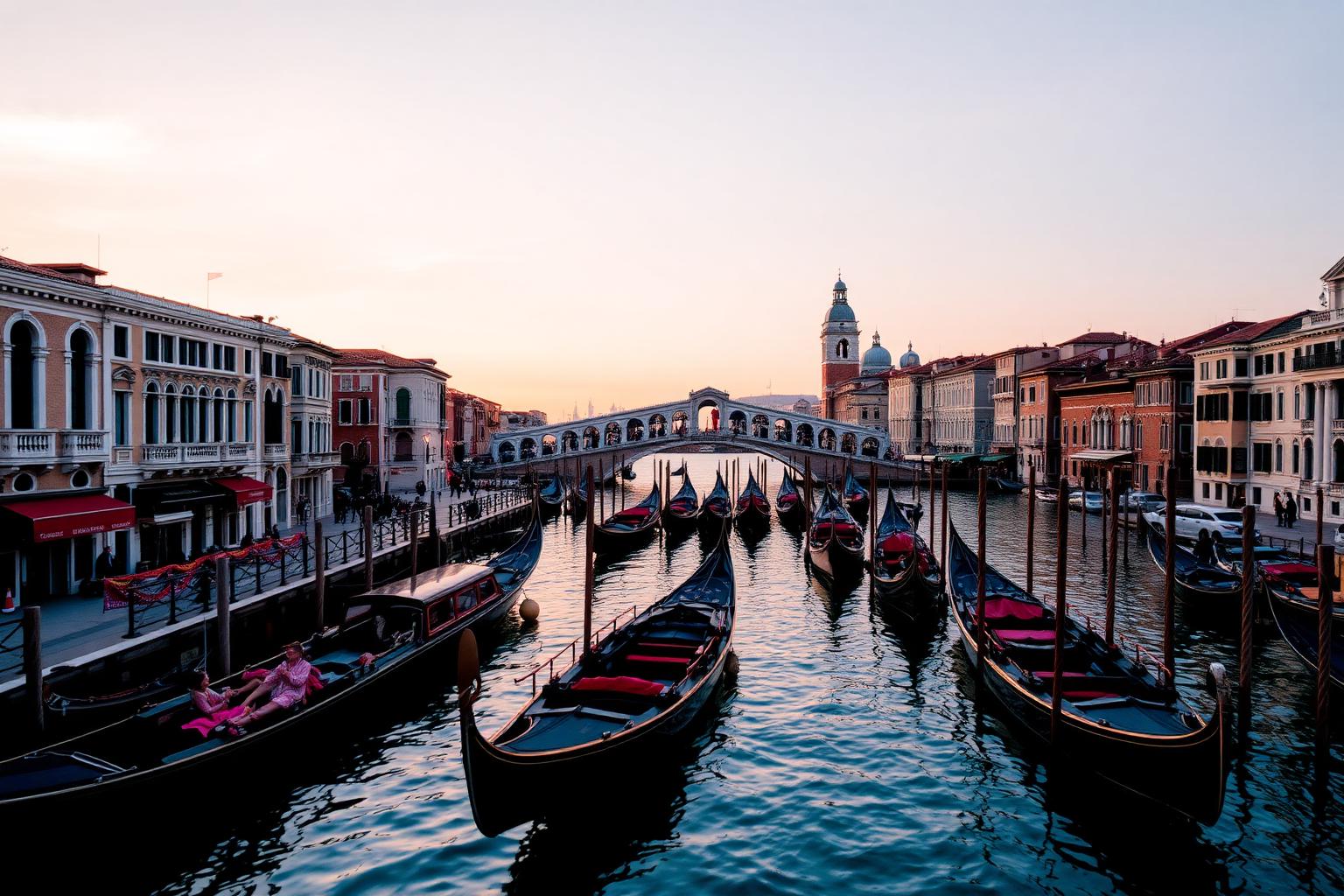
To understand the colours found in this collection, one must stand on the Ponte dell’Olio at dusk. Coen’s palette was strictly dictated by the city's decay and its glory: the deep crimson of a cardinal’s robe, the bottle green of lagoon moss, and a specific navy blue that borders on black.
The archived pieces from the late 1960s demonstrate how Coen moved into jersey dresses, using the same trompe l’oeil prints to create "instant outfits." A single piece of fabric would be printed to look like a pleated skirt, a leather belt, and a ruffled blouse. These garments, often found hanging in the shadowy wardrobes of the palazzo, haven't faded. The secret was the chemical dyes used in the mid-century, which bonded to the silk with a permanence that modern environmental standards rarely allow.
Sourcing the Archive: Beyond the Window Dressings
Tracking down these pieces requires a certain level of Venetian "omertà." While the flagship boutique on the Calle della Testa provides the modern interpretation of the brand, the true vintage hunter must seek out the specialists. Venetia Studium on the Calle Larga XXII Marzo occasionally carries pieces that echo Coen’s obsession with pleated silks, but for the authentic 1950s velvet, one must head to the specialist vintage dealers.
Pieces often surface at L’Armadio di Coco in the Dorsoduro district, a shop that prioritises the structural integrity of 20th-century Italian couture. Here, one might find a Coen-designed silk scarf featuring the "Gondolier’s stripe" or a heavy velvet clutch. Another essential stop is Vintageria Venezia in the San Polo district, where the focus often leans toward the more avant-garde knitwear Coen produced in the 1970s.
The Legacy of the Bevilacqua Looms
The heart of the Roberta di Camerino story remains the Tessitura Bevilacqua. Located on the Santa Croce side of the Grand Canal, this is the workshop where the velvet for the most famous "Bagonghi" bags is still woven on original 18th-century looms. A visit to the Tessitura is the spiritual companion to sourcing the vintage bags themselves.
The weavers here still use the same wooden patterns that Coen commissioned. Seeing the slow, rhythmic movement of the looms explains why a vintage Roberta piece feels so substantial. It is not "fashion" in the disposable sense; it is a fragment of the city's physical history. To wear a 1955 velvet waistcoat is to wear the same warp and weft that lines the walls of the city’s private chapels.
If You Go
The Roberta di Camerino Foundation: Access to the private archives and the palazzo collection is typically by appointment for researchers and serious collectors. Check the official foundation website for seasonal exhibitions.
Getting There: The Campo Santa Maria Formosa is a ten-minute walk from Piazza San Marco. Follow the signs for the Querini Stampalia Foundation to stay on the correct side of the canals.
The Hunt: For those seeking pieces to purchase, visit L’Armadio di Coco (Dorsoduro 2991) and Vintageria Venezia (Calle dei Nomboli). Expect to pay anywhere from €400 for a well-preserved silk scarf to upwards of €3,000 for a 1950s velvet "Bagonghi" in mint condition.
Dining: After a morning in the cold shadows of the archive, eat at Osteria alle Testiere. There is no menu; the chef cooks what was found at the Rialto market that morning. Book at least three weeks in advance.