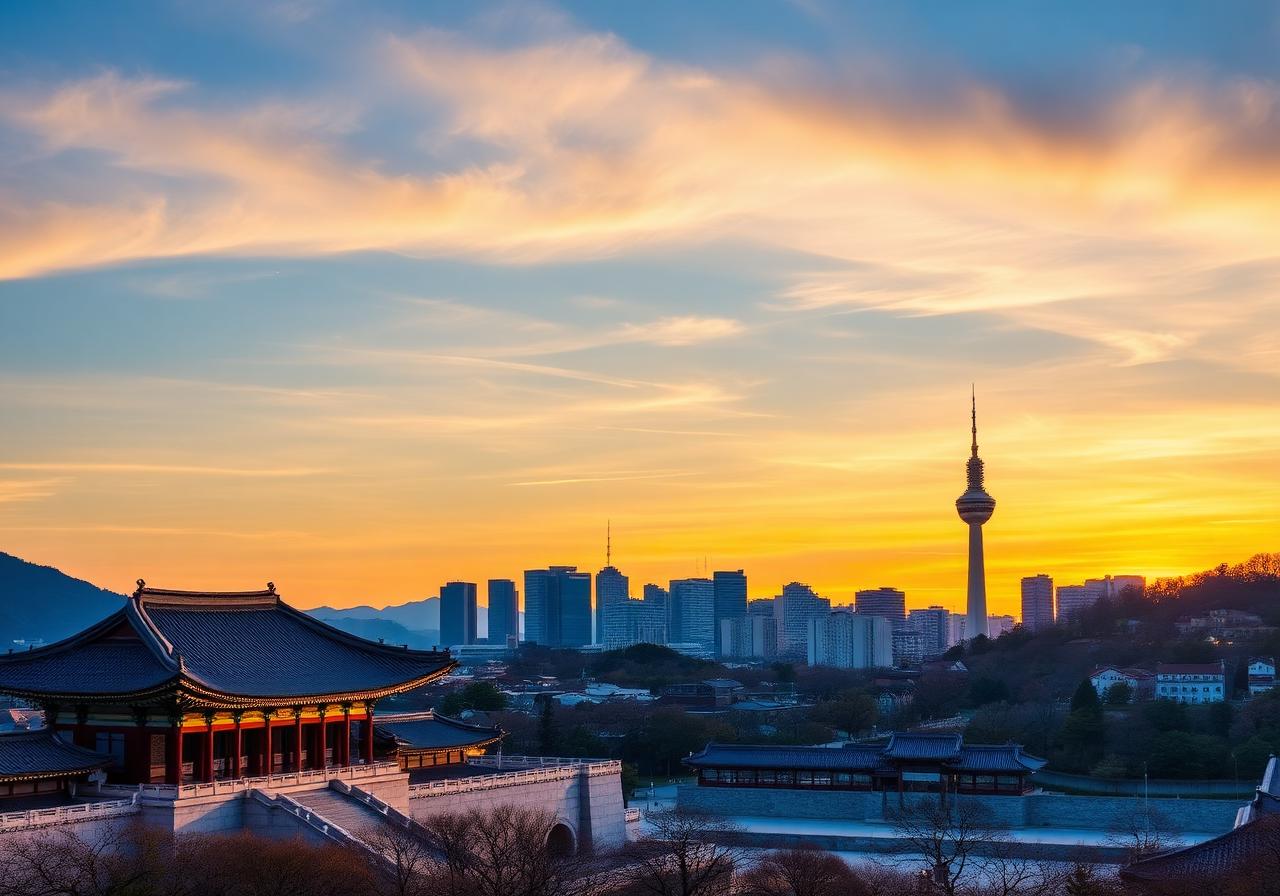
The smell of toasted chestnuts and cold pine needles cuts through the sterile, glass-edged scent of Gangnam’s financial district. Just minutes from the neon glare of Teheran-ro, the skyscrapers give way to a sudden, sprawling darkness. This is Seonjeongneung, a burial ground for Joseon Dynasty kings, where the tumuli rise like emerald waves under the winter moon. During the December weeks, the perimeter of these UNESCO-protected woods transforms. While tourists elbow through the gaudy stalls of Myeong-dong, the residents of Samseong-dong retreat here for a market that feels less like a fairground and more like a private salon held under a canopy of illuminated ancient trees.
The Luminescent Path of the Joseon Kings
The market begins where the pavement meets the forest. The low stone walls surrounding the tombs of King Seongjong and Queen Jeonghyeon are bathed in gold light, reflecting off the frost-covered grass. This isn't the flashing LED chaos found elsewhere in Seoul; the lighting is architectural and restrained. Lanterns shaped like traditional baekja (white porcelain) vessels line the walkways, casting a soft glow on the path toward the main courtyard.
The air here is noticeably cooler than on the main road, filtered through rows of pine and juniper. Walking along the eastern edge of the park, the sound of the city fades, replaced by the rhythmic clinking of ceramic mugs and the distant, brassy swell of a saxophone. It is a sensory transition that prepares the visitor for a slower pace of commerce.
Small-Batch Ceramics and Joseon Minimalism
The shopping at Seonjeongneung shuns the mass-produced trinkets typical of Christmas markets. Instead, the wooden stalls—designed to mimic the clean lines of hanok architecture—feature independent artisans from the nearby Gyeonggi-do studios.
Look for the work of Kim Ji-wan, a ceramicist known for his "moon jars" in miniature form. His stalls often feature functional art: matte-black espresso cups and sake sets fired in traditional wood kilns. Beside him, you will usually find the textile designers of Sae-on, who repurpose high-grade silk scraps from hanbok tailoring into minimalist scarves and knot-work ornaments called maedeup. These items are not "souvenirs" in the traditional sense; they are refined pieces of Korean design that happen to be for sale in a forest.
Collectors should keep an eye out for hand-poured candles by Le Plein, a local fragrance house. Their seasonal scent, "Winter in Bukchon," uses notes of dried persimmon and hinoki wood to evoke a traditional Korean winter home—a world away from the generic cinnamon and vanilla scents found in global chains.
Jazz Notes and Hot Ginger Tea
At the heart of the market is a makeshift stage built from reclaimed timber, positioned so the soaring pine trees serve as a natural backdrop. Every evening from 6:00 PM, local jazz quartets take the stage. The vibe is decidedly "Cool Jazz"—think Chet Baker reimagined in 21世纪 Seoul. It is common to hear a melancholic, brass-heavy rendition of The Christmas Song followed immediately by a lounge arrangement of a traditional Gugak folk melody.
To withstand the Seoul frost, visitors congregate around the standing heaters with cups of sujeonggwa. This traditional persimmon punch is served hot here, spiced heavily with cinnamon and garnished with pine nuts. For those seeking something more substantial, the stall operated by Bonggeunsu serves a sophisticated take on eomuk (fish cake soup). Rather than the thin, rubbery sheets found on street corners, their version features artisan cakes stuffed with perilla leaves and blue crab, served in a broth clarified with dried shiitake mushrooms.
The Secret Cellars of Samseong-dong
The market experience often spills over into the narrow alleys that border the royal tombs. For a refined retreat from the night air, find Vault 82, a basement speakeasy located just a five-minute walk from the Seonjeongneung station exit. The interior is all mahogany, green leather, and heavy crystal—the quintessential "old money" Gangnam aesthetic. Their seasonal cocktail, the "Persimmon Old Fashioned," uses house-made bitters and fruit dried on the market grounds.
Conversely, for those who prefer the grape, Vin.ga offers one of the city's most extensive wine lists in a space that feels like a monastic cellar. On market nights, they often host "After-Dark" tastings featuring organic wines from small European vineyards, paired with local Korean cheeses from the forest stalls.
Decorum Amongst the Spirits
What distinguishes the Seonjeongneung market from the festive chaos of the West is the pervasive sense of yemunchi—a respect for the site's history. Because this is a royal burial ground, the revelry is tempered with a quiet dignity. You won't find loud carols or neon-clad Santas. Instead, you find families walking in hushed tones and couples sharing a single pair of wool gloves.
As the clock nears 10:00 PM, the lights begin to dim sequentially, starting from the furthest tomb and moving toward the exit. It is a choreographed closing that mirrors the setting of the sun, leaving the kings to their slumber and the visitors to return to the high-speed pulse of the 21st century.
If You Go
Getting There: Take Seoul Metro Line 9 or the Bundang Line to Seonjeongneung Station. Use Exit 3 and walk five minutes toward the park entrance.
Timing: The boutique market typically runs from the second week of December through to Christmas Eve. It is best visited on a weekday evening to avoid the Saturday rush of local office workers.
Clothing: Wear a heavy wool coat and thermal layers. The "Seoul Wind" is notorious for cutting through light jackets, and the microclimate within the tomb forest is several degrees colder than the surrounding streets.
Payments: While most vendors accept international credit cards (Visa/Mastercard) and Apple Pay, it is useful to have some Korean Won in cash for the smaller snack stalls.