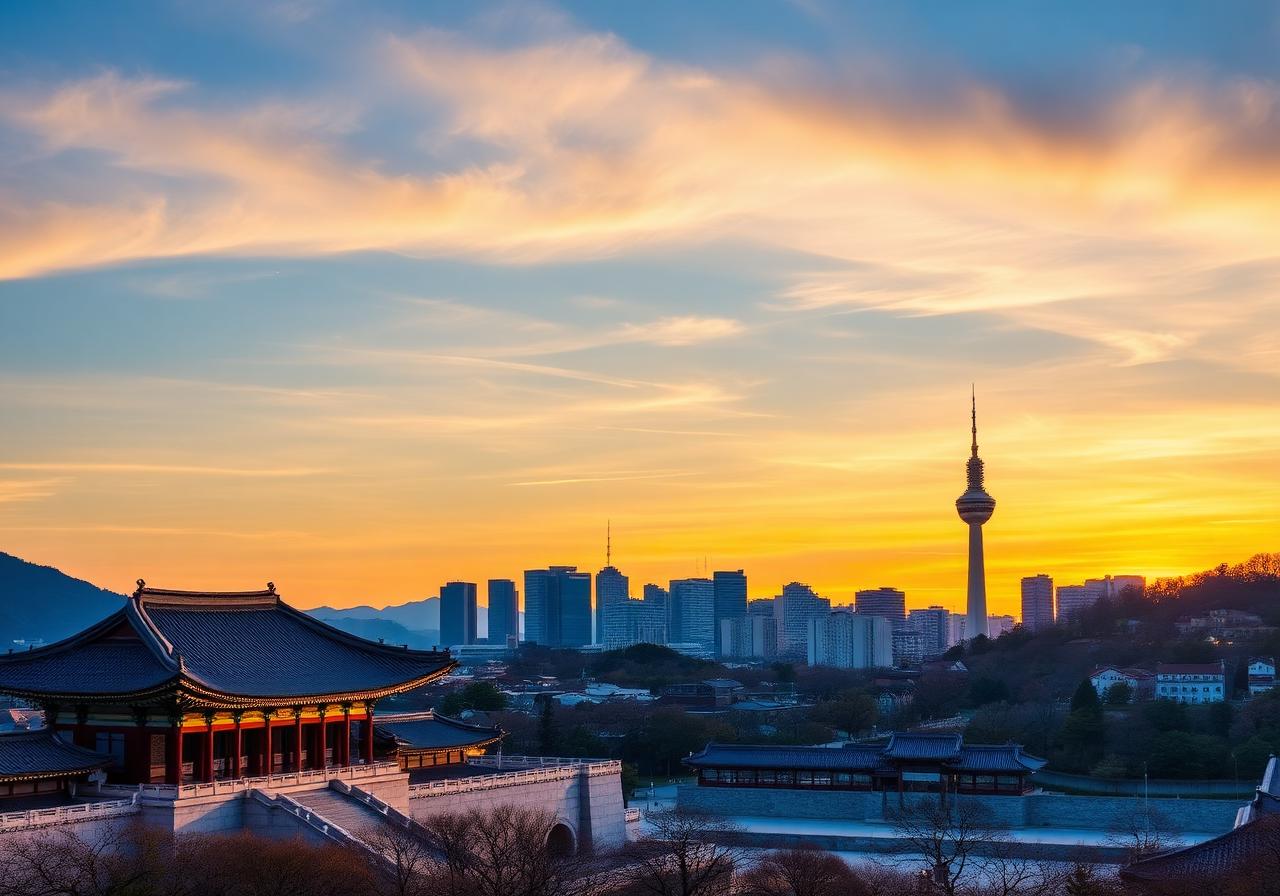
The air in Gangnam usually hums with the electric friction of Teheran-ro’s glass towers and the relentless pace of South Korea’s financial engine. But behind an unassuming stone wall in Samseong-dong, the decibels drop. Here, the Seonjeongneung royal tombs—the resting place of Joseon Dynasty kings—provide a 47-acre buffer of ancient forest against the neon sprawl. During the December chill, the northern edge of this UNESCO site transforms into the Seonjeongneung Boutique Market. It is not a place of tinsel or manufactured cheer; it is a quiet, architectural celebration of glass, pine needle scents, and slow-pour coffee, illuminated by the soft amber glow of lanterns hanging from centuries-old trees.
Ceramics and the Art of the Slow Gift
While the massive markets at Seoul City Hall or Dongdaemun rely on volume, this boutique gathering prioritises the tactile. The stalls here are curated galleries. Look for the potter Park Ji-won, whose studio, Soyo Ceramics, produces celadon-glazed pieces that mimic the muted grey-greens of the winter sky. Her hand-pressed espresso cups are a staple of the market, often sold alongside small, linen-bound boxes of incense from Odt.
Unlike the mass-produced trinkets found in Myeong-dong, the offerings here are deeply personal. You will find leather workers from the nearby Cheongdam-dong district, such as the artisans at Hevitz, hand-stitching passport covers while patrons wait. The atmosphere is one of hushed appreciation rather than frantic commerce. Shoppers move between booths with a glass of warm, spiced pear juice in hand—a traditional baesuk—rather than the standard sugary mulled wine found elsewhere.
Jazz Amongst the Joseon Pines
As the sun dips behind the Lotte World Tower in the distance, the market’s acoustic stage begins to flicker to life. The musical direction at Seonjeongneung leans heavily into mid-century jazz and bossa nova, a sharp departure from the K-Pop loops that dominate the rest of the city. Local quartets, often featuring graduates from the nearby Seoul Arts College, set up under a canopy of illuminated canopy.
The standout performer is often the Min-chae Trio, known for stripping back holiday classics into minimalist, piano-heavy arrangements. There are no flashing LEDs or booming speakers. Instead, the music drifts through the pine groves, mingling with the scent of charcoal braziers. It creates a surreal, cinematic "Old Seoul" feeling, where the modern skyline visible through the bare branches feels like a distant, silent movie.
A South Korean Winter Larder
The culinary offerings at the Seonjeongneung market reflect the upscale sensibilities of Gangnam’s food scene. This is not the place for greasy street snacks; rather, it is a showcase for refined, seasonal Korean flavours. The crowd gathers at the Mingles pop-up stall—an extension of the two-Michelin-starred restaurant nearby—to sample small bowls of jang-ajji (pickled vegetables) paired with slow-cooked beef short rib that pulls apart with a wooden spoon.
For a sweet reprieve, visit the stall run by Haap, a contemporary tteok (rice cake) laboratory. Their signature winter item is the yujadanji, a whole citron fruit hollowed out and stuffed with its own pulp, chestnuts, and stone fruit, then preserved in honey. It is served sliced thin, like a jewel-toned terrine, and pairs perfectly with the roasted buckwheat tea served in heavy brass bowls at the communal wooden tables.
The Secret Garden of Light
Architectural lighting is the market’s primary decor. Rather than draping the trees in harsh, multicoloured fairy lights, the organisers use "stealth lighting"—warm white spotlights hidden in the undergrowth to catch the gnarled bark of the red pines. This creates a ghost-like forest effect that honours the sacred nature of the tombs without feeling funereal.
Walking the perimeter of the market leads you to the "Reflection Path," a series of glass installations by the artist Lee Sang-min. These mirrors are angled to catch the moon and the surrounding lanterns, blurring the lines between the historic burial mounds and the modern market. It is a deliberate design choice that encourages visitors to linger in the cold, wrapped in heavy wool coats, to appreciate the stillness that Gangnam so rarely affords.
After Hours at the Seolleung Rim
When the market stalls begin to pack away at 9:00 PM, the evening continues in the small, jazz-focused bars that line the street bordering the tombs. The Lion’s Den is a subterranean sanctuary nearby that specialises in highballs and rare Japanese whiskies. It serves as an unofficial "after-party" for market-goers looking to escape the wind.
If you prefer something more traditional, Gat-Meok-Ko is a nearby tavern where the decor is strictly Joseon-era wood and the speciality is fermented rice wine (makgeolli) served from copper kettles. Sitting by the window, watching the last of the market lanterns being extinguished against the silhouettes of the royal mounds, provides the perfect coda to a night in Seoul’s most sophisticated winter pocket.
If you go
When: The Boutique Market typically runs for the final two weekends of December, from 2:00 PM to 9:00 PM. Getting there: Take Seoul Subway Line 2 or the Bundang Line to Seolleung Station. Use Exit 10 and walk straight for five minutes toward the main gate of the Seonjeongneung Royal Tombs. Dress: Temperatures in Seoul can drop to -10°C in December; heavy woollens and heat-tech layers are essential as the market is entirely outdoors. Entry: Access to the market area is free, though a small fee (approximately 1,000 KRW) is required to enter the official Royal Tomb heritage site itself.