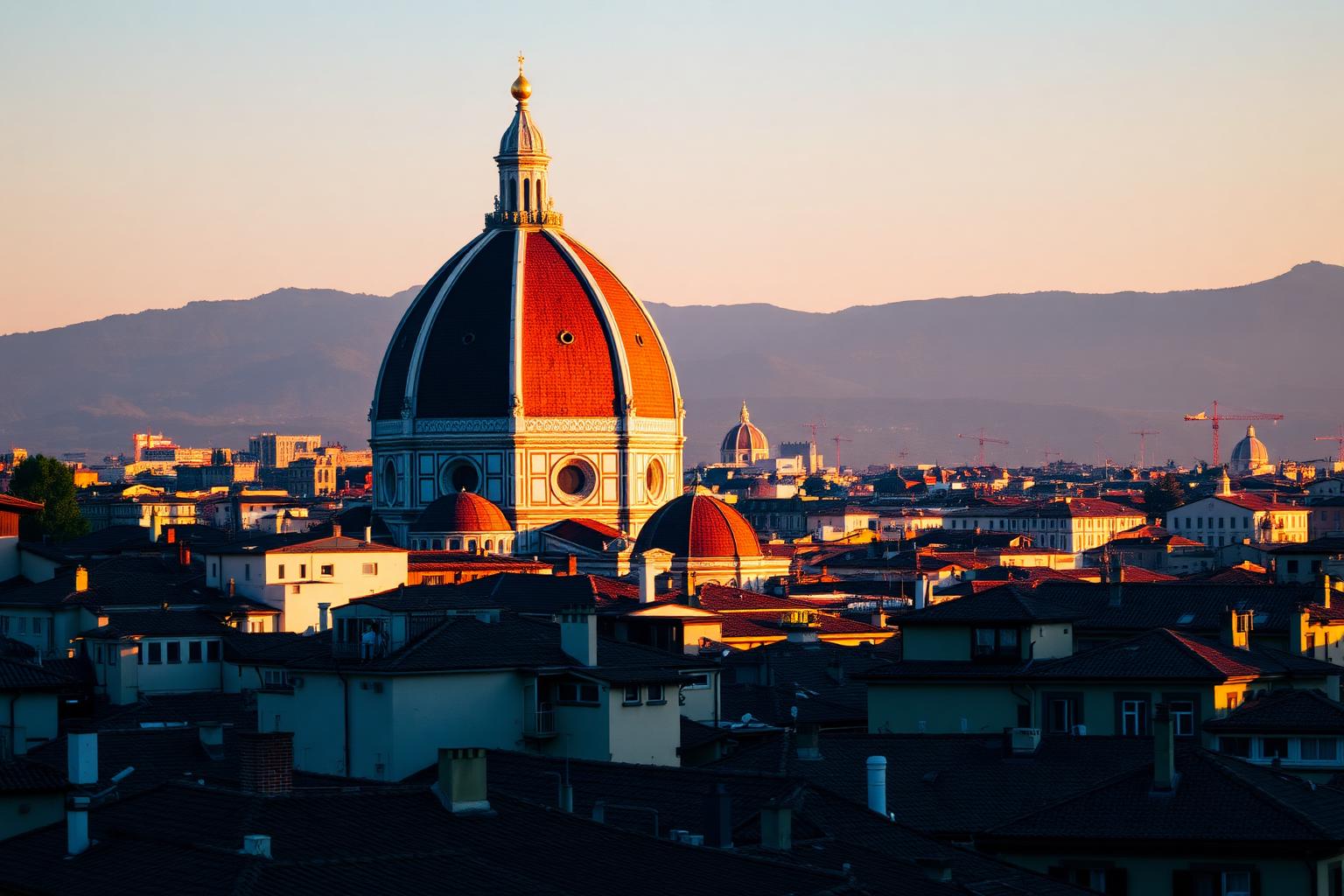
Piazza della Signoria
Piazza della Signoria is the rugged, stone-paved heartbeat of Florence, functioning less like a traditional public square and more like a visceral, open-air museum of Florentine power and artistic defiance.
What to expect — what visitors actually see/do
The piazza is dominated by the monolithic Palazzo Vecchio, the fortress-like town hall that has anchored the city since the 14th century. As you enter the space, your eyes are immediately drawn to the replica of Michelangelo’s David standing precisely where the original was placed in 1504, accompanied by Baccio Bandinelli’s muscular Hercules and Cacus.
The visual focal point is the Loggia dei Lanzi, an open-air vaulted gallery. Spend time here to study Cellini’s bronze Perseus with the Head of Medusa and Giambologna’s Rape of the Sabine Women. Unlike the high-speed transit of the surrounding streets, the Loggia offers stone benches where one can sit, shade oneself from the Tuscan sun, and observe the sheer density of Renaissance mastery free of charge. Nearby, the Fountain of Neptune—nicknamed Il Biancone ("The Big White One") by locals—provides the constant, grounding sound of cascading water against its towering maritime statues.
History & significance — brief background
Originally the site of Roman baths, the piazza became the civic nucleus of the Republic of Florence in the 13th century. It was designed to intimidate as much as it was to serve; the L-shaped layout surrounds the Palazzo Vecchio, a building specifically designed with a protruding tower to command the skyline. This was the stage for some of Italy’s most dramatic political moments, including the execution of the friar Savonarola in 1498—marked today by a simple commemorative plaque in the paving—and the long-standing tug-of-war between the Medici family and the Republic.
Practical tips — opening hours norms, tickets, queues, best time of day
The piazza itself is a public thoroughfare and is open 24/7, requiring no tickets. However, it is perpetually crowded by midday. The best time to visit is at dawn, just as the cleaning crews finish and the sun hits the terracotta roof of the Palazzo Vecchio, or after 10:00 PM, when the heavy floodlights create cinematic shadows across the sculptures. If you intend to enter the Palazzo Vecchio museum, purchase "Skip-the-Line" tickets online in advance to avoid the winding queue that builds by 9:30 AM.
Getting there — neighbourhood, transport
The piazza is located in the Santa Maria del Fiore/Uffizi district. It is entirely pedestrianized and accessible only on foot. From the Santa Maria Novella train station, it is a 15-minute walk down Via de' Panzani and Via dei Calzaiuoli. There is no direct bus access to the square itself; arrive by foot from the surrounding medieval alleys.
Nearby — 2-3 sights or eats within walking distance
- The Uffizi Gallery: Located mere steps through the piazza’s archway, this is home to the world’s greatest collection of Renaissance art.
- Gelateria La Carraia: If you are willing to walk five minutes toward the Arno river, this spot offers some of the most authentic, reasonably priced gelato in the city.
- Orsanmichele: A five-minute walk north leads you to this unique building; once a grain market, its exterior niches are filled with masterpieces of sculpture commissioned by the city's medieval trade guilds.