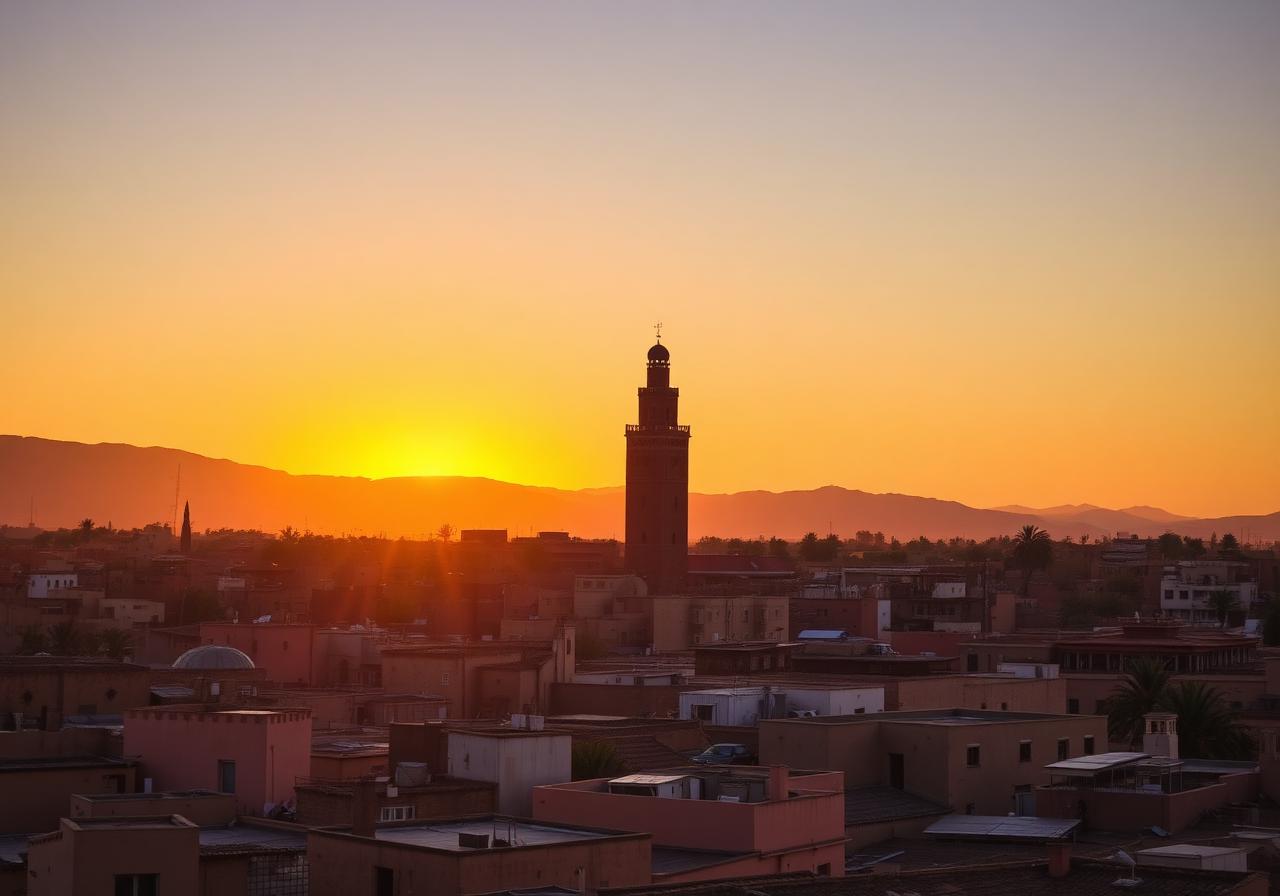
The sun hits the terracotta ramparts of the Jemaa el-Fnaa with a heavy, golden weight, but the entrance to the Souk Semmarine offers immediate, cool shadow. It is the jugular vein of the Marrakech Medina, a wide, roofed artery that pulses with the frenetic energy of a thousand years of commerce. Here, the air thickens with the scent of cedar shavings, damp wool, and the sharp, metallic tang of hammered brass. To the uninitiated, it is a sensory ambush. Motorbikes weave between pedestrians with millimetre precision, their exhausts mingling with the aroma of slow-cooked lamb. This is not a place for the hesitant; it is a theatre of deal-making where every interaction is a performance.
The Geography of the Spine: From Hardware to High Fashion
The Souk Semmarine is the primary thoroughfare, beginning at the northern edge of the Jemaa el-Fnaa. It acts as a compass needle for the labyrinthine network of smaller markets (souks) that branch off its sides. In the first hundred yards, the architecture is grand—high vaulted ceilings of iron and wood protecting shops that deal in the high-ticket items: intricate lanterns, heavy antique doors, and high-quality leather.
As one pushes deeper north, the path eventually forks. To the right lies Souk el Kebir, the traditional domain of leatherworkers and bookbinders. To the left, the path narrows into Souk el Attarine, a corridor of bright brass and copperware that gleams under low-hanging bulbs. Understanding this "Y" junction is the key to navigating the Medina without a guide. Look for the landmarks: the massive, iron-studded doors of the older merchants and the scent of cedar wood which signals you are nearing the woodcarvers' district. If the path becomes so narrow that two people cannot pass abreast, you have drifted into the residential derbs; turn back toward the sound of hammers to find the main artery again.
The Alchemist’s Square: Rahba Kedima
Veering off the main Semmarine path leads to Rahba Kedima, or the "Spice Square." This is the most evocative pocket of the city. Unlike the shaded tunnels of the main souk, this square is open to the sky, framed by sun-bleached buildings in shades of ochre and dusty rose. Here, the commerce shifts from hardware to the medicinal and the culinary.
Baskets overflow with dried rosebuds from the M’Gouna valley, crystals of raw menthol, and heaps of Ras el Hanout—a complex spice blend where every merchant claims a secret "top note." Look for Café des Épices, a red-painted landmark on the corner. It provides an essential vantage point from its rooftop. From here, you can watch the drama of the square below: women weaving straw hats (the Chapeau de Paille) and traditional apothecaries selling ghassoul (clay mask) and Moroccan indigo. It is the best place to recalibrate your senses before diving back into the darker covered alleys.
The Art of the Slipper: Finding the Babouche
Deep within the grid lies the Souk Smata, better known as the Slipper Souk. The walls here are invisible, entirely obscured by thousands of babouches—the traditional Moroccan pointed-toe leather slipper. The smell here is unmistakable: the pungent, earthy scent of tanned hide.
For a first-timer, quality is found by touch. Avoid the neon-bright, plasticky versions found near the square. Look for the hand-stitched soles and the soft, supple leather of the traditional yellow "Demma" style, traditionally worn by men but now universal. Specifically, seek out stalls where the "Maâlem" (the master craftsman) is present. If you see a man hunched over a wooden last, stitching leather with a heavy needle, you have found the authentic source. Expect to pay more for goat leather over cowhide; it is softer, more durable, and carries that distinct Moroccan patina that ages into a rich honey hue.
The Kilim Protocol: Tea and Negotiation
In the Souk des Tapis (the Carpet Souk), commerce is a slow-motion sport. You will likely be invited into a showroom like Les Nomades or Palais de la Bahia. This is not a "quick look" transaction. It begins with the arrival of "Berber Whiskey"—hot, heavily sweetened gunpowder green tea infused with fresh sprigs of mint, poured from a height to create a frothy "crown."
Negotiating for a kilim (flat-weave) or a plush Beni Ourain rug is a social contract. The merchant will unfurl dozens of rugs, explaining the tribal symbolism of the lozenges and zig-zags. The first price quoted is a conversational opening, not a demand. To master the exchange, offer exactly half of the initial quote, then slowly move toward a middle ground. The moment the merchant begins to tell a story about his family in the High Atlas mountains, you are in the final stages of the deal. If the price does not suit, a polite "La, Shokran" (No, thank you) and a firm exit is perfectly acceptable, though usually, the price will drop one last time as you reach the door.
The Hidden Workshops: Foundries and Dyers
To find the soul of the Medina, one must look past the storefronts and into the fondouks. These are ancient inns for travelling merchants that have been converted into artisanal cooperatives. In the Souk Haddadine (the Blacksmiths' Souk), the air vibrates with rhythmic clanging. Here, artisans sit on dirt floors, using their feet to steady iron rods while they forge the intricate scrollwork for Marrakech's famous lanterns.
Further north, near the Ben Youssef Madrasa, lies the Souk des Teinturiers—the Dyers’ Souk. Though smaller than it once was, you can still see yarns of silk and wool hanging from bamboo poles above the alleys, dripping with vibrant crimsons from poppies and deep blues from cobalt. It is a gritty, hardworking corner of the city. Observe from a distance; the dyers are focused on their vats of boiling water, and the narrow walkways can become slick with runoff.
Social Etiquette and the "Petit Taxi" Strategy
Navigating the Semmarine requires a specific body language. Walk with purpose. If you look lost, you will be approached by "faux guides" offering to show you the "way to the square" or a "special festival" (which usually leads to their uncle’s carpet shop). A polite but firm "I know the way" is usually enough.
Keep to the right of the path. This is the unofficial rule of the road, allow for the passage of laden donkeys and carts. If you hear a shout of "Balak!"—get out of the way immediately. It is the universal signal for a cart or motorbike approaching at speed. When your legs finally give out, do not try to find a taxi in the heart of the souk. Walk back to the Jemaa el-Fnaa or the stands near the Koutoubia Mosque. Ensure the driver turns on the meter (the compteur); if they refuse, move to the next "Petit Taxi." The ride to the New Town (Gueliz) should rarely cost more than 20 to 30 dirhams.
If You Go
Timing: The souks officially open around 9:00 AM, but they don't truly wake up until 10:30 AM. Friday is the holy day; many stalls close for midday prayer (around 1:00 PM), and some may not reopen at all. Visit in the late afternoon for the best atmosphere and better bargaining power as merchants look to close their final sales.
Currency: Carry cash (dirhams). While larger carpet and lantern shops accept credit cards, the smaller stalls and food vendors deal exclusively in notes and coins. Small denominations are essential for tips and street snacks.
Attire: Wear comfortable, closed-toe shoes. The ground is uneven and often dusty. While Marrakech is cosmopolitan, the Medina is traditional; modest clothing that covers shoulders and knees is the respectful and practical choice for both men and women.