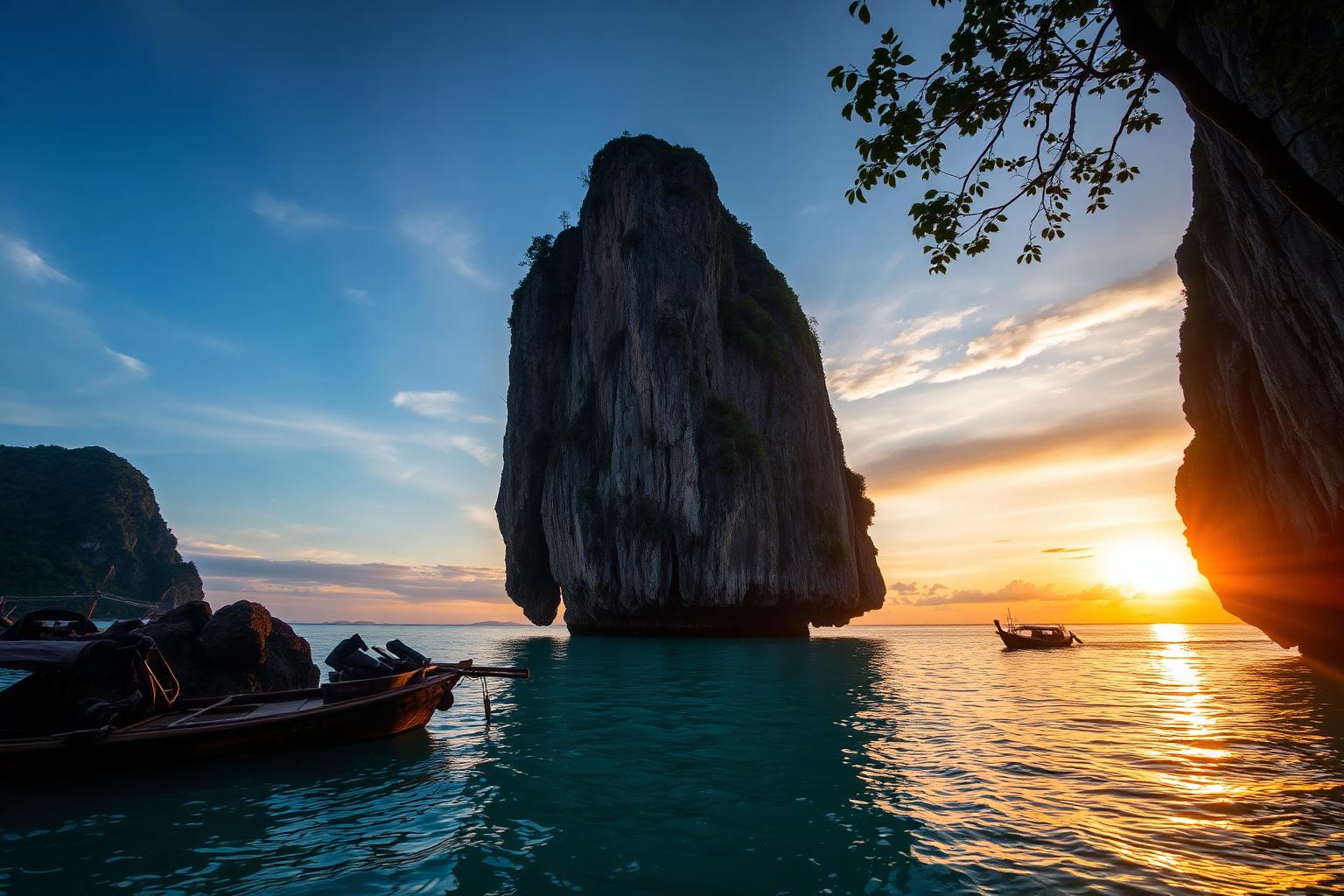
A thin plume of grey smoke drifts across Utarakit Road, blurring the line where the asphalt meets the lime-green fringe of the Andaman Sea. It is 7:00 AM in Krabi Town, and the humidity is already a physical presence. While most of the tourist traffic has bypassed this riverside outpost in favour of the limestone karsts of Railay or the neon stretch of Ao Nang, a quiet combustion is occurring in the backstreets. Here, the heavy scent of sea salt mixes with something charred, deep, and earthy. It is the smell of than mai kong kang—mangrove wood charcoal—hitting a cast-iron drum.
Inside a cavernous shophouse, a roaster turns a hand-cranked cylinder over an open pit of glowing embers. There are no digital probes or profile-mapping software here. Instead, the process relies on the rhythmic sound of the beans cracking and the ancestral knowledge of a fuel source that once powered the entire coastal economy of southern Thailand.
The Carbon Heart of the Coastline
For centuries, the dense mangrove forests of Krabi’s river estuaries were the region’s primary energy grid. The heavy, slow-growing wood produced a charcoal that burned hotter and longer than almost any other material in Southeast Asia. When electricity and gas stoves arrived, the charcoal kilns—huge, dome-shaped brick structures—slowly crumbled back into the mud.
However, in the old town, a niche group of coffee traditionalists refused to switch to gas-fired drum roasters. Mangrove charcoal provides a dry, intense heat that penetrates the outer skin of the coffee cherry without scorching the sugars. The result is a profile that eludes modern industrial roasting: a deep, woody smokiness that complements the naturally chocolatey notes of Thai robusta, stripping away the harsh bitterness often associated with the bean. This isn't just a drink; it is a liquid map of the Krabi coastline.
The Shophouse Alchemists
The epicentre of this movement is Hock Hoe Seng, a family-run institution where the roasting process is treated with the solemnity of a religious rite. The beans—primarily sourced from the hills of nearby Khao Phanom—are tossed into a drum that has been seasoned by decades of smoke. The roaster listens for the "first crack," a sound like snapping kindling, which signals that the internal moisture is escaping.
Unlike the bright, acidic fruit notes favoured by the third-wave specialty movement in Bangkok or Chiang Mai, Krabi’s charcoal coffee is unapologetically bold. At Hock Hoe Seng, the "Kopi" is served in thick glass tumblers with a heavy dollop of sweetened condensed milk at the bottom. The smoky char of the mangrove wood cuts through the dairy, creating a flavour profile reminiscent of toasted hazelnuts and burnt caramel. It is a rugged, maritime caffeine hit that reflects the town’s history as a trading port for sea gypsies and spice merchants.
Transitioning to the Specialty Stage
While the old guard preserves the tradition, a new generation of Krabi locals is translating these coastal fuel sources into a modern specialty context. At Much & Mellow, located on Maharat Road, the aesthetic shifts from dusty shophouse to minimalist glass and steel, but the respect for the local terroir remains. Here, roasters experiment with "charcoal-finished" beans, where the initial roast is precise and controlled, but the final temperature spike is achieved over mangrove embers to impart that telltale Krabi smoke.
This evolution bridges the gap between the "old town" Kopi culture and the demands of the modern palate. In these venues, the "Mangrove Mocha"—a local riff on the classic—uses a double shot of charcoal-roasted espresso blended with dark Thai cacao. It lacks the synthetic syrupy finish of international chains; instead, it tastes of the earth and the furnace.
The Ritual of the Morning Market
To understand the cultural gravity of charcoal coffee, one must leave the air-conditioned cafés and head to the Maharat Morning Market. Between the stalls of pungent durian and mountains of dried shrimp, small wooden carts serve the "Traditional Krabi Blend."
Watch the vendors perform the "pull"—pouring the coffee from a height through a fabric sock filter into a waiting tin. The aeration softens the smoke, and the smell of the charcoal embers heating the water tanks provides a sensory backdrop to the chaos of the market. Order a Kopi O (black with sugar) and pair it with Pathongko (deep-fried dough sticks). The dough acts as a sponge for the smoky brew, a breakfast ritual that has remained unchanged since the first mangrove kilns were fired a century ago.
Preserving the Smoke
The future of this niche industry is precarious. Environmental regulations now strictly limit the harvesting of mangroves to protect the coastal ecosystem from erosion. Today’s charcoal roasters must source their fuel from sustainable, government-managed plantations where "dead wood" is harvested without damaging the living forest.
This scarcity has turned mangrove charcoal into a luxury commodity within the coffee world. It makes each cup a finite experience. At Easy Café near the Krabi River pier, the baristas explain that the charcoal roast is becoming a seasonal specialty rather than a daily staple. But for those who know where to look—and what to sniff for—the reward is a cup of coffee that belongs nowhere else on earth. It is a drink defined by the very trees that hold the Krabi shoreline together.
If you go
Getting there: Krabi Town is 15 minutes by taxi from Krabi International Airport. The best roasting houses are clustered within walking distance of the Krabi Riverfront.
Where to drink:
- Hock Hoe Seng: Located on Utarakit Road. Go early (before 10:00 AM) to see if they are roasting that day.
- Much & Mellow: On Maharat Road. Best for those who want the charcoal profile in a latte or flat white format.
- The Old Town Market: Located near the "Vulture" traffic lights. Look for vendors with the large brass kettles and charcoal braziers.
What to order: Ask for "Kopi Boran" (Ancient Coffee) if you want the full traditional experience with condensed milk, or "Kopi Dum" (Black Coffee) to taste the unadulterated smoke of the mangrove wood.