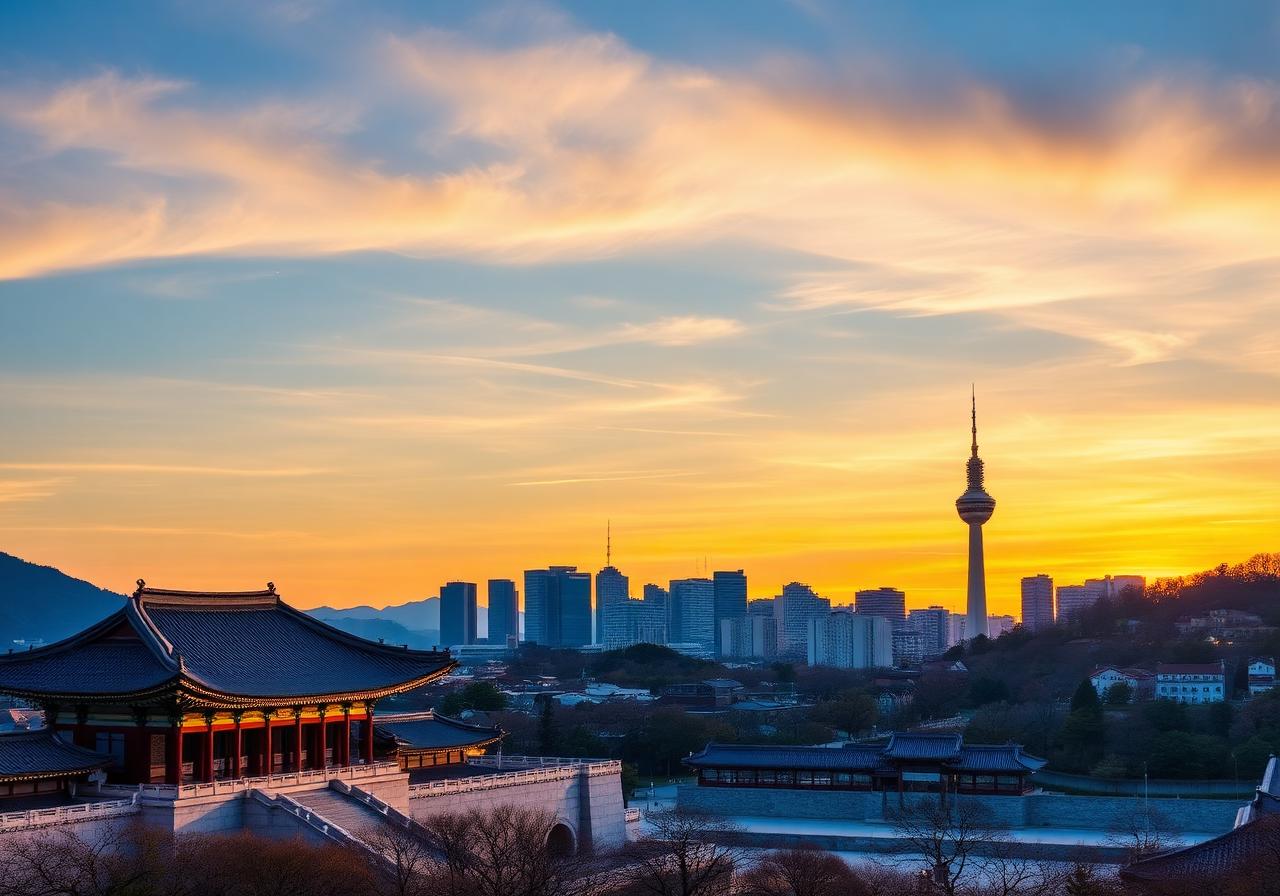
Gyeongbokgung Palace
Standing at the northern end of Sejong-daero, Gyeongbokgung serves as the architectural soul of Seoul, where the rhythmic tap of traditional drums and the vibrant silk of Hanbok bridge a 600-year gap between the Joseon Dynasty and the modern city.
What to expect
Gyeongbokgung is an expansive grid of granite courtyards and ornate wooden pavilions anchored by a mountain backdrop. Upon entering through the towering Gwanghwamun Gate, you encounter the Geunjeongjeon (Throne Hall), the palace’s most magnificent structure, where kingly audiences were held under intricately painted ceilings. Beyond the main halls lies the Gyeonghoeru Pavilion, an elevated wooden structure overlooking a shimmering lotus pond, perfect for reflection. The Hyangwonjeong Pavilion, situated on a small island reached by a delicate arched bridge at the northern end of the grounds, offers the most tranquil escape, especially during the cherry blossom season or the heavy, lush green of summer.
History & significance
Built in 1395, three years after the founding of the Joseon Dynasty, Gyeongbokgung functioned as the primary royal residence. The name translates to "Palace Greatly Blessed by Heaven." It was systematically destroyed by fire during the Japanese invasions of the 1590s and lay in ruins for nearly three centuries. Following massive 19th-century reconstructions and subsequent restorations in the late 20th century, the complex now stands as a symbol of Korean resilience and the central pillar of royal heritage.
Practical tips
- Changing of the Guard: The Royal Guard Changing Ceremony takes place at the Gwanghwamun Gate at 10:00 and 14:00 daily (except Tuesdays). Arrive 15 minutes early for a clear view of the vibrant uniforms and traditional instruments.
- Admission: Tickets are approximately 3,000 KRW, but entry is free if you are wearing a Hanbok. Many rental shops surround the palace, making this highly recommended for photo opportunities.
- Know the Schedule: The palace is closed every Tuesday.
- Pacing: The site is massive. Wear comfortable shoes and prioritize the central throne hall before wandering toward the quieter northern gardens.
Getting there
Located in Jongno-gu, the palace is most easily accessed via Gyeongbokgung Station (Seoul Subway Line 3). Use Exit 5, which offers direct access to the palace’s secondary entrance, bypassing the main gate crowds. Alternatively, the area is well-serviced by dozens of public bus lines stopping directly in front of Gwanghwamun Square.
Nearby
- Bukchon Hanok Village: A ten-minute walk east, this hillside neighborhood features hundreds of traditional hanok houses. It is best navigated via the steep alleys off Bukchon-ro.
- Tosokchon Samgyetang: Located just west of the palace walls on Jahamun-ro, this famous restaurant is the place to eat samgyetang (ginseng chicken soup), a restorative, deeply savory meal that feels particularly authentic in this historic district.
- National Folk Museum of Korea: Housed within the palace grounds, this museum provides essential context for the daily life and seasonal rituals practiced during the Joseon era.