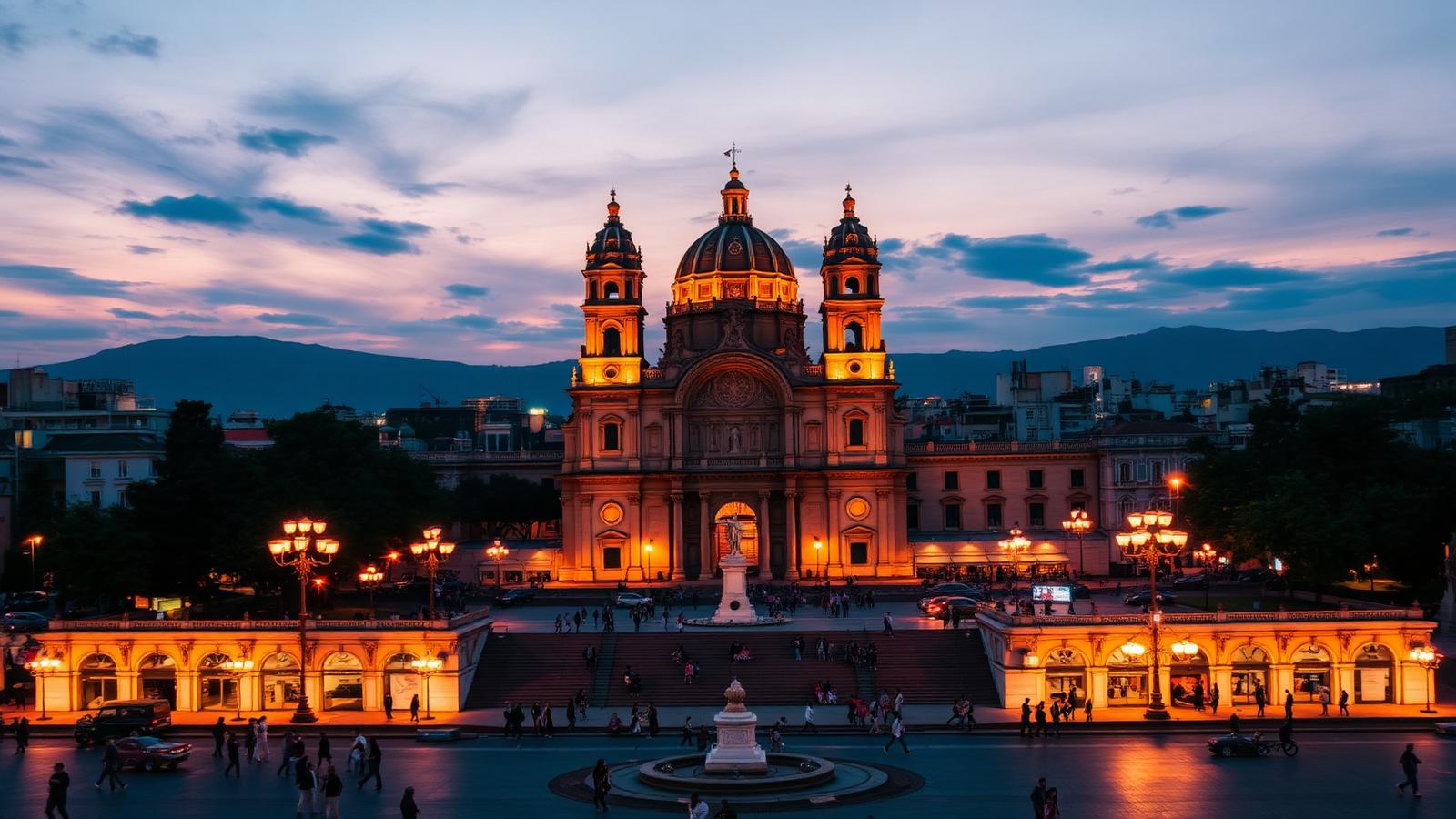
The morning heat ripples over the black asphalt of Avenida México, but inside the sprawling warehouses of the Santa Teresita neighborhood, the air smells strictly of cedar oil and old paper. While Mexico City’s vintage markets have been picked clean by global sourcing agents, Guadalajara remains a heavy-lidded vault of mid-century excess. This is the heart of the Mexican Mod—a specific, trippy intersection where space-age optimism met the heavy textures of pre-Hispanic brutalism. Here, the furniture doesn't just sit; it swaggers.
The Pop-Art Ghosts of Bazar de Antigüedades
The epicenter of this subculture is the Bazar de Antigüedades y Coleccionables (Avenida México 2110). Unlike the manicured boutiques of Roma Norte in the capital, this is a dense, high-ceilinged labyrinth where patience is the only currency that matters. To walk these aisles is to trace the lineage of the 1968 Olympics—an event that fundamentally altered Mexican design, introducing Op-Art patterns and primary-colour palettes into the national consciousness.
Sifting through the racks, an amateur eye might see clutter, but the discerning collector finds silk shift dresses by El Palacio de Hierro from the mid-sixties, featuring acid-bright geometrics that mimic the muralist movement. The "Mod" aesthetic here isn't a British import; it is a homegrown evolution. Look for the "Made in Mexico" tags on heavy wool ponchos cut with sharp, Courrèges-inspired silhouettes, or vinyl handbags in saturated oranges and magentas that have survived half a century of Tapatío sun without fading.
Sculptural Cedar and Space-Age Chrome
Guadalajara was always a city of carpenters. By the 1960s, those artisans were bored with colonial aesthetics and began churning out furniture that looked like it belonged on a lunar colony. Along the side streets branching off Avenida México, shops like Gaba Antique specialize in these heavy-duty relics.
The prize finds are the "Butaque" chairs reimagined through a mid-century lens—heavy sabino wood frames upholstered in original Naugahyde or rough-textured weaves. Unlike the flimsy flat-pack vintage found in Europe, the Mexican Mod movement favoured weight. Look for coffee tables with thick volcanic stone tops and chrome legs, or the iconic "Acapulco" style chairs in their original 1960s iterations, which used thicker, more tactile PVC cords than the modern reproductions sold in garden centres today.
The Vinyl Vaults of Calle Mezquitán
The aesthetic of the era is inseparable from its soundtrack. A twenty-minute walk from the main antique strip leads to the dustier corners of Calle Mezquitán, where the record stalls are dominated by Nueva Ola (New Wave) pressings. This was the era of Enrique Guzmán and Angélica María, but the real treasures are the garage-rock 45s by bands like Los Dug Dug’s.
In stalls hidden behind stacks of Lucha Libre masks, one can find the psychedelic 1960s covers of México Canta magazine. These publications are the blueprints for the Mod look: beehive hairdos, thick eyeliner, and short-hemmed tunics staged against the backdrop of Luis Barragán’s modernist architecture. Collectors specifically hunt for the Orfeón record label pressings—their sleeve art remains some of the most striking graphic design work in Latin American history, heavy on distorted typography and neon-pink photography.
Santa Tere’s Sartorial Time Capsule
While Avenida México holds the heavy furniture, the surrounding streets of the Santa Teresita neighbourhood (known locally as Santa Tere) host a frantic, weekly ritual. On Sundays, the street markets become a tactical exercise in vintage hunting. This is where the local "Chicas Mod" source their daily uniforms.
The inventory here is less curated and more chaotic. Amidst the stalls of fresh pitaya fruit and sizzling carnitas, you might find a pair of 1970s platform boots by Calzado Canadá—the legendary Guadalajara shoe brand that once defined the city’s industrial output. The leather is thick, the heels are architectural, and the durability is legendary. It is a reminder that during the 1960s and 70s, Guadalajara wasn't just consuming culture; it was manufacturing the very tools of the rebellion.
The Brutalist Backdrop: A Walkable Gallery
Shopping for the Mod aesthetic in Guadalajara is amplified by the city’s built environment. To understand the furniture in the shops, one must look at the buildings around them. The Colonia Americana and Lafayette districts are packed with "Functionalist" houses featuring porthole windows, curved concrete balconies, and mosaic murals that mirror the patterns found on the vintage silk scarves at the markets.
The Hotel Carlton, designed by Manuel González Rul, stands as a towering example of the era's ambition. Its lobby remains a masterclass in the period's love for scale—massive open spaces, integrated art, and the kind of low-slung lounge furniture that dealers on Avenida México spend their lives trying to acquire. Walking these streets in a pair of vintage Mexican-made Chelsea boots isn't just a fashion choice; it is an immersion into a specific, high-contrast moment in history that the rest of the world has largely forgotten.
If you go
Bazar de Antigüedades y Coleccionables is most active on Sundays, but many of the permanent storefronts along Avenida México are open Monday through Saturday from 11:00 to 19:00. Cash is mandatory for the best negotiating leverage. For transport, use the MiBici bike-share system to navigate the flat, grid-like streets of the Americana and Lafayette districts. If searching for textiles, bring a small magnifying glass to check for the distinctive tight-weave of 1960s Mexican cotton—a hallmark of quality that modern fast-fashion cannot replicate. Stay at the Casa Habita, a 1940s mansion with a 1960s glass-tower addition that perfectly bridges the city's architectural eras.