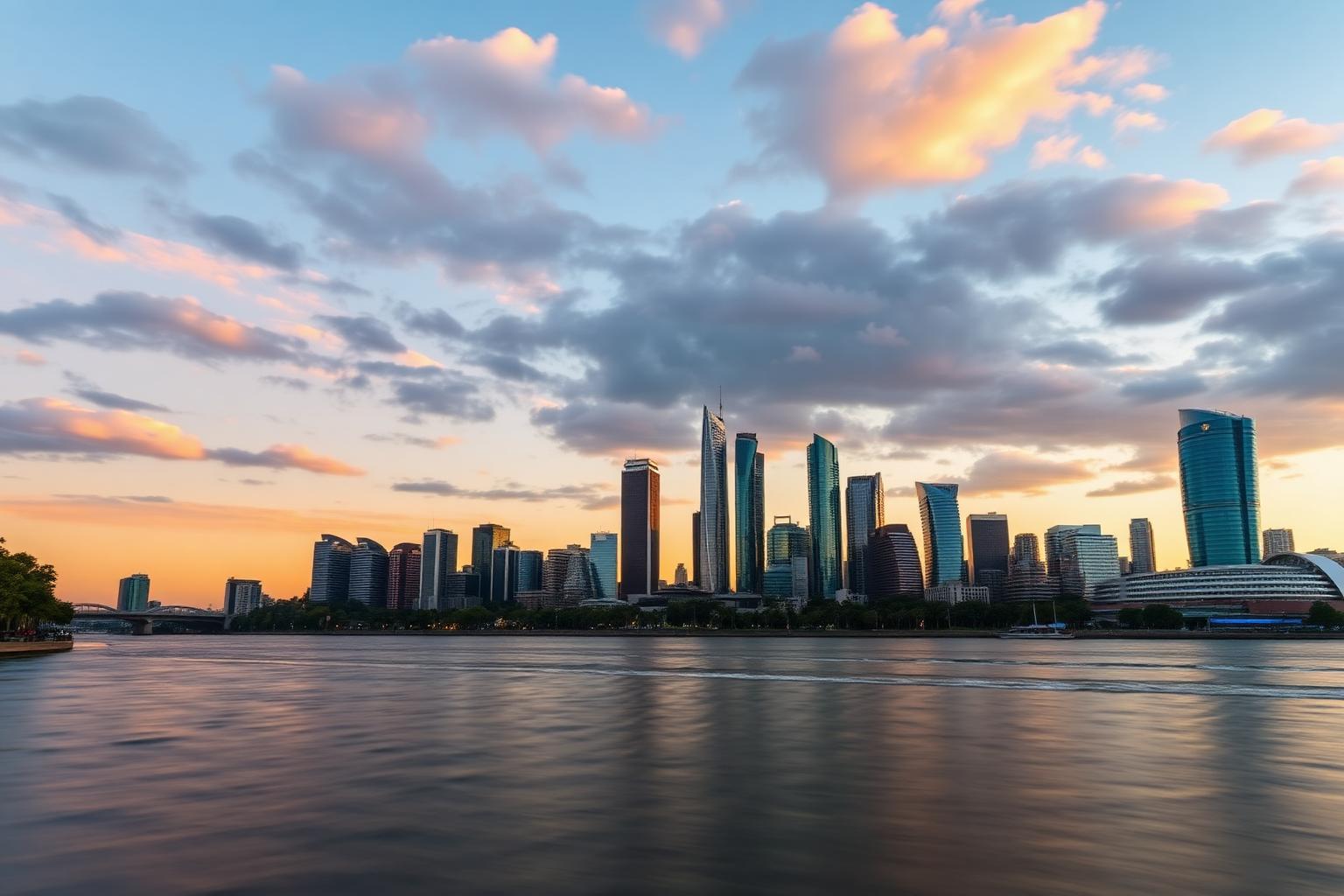
The journey begins at Perth Station, platform seven. As the Fremantle Line train pulls away from the city’s glass-tower skyline, the limestone and salt air of the Indian Ocean begin to take hold. Within thirty minutes, the Perth hills fade into the rearview and the train halts at the end of the line—a 1907 federation-style station defined by its red brickwork and timber valances. Stepping onto the platform, the humidity drops and the "Fremantle Doctor"—the reliable afternoon sea breeze—rattles the palm fronds. This is a city built on the sweat of convicts and the ambition of gold-rush merchants, preserved in amber and best explored entirely on foot.
The West End: A Victorian Time Capsule
From the station, a five-minute walk leads into the West End, a twenty-block conservation area that represents perhaps the best-preserved 19th-century port streetscape in the southern hemisphere. Walking down High Street toward the Round House, the architecture is a dense thicket of stuccoed facades, pediments, and wrought-iron lace.
Stop at the intersection of High and Mouat Streets. Here, the former P&O Hotel and the ornate Bank of New South Wales building stand as monuments to a time when Fremantle was the first port of call for every mail steamer from Europe. Unlike the glass-and-steel homogeny of central Perth, the West End feels tactile. The limestone glows a pale honey colour under the Western Australian sun. Peer into the windows of Moore & Moore on Henry Street; once a merchant warehouse, it now functions as a gallery and cafe where the scent of roasting coffee competes with the smell of old timber beams.
High-Visceral History at Fremantle Prison
Walk east, away from the water, until the gentle incline of The Terrace gives way to the imposing gatehouse of Fremantle Prison. Built by convicts in the 1850s to house themselves, this UNESCO World Heritage site is a grim masterpiece of colonial engineering.
The guided "Doing Time" tour is the essential entry point. It avoids the sanitised version of history, instead focusing on the claustrophobic reality of 1.2-metre by 2.1-metre cells. The air inside the limestone walls remains notably cooler than the outside temperature, and the silence of the Main Cell Block is heavy. Look for the artwork in the cells of the 19th-century prisoners—intricate, desperate etchings of ships and religious icons. For those with a stronger constitution, the evening Torchlight Tour delves into the more macabre side of the prison’s history, including the gallows where the State’s last executions were carried out as recently as 1964.
The Science of the South Terrace Flat White
Fremantle’s modern identity is inextricably linked to the post-war influx of Italian and Greek immigrants. This heritage solidified on South Terrace, famously known as the Cappuccino Strip. While the strip has its share of tourist traps, the coffee culture here remains a serious, almost scientific pursuit.
Gino’s, located on the corner of South Terrace and Bannister Street, is the spiritual home of this movement. Established by Gino Saccone in 1983, it retains the atmosphere of a classic European espresso bar. Order a flat white—the quintessential Australian coffee—and watch the world go by from the pavement tables. The milk should be micro-foamed to a glossy sheen, concealing a double shot of dark, nutty roast underneath.
If the crowds at Gino's are too thick, walk two minutes south to Chalkys Espresso Bar on High Street. It occupies the shadow of the Round House and serves a more modern, third-wave brew using beans from local roaster Dukes. The "precise science" here involves weighing every shot and timing every extraction to ensure the citrus notes of the beans aren't lost to the heat.
Markets, Buskers, and Barramundi
No weekend visit to the port is complete without navigating the Fremantle Markets. The Victorian-era building, dating back to 1897, features a vast leadlight entrance and a bustling interior that smells of cinnamon, fresh ginger, and leather.
Avoid the mass-produced souvenirs and head straight for the Yard. This is the food hall where the diversity of the city is on full display. Look for the Levi’s Doughnuts stall for a traditional German-style Berliner, or head to Michele’s Crepes for a savoury Galette.
Outside the market gates on Henderson Street, the air is usually filled with the sounds of buskers. Fremantle has a reputation as a training ground for world-class musicians; it is not uncommon to find virtuoso guitarists or indie folk bands playing for change. From here, it is a ten-minute stroll down to Fishing Boat Harbour. At Kailis’ Fish Market Cafe, skip the generic options and order the grilled Barramundi or local Fremantle sardines. Eat them on the pier, keeping a sharp eye on the silver gulls that have turned food-theft into an art form.
Sunset at the Round House and Bathers Beach
As the afternoon light turns gold, head back toward the ocean to the Round House—Western Australia’s oldest public building. Originally a gaol, it sits atop Arthur Head with a commanding view of the Indian Ocean. Every day at 1:00 PM, a volunteer fires the time cannon and drops the time ball, a tradition formerly used by mariners to calibrate their chronometers.
Below the Round House lies Bathers Beach, a rare stretch of urban sand where the water is shielded by the breakwaters of the harbour. It is the perfect place to watch the sun sink into the sea, a sight that never fails to draw a quiet crowd. On the way back to the train station, make a final stop at the Esplanade Hotel. The heritage-listed hotel, with its long white balconies, has hosted everyone from royalty to rock stars. A quiet pint of local Little Creatures Pale Ale in the beer garden provides a fitting bookend to the day.
If you go
Transport: The Fremantle Line runs every 15 minutes from Perth Station. Use a SmartRider card or buy a "DayRider" ticket for unlimited travel on the Transperth network.
Timing: Visit on a Friday, Saturday, or Sunday to experience the Fremantle Markets at full volume. The Prison is open daily from 9:00 AM to 5:00 PM (later on tour nights).
Footwear: The West End and the walk to the Prison involve roughly 5 to 7 kilometres of walking on limestone and pavement; wear comfortable shoes.
Essentials: The Western Australian sun is unforgiving even in winter. Bring a hat and a refillable water bottle; there are public drinking fountains at the Esplanade Park and the Markets.