Florence Cathedral (Il Duomo)
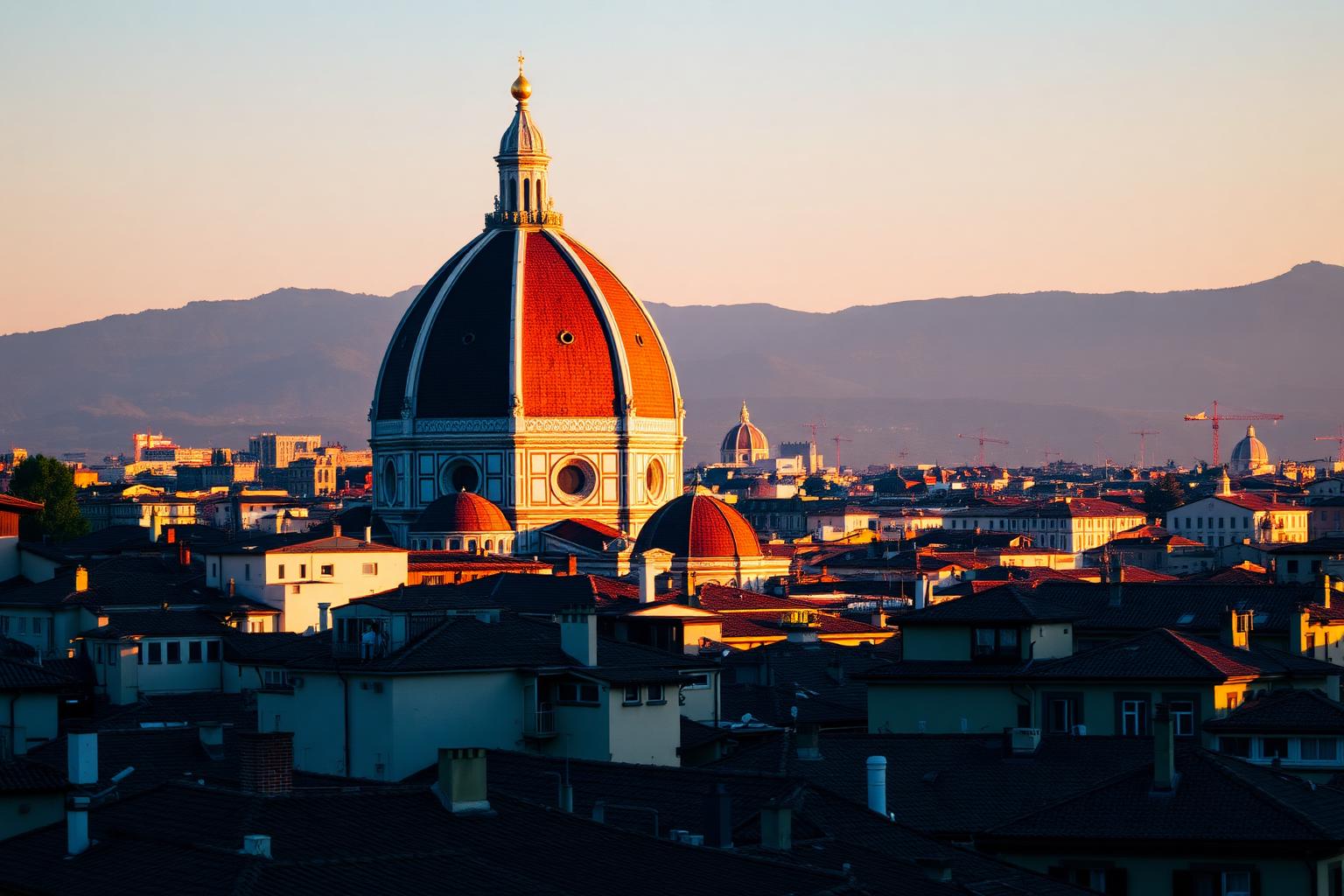
Dominating the Tuscan skyline with its iconic, terracotta-tiled silhouette, the Cattedrale di Santa Maria del Fiore is not merely a church; it is the physical manifesto of the Italian Renaissance.
What to expect — what visitors actually see/do
The aesthetic experience of the Duomo is defined by stark contrasts: the exterior is a riot of polychrome marble—shades of white from Carrara, green from Prato, and pink from Maremma—while the interior feels surprisingly cavernous and austere. Upon entering, eyes are immediately drawn upward toward the underside of the dome, which features Giorgio Vasari and Federico Zuccari’s massive fresco, The Last Judgment.
Most visitors come to climb. Ascending the 463 steps to the lantern requires endurance, as the path winds through the narrow "interspace" between the inner and outer shells of Brunelleschi’s dome. At the top, you are rewarded with an unobstructed, 360-degree panoramic view of Florence’s terracotta rooftops and the surrounding Apennine foothills. Down at street level, the complex includes the Baptistery—famous for Ghiberti’s bronze "Gates of Paradise"—and Giotto’s Bell Tower, which offers a different perspective of the cathedral’s structure.
History & significance — brief background
Construction on the cathedral began in 1296, but the project remained famously stalled for decades because no one knew how to roof a space of such immense span without the use of Gothic flying buttresses. Filippo Brunelleschi solved this in 1420 by inventing a self-supporting double-shell dome design that required no scaffolding. This engineering feat, completed in 1436, marked the definitive end of the Middle Ages and the birth of modern architectural ingenuity.
Practical tips — opening hours norms, tickets, queues, best time of day
- Tickets: Entry to the cathedral floor is free, but the line is often hours long. To climb the dome, you must purchase a Brunelleschi Pass online at least 3-4 weeks in advance, as time slots sell out rapidly. This pass also covers the Baptistery, the Bell Tower, and the Opera del Duomo Museum.
- Queues: Aim for an 8:30 AM arrival to beat the mid-day heat and the worst of the cruise-ship crowds.
- Dress Code: The Cathedral is a functioning place of worship. Shoulders and knees must be covered; guards will deny entry to those wearing tank tops or short shorts.
- Physicality: The climb is steep, narrow, and claustrophobic. It is not recommended for those with heart conditions, respiratory issues, or vertigo.
Getting there — neighbourhood, transport
The Duomo is located in the heart of the Centro Storico. Because the historic center is a restricted traffic zone (ZTL), there is no direct vehicular access. It is best reached on foot from the Santa Maria Novella train station, a flat 10-minute walk via Via de' Panzani and Via de' Cerretani.
Nearby — 2-3 sights or eats within walking distance
- Museo dell'Opera del Duomo: Located just behind the cathedral, this is arguably the most underrated museum in the city. It houses the original gold-plated Baptistery doors and Michelangelo’s late Pietà.
- Sbrino – Gelatificio Urbano: A short walk toward the river leads to this artisanal gem. Skip the brightly colored tourist mountains of gelato and try their seasonal, natural flavors.
- Piazza della Repubblica: A five-minute walk away, this bustling square is the site of the ancient Roman forum and home to Caffè Gilli, perfect for a standing espresso to watch the city pass by.