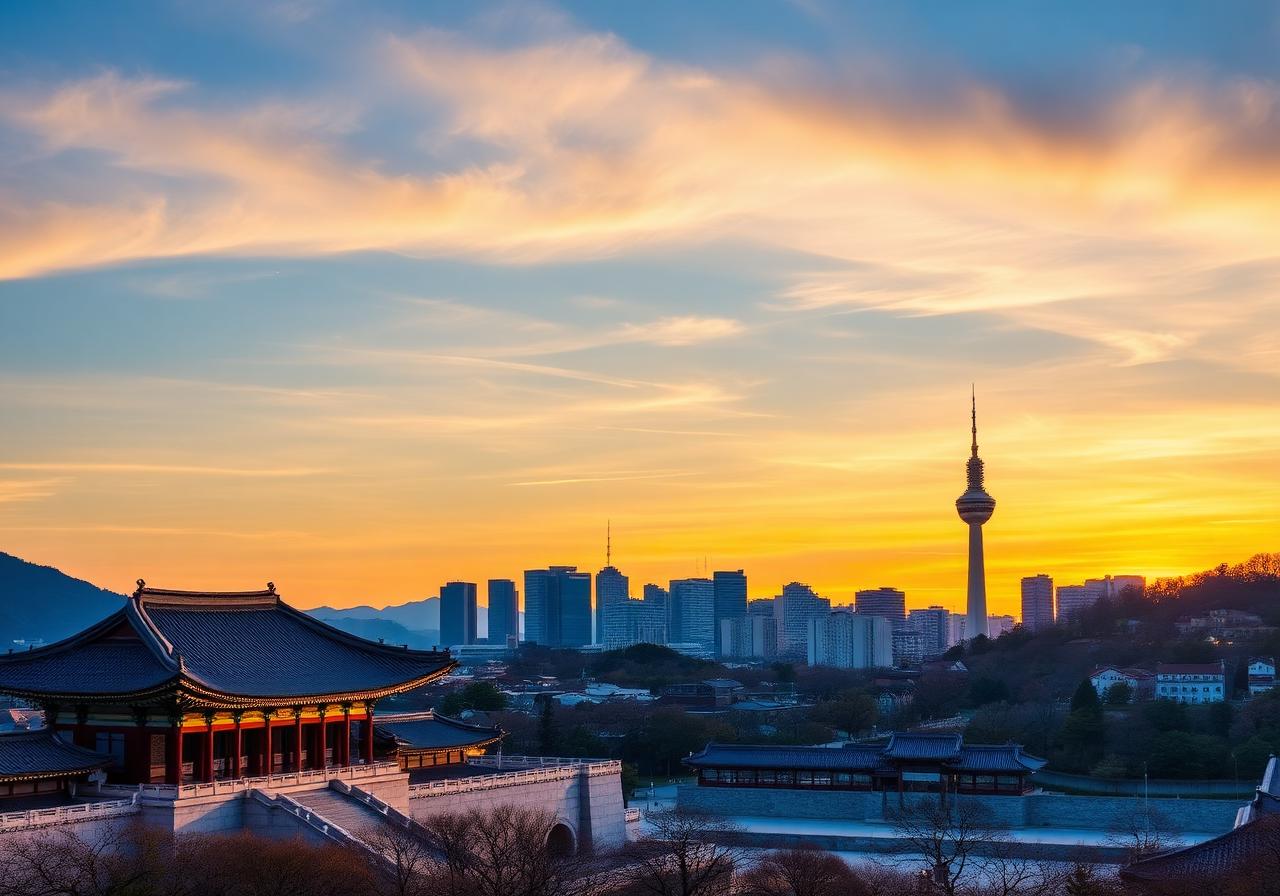
The silver skin of the Dongdaemun Design Plaza (DDP) does not glow with the warmth of a traditional hearth. Instead, it hums with the cold, lunar radiance of 45,000 unique aluminium panels. In December, when the Siberian winds whip through the canyons of Seoul’s Jongno-gu district, Zaha Hadid’s neo-futurist behemoth transforms. While European squares lean into the nostalgia of gingerbread and hand-carved wood, the DDP Christmas Market chooses the aesthetic of the next century. This is a festive gathering reimagined as a high-design trade show, where the scent of spiced tea competes with the ozone of LED light installations.
The Silver Ship and the Light Forest
Standing at the intersection of Eulji-ro, the DDP looks less like a building and more like a mercury droplet frozen mid-splatter. Architect Zaha Hadid designed it without a single straight line, creating a fluid landscape that feels untethered from the chaotic wholesale markets surrounding it. During the festive season, the exterior serves as the canvas for Seoul Light DDP, a massive projection mapping show that turns the building’s curves into a shifting digital sea.
The market itself occupies the cavernous interiors of the Design Lab and the open-air Oulim-square. It is an intentional departure from the "rustic" holiday trope. Instead of pine boughs, there are acrylic trees; instead of carols played on a lutenist’s strings, there is a synth-heavy soundtrack curated by local DJs. The atmosphere is crisp and deliberate, a testament to Seoul’s obsession with "K-Design"—a movement that prioritises sharp minimalism and functional art.
Avant-Garde Ornaments and Local Craft
The stalls here are curated selections from the city’s most promising industrial designers and small-scale studios. You will not find mass-produced plastic baubles. Instead, shoppers browse the creations of brands like OIMU, a Seoul-based design project that reinterprets traditional Korean incense and stationery for a modern desk. Their matches and incense sticks, scented with sandalwood and citrus, are packaged in boxes that look like museum artefacts.
For those looking for physical decor, the market often features metalwork from the nearby Euljiro workshops—an area traditionally known for hardware stores that has lately birthed a new wave of "Newtro" (new-retro) art. Look for hand-poured soy candles from Soohyang, specifically their "Itaewon 565" scent, or architectural jewellery by Archi-Poly, where earrings echo the sweeping parabolic curves of the DDP itself. Every item sold here serves as a rebuttal to the disposable nature of modern festive shopping.
Culinary Innovation on a Paper Plate
The food at the DDP Christmas Market ignores the standard turkey-and-stuffing fare. In keeping with the high-concept theme, the offerings are a hybrid of Korean street food staples and hyper-modern presentation. One might find Bung-eo-ppang (fish-shaped pastry) filled not just with traditional sweetened red bean, but with Earl Grey cream or molten gruyere cheese.
Local vendors like Fritz Coffee Company—the darlings of Seoul’s third-wave coffee scene—frequently make appearances, serving pour-overs with beans sourced from direct-trade farms in El Salvador. To eat, seek out the Tteokbokki elevated with truffle oil or the "Somsatang" (cotton candy) clouds that are spun into the shapes of glowing LED-lit flowers. It is food designed to be photographed against the backdrop of the DDP’s curving staircases, as much a visual statement as a meal.
The Seoul Light Festival and Digital Cheer
The shopping is merely the prelude to the main event: the 10-minute projection sequence that begins every hour on the hour after sunset. Previous years have seen collaborations with media artists like Refik Anadol, who uses AI to turn the DDP’s surface into a swirling vortex of colour. It is a communal experience, with crowds gathering in the sunken plaza, faces upturned and illuminated by the blue-white glare of the building.
Inside the Design Lab, the festive spirit is bolstered by "Design Walk" exhibitions. These are often interactive, allowing visitors to use VR headsets to "paint" digital ornaments onto a virtual tree or engage with kinetic sculptures that move in response to the ambient noise of the crowd. It is a clinical, beautiful kind of cheer, stripped of the sentimentality of the 19th century and replaced with the optimism of the 21st.
The Souvenirs of Tomorrow
Before leaving, visitors often gravitate toward the DDP Design Store, a permanent fixture that expands during the market. Here, the "K-Design" philosophy reaches its peak. You can find "Hangeul" clocks where the time is spelled out in Korean characters using minimalist typeface, or gravity-defying vases by Studio PESI.
The gift-wrapping services here are an art form in themselves. Eschewing the traditional red-and-green paper, many stalls use Bojagi (traditional Korean wrapping cloth) made from translucent, high-tech fabrics or recycled industrial materials. It is a way of honouring the past while looking firmly at a sustainable, tech-driven future—a fitting microcosm for Seoul itself.
If you go
Dates: Typically from mid-December through to New Year’s Day. The Seoul Light projections usually run from 6:00 PM to 10:00 PM.
Location: Dongdaemun Design Plaza (DDP), 281 Eulji-ro, Jung-gu, Seoul. Take the Subway Line 2, 4, or 5 to Dongdaemun History & Culture Park Station, Exit 1.
What to Bring: A high-capacity power bank for your phone; the cold temperatures combined with the constant photography of the light shows will drain batteries within hours.
Pro Tip: After the market closes, walk five minutes to the Gwangjang Market. It provides the perfect gritty, traditional counterpoint to the DDP’s polish, where you can warm up with a bowl of Hand kalguksu (knife-cut noodles) made by weavers who have occupied the same stalls for forty years.