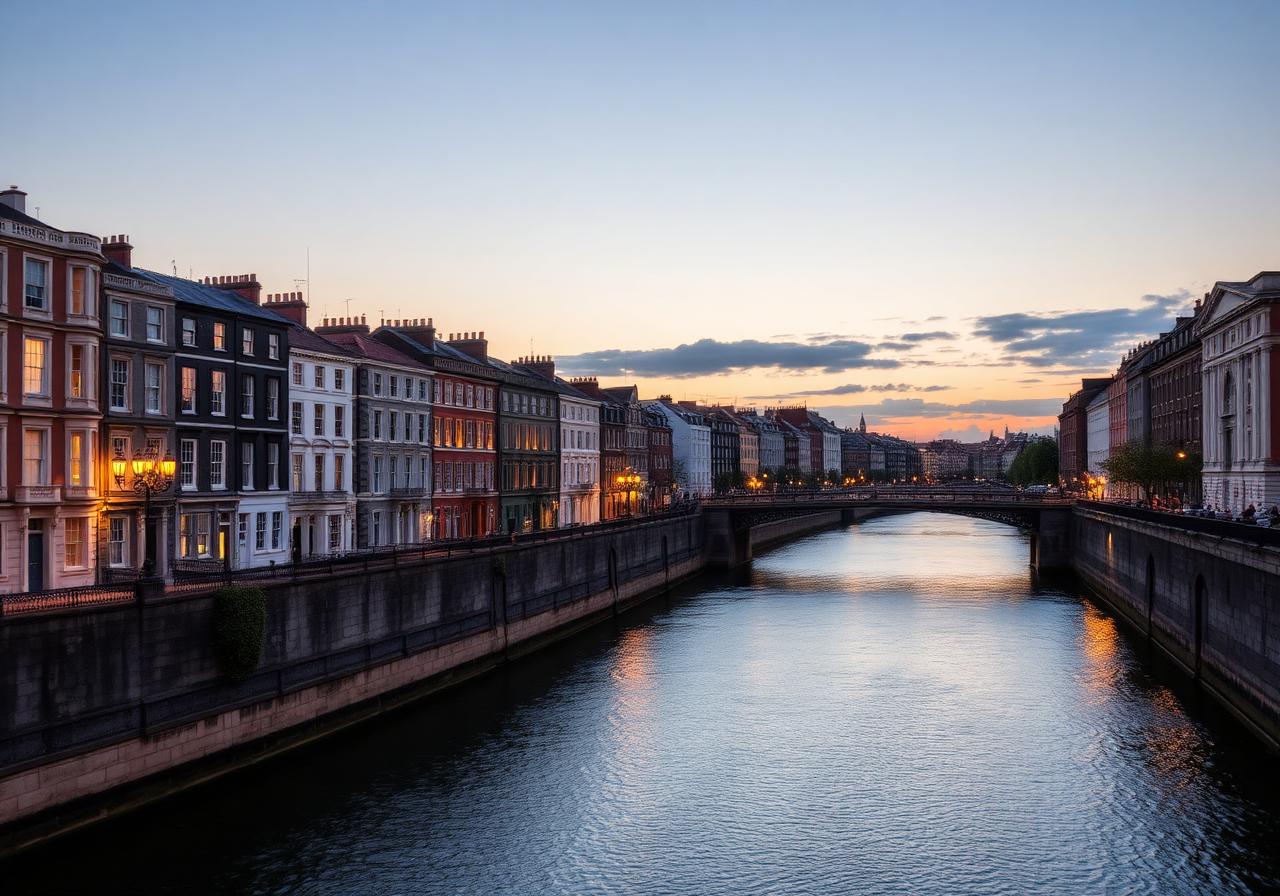
The DART train pulls out of the tunnel between Lansdowne Road and Sandymount, and suddenly the grey suburban sprawl of Dublin dissolves. The horizon line of the Irish Sea asserts itself, shifting from leaden slate to a bright, mineral teal. This is the beginning of the run toward Dalkey, a medieval village that serves as the gateway to what locals cheekily, yet not entirely inaccurately, call the Amalfi Coast of Ireland. Here, the granite cliffs drop sheer into the surf, and the air carries the scent of gorse and salt spray.
The Ascent of Coliemore Road
The journey begins at Dalkey Station. Turn left away from the heritage centre and head toward the sea. The route quickly transitions from boutique shopfronts to the winding narrows of Coliemore Road. This is one of the most expensive stretches of tarmac in the country, but the grandeur is accessible to any pedestrian.
To the left, the sea-lashed rocks of Coliemore Harbour provide the first major vantage point. In the summer months, Ken the Ferryman operates a small boat from these stone steps to Dalkey Island. If the tide is right, you might spot the resident herd of wild goats or the grey seals that bob in the Muglins, a treacherous outcrop marked by a white beacon. The sound here is distinctive: the rattle of rigging on yachts and the constant, rhythmic slapping of the Irish Sea against the Victorian stonework.
The High Road and Cat’s Ladder
Leaving the harbour, the path turns upward. Follow the signs for Vico Road, a serpentine stretch of asphalt that hugs the cliffside. The elevation gain is quick, and the payoff is immediate. On the inland side, high granite walls draped in jasmine and honeysuckle shield the estates of residents like Enya and Bono. On the seaward side, the bay opens up in a massive, sweeping arc.
For a physical challenge, find the ‘Cat’s Ladder’ near the intersection of Torca Road. These steep stone steps were once used by quarrymen to reach the granite works that built much of 19th-century Dublin. Climbing them feels like a secret passage into the canopy. At the top, you find the house where George Bernard Shaw lived as a boy. The view from his front gate across the Muglins is said to have inspired his lifelong disdain for the mundane.
The Summit of Killiney Hill Park
The hike reaches its peak within the gorse-heavy expanses of Killiney Hill Park. This is public land, donated to the people in 1887 to celebrate Queen Victoria’s Jubilee. Follow the dirt trails—slick with pine needles and granite dust—up to the Obelisk. Standing at 170 metres above sea level, the 360-degree panorama is the best free show in the county.
To the north, the curve of Dublin Bay reaches toward the Hill of Howth; to the west, the purple silhouettes of the Dublin and Wicklow Mountains rise like sleeping giants. On a clear day, the serrated peaks of Snowdonia in Wales are visible across the water. The air up here is sharper, carrying the smell of crushed bracken. Look for the 'Wishing Steps,' a set of stone tiers where local lore promises a wish granted to those who can walk up and down them with their eyes closed.
Descent to the Vico Baths
From the obelisk, follow the southern ridge downward towards the sea. The descent is steep, requiring a bit of footwork over exposed roots and loose stone until you rejoin Vico Road. Look for a nondescript green metal gate and a small, unassuming sign. Beyond this lies a narrow, concrete staircase that tunnels under the DART railway line.
This is the entrance to the Vico Baths, Dublin’s most iconic sea-swimming spot. It isn't a leisure centre; it is a series of concrete platforms, handrails, and a solitary changing shelter bolted directly onto the rocks. The water here is deep, clear, and exceptionally cold. Even in the depths of January, you will find "the regulars"—weathered locals in dry robes who treat the daily plunge as a secular religion. The experience is raw. There are no lockers or lifeguards, just the roar of the water and the sight of the Bray Head looming in the distance like a miniature Sugarloaf.
Mediterranean Moods at Sorrento Point
After a swim, or at least a bracing splash of saltwater on the face, walk back toward Dalkey via Sorrento Road. This stretch captures the southern European aesthetic that gives the area its nickname. Palms and Monterey cypresses frame the views of the sea, and the architecture shifts toward Italianate villas with terracotta tiles.
Stop at Sorrento Point, a small landscaped park at the tip of the headland. It is often quiet, bypassed by those rushing back to the village. It offers a final, low-level perspective of the Dalkey Sound. If the sun is dropping, the light hits the granite of the Martello Tower on the island, turning the grey stone to gold. It is a place of profound stillness, interrupted only by the occasional shriek of a herring gull.
If You Go
Transport: Take the southbound DART from Dublin city centre (Pearse or Tara Street stations) to Dalkey. The journey takes approximately 30 minutes. Gear: Wear sturdy trainers or hiking shoes; the trails on Killiney Hill can be muddy and uneven. Bring a swimsuit and a lightweight towel if you intend to brave the Vico. Food: Before starting, grab a coffee and a sourdough cardamon bun from Begley & Co in Dalkey village. Post-hike, find a snug corner in Finnegan’s of Dalkey for a pint of Guinness and a bowl of seafood chowder. Timing: Early morning is best to avoid the weekend crowds. The Vico Baths are most accessible at mid-to-high tide; at low tide, the entry involves more scrambling over slippery seaweed.