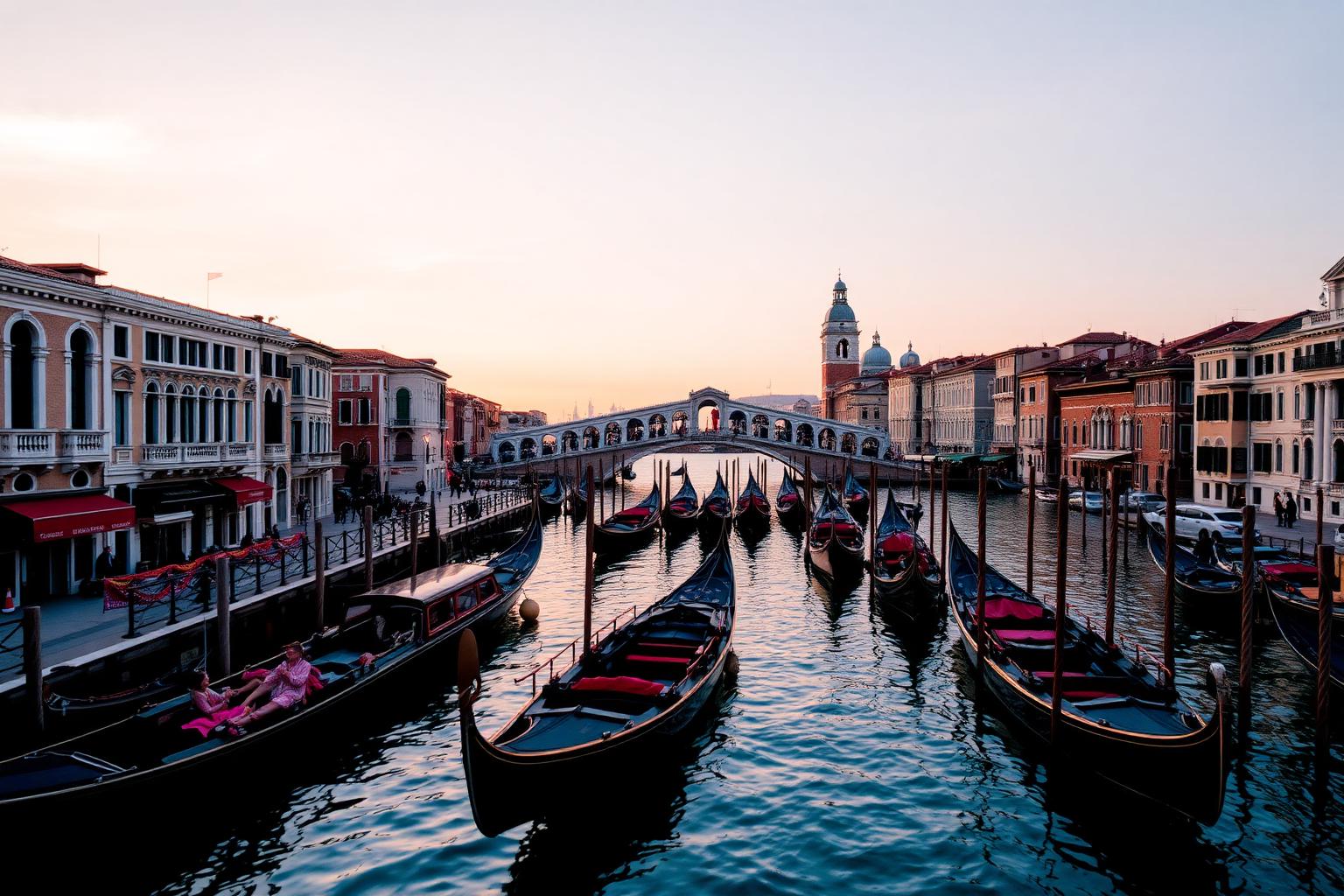
Venice is a city built on the anxiety of disappearing, which explains why its best interiors are crowded with objects meant to last forever. While the stalls around the Rialto Bridge offer flimsy, candy-coloured trinkets made for the transitory tourist, the real weight of Venetian history sits behind the heavy timber doors of San Polo. Here, the air smells of floor wax and salty damp, and the light hits glass not as a cheap sparkle, but as a deep, saturated glow. At Antichità Zanco, the chaos of the lagoon is traded for the disciplined geometry of the 1950s and 60s. This is not a shop for souvenirs; it is a repository for the heavy-hitters of the furnaces—pieces that once anchored the sideboards of the Venetian haute bourgeoisie and now represent some of the most stable investments in the decorative arts.
The San Polo Sanctum: Finding Antichità Zanco
Located a short walk from the Campo San Polo, Antichità Zanco operates with a quiet gravity that distinguishes it from the neon-lit galleries of San Marco. The proprietor, Marco Zanco, sources almost exclusively from local estate liquidations. This is a critical distinction for the serious collector. Venetian families of the mid-20th century didn't buy 'art glass' as a speculative asset; they commissioned sets of fazzoletto (handkerchief) vases and heavy sommerso bowls to match the velvet of their sofas.
The shop itself is a dense thicket of walnut furniture and tarnished silver, but the glass is the protagonist. To find the investment pieces, one must look past the chandeliers. The mid-century era in Murano was defined by a shift from the rococo flourishes of the past toward a modernist, architectural rigour. At Zanco, these pieces are often tucked away in glass-fronted cabinets, stripped of the 'Made in Italy' stickers that define modern mass production, relying instead on the unmistakable weight of leaded silica and the signature of the master.
Identifying the Heavies: Seguso and the Sommerso Technique
Archimede Seguso is the name that carries the most currency in these aisles. A master who bridged the gap between traditional craft and mid-century modernism, Seguso’s work from the 1950s is defined by the sommerso (submerged) technique. This involves layering different colours of glass without them bleeding into one another, creating a suspended, translucent effect that mimics a solid block of frozen light.
When inspecting a Seguso piece at Zanco, check the base. Authentic mid-century pieces will show 'shelf wear'—fine, honest scratches from decades of sitting on marble mantels. Look for the merletto (lace) patterns, where Seguso used incredibly fine threads of glass to create a mesh inside the vessel. In the late 1950s, he experimented with acidic greens and deep burnt oranges; these palettes are currently the most sought-after by interior designers looking to ground a minimalist room with a single, aggressive pop of colour.
The Venini Standard: Fulvio Bianconi and Carlo Scarpa
If Seguso is the soul of San Polo glass, Venini is the intellect. Founded by Paolo Venini, the furnace became a laboratory for the 20th century’s greatest architects. At Antichità Zanco, the holy grail is a piece by Fulvio Bianconi, particularly his Pezzato series—vases made of a patchwork of multicoloured glass squares.
Equally vital is the work of Carlo Scarpa. Before he became Italy’s most celebrated brutalist architect, Scarpa was the creative director at Venini. His Battuto glass—pieces that have been ground on a wheel to create a hammered, matte texture—defies the typical Venetian obsession with shine. To hold a Scarpa piece is to feel the vibration of the stone-cutter’s wheel. These pieces are rare finds in the San Polo district, often snapped up by Milanese dealers, but Zanco’s deep ties to local palazzos mean they occasionally surface, hidden behind a stack of 19th-century plates.
Sourcing from the Estate: Why Local Provenance Matters
The advantage of buying a 1960s Murano piece from a dealer like Zanco over a contemporary showroom is the quality of the glass mix. Post-war Murano glass had a high lead content, giving it a refractive index and a physical heft that modern ecological regulations have somewhat muted.
Collectors should look for 'cased' glass—where a vibrant interior colour is wrapped in a thick layer of clear crystal. In the 1960s, designers like Flavio Poli for Seguso Vetri d’Arte perfected this 'ice-block' look. These pieces were designed to catch the low, winter light of the Venetian lagoon. When sourcing, ask about the provenance. A piece that came from a single-family home in the Cannaregio or Dorsoduro districts is less likely to be a later 'in the style of' reproduction. Marco Zanco’s inventory is a testament to the era when the Maestro was king, and the furnace was a place of high-stakes chemistry.
Curation and Care: Bringing the Lagoon Home
Collecting mid-century glass requires an eye for silhouette. The 1960s moved away from the 'drunken' shapes of the early century toward tall, slender 'bottleneck' vases and heavy, asymmetric ashtrays (which now function as sculptural catch-alls). At Zanco, look for the 'inciso' technique—finely engraved parallel lines that give the glass a textile-like handle.
Shipping these heavyweights is the final hurdle. Venice is a city of porters and barges, and Zanco is well-versed in the rigours of international transport. Do not attempt to carry a 1960s Seguso bowl in a carry-on; the density of the glass often triggers security concerns, and the risk of shearing is high. Professional packing, involving custom-fit foam and double-walled crating, is the only way to ensure a piece of the 1964 Biennale makes it to a London or New York sideboard intact.
If you go
Antichità Zanco Address: San Polo 2260, 30125 Venice. Timing: Traditionally open Tuesday through Saturday, with a midday break for riposo between 12:30 and 15:30. Pro-tip: Visit on a Tuesday morning when new estate finds are often being uncrated. Avoid wearing bulky backpacks; the aisles are narrow and the inventory is fragile. Bring a small LED torch to check for internal 'flea bites' or stress fractures in the glass layers—a common flaw in improperly cooled mid-century pieces. For post-purchase celebrations, the nearby Cantina Do Mori (Calle Do Mori) serves the city’s best francobollo sandwiches and cold Malvasia.