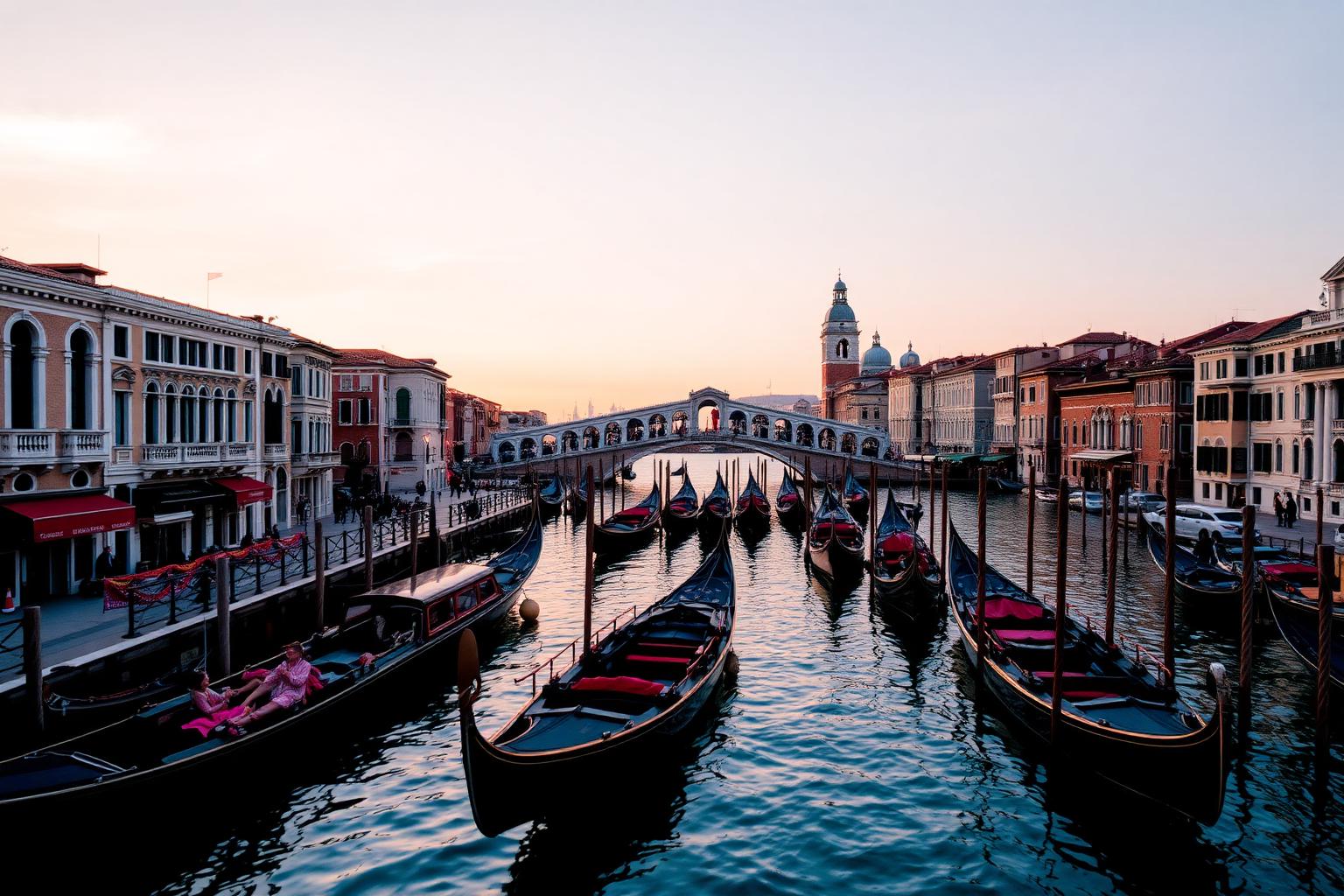
The mist off the Grand Canal has a way of turning the city’s terracotta into a blur of grey, but behind the heavy timber doors of a discreet San Polo storefront, the light behaves differently. It fractures through cobalt Sommerso bowls and shimmers off the gold-leaf flecks of a 1950s cordonato d'oro vase. This is not the garish, multi-coloured tourist glass that clutters the stalls near the Rialto. This is the domain of Antichità Zanco, a cavernous repository where the 20th century’s most daring experiments in silica and heat remain stacked in magnificent, dusty tension.
At Antichità Zanco, located on Calle dei Nomboli, the collection is less a shop and more an archive of the Venetian elite. Here, the stock is predominantly sourced from the palazzos and modernist canal houses of families who commissioned pieces directly from artists like Fulvio Bianconi or Napoleone Martinuzzi. For the collector, it offers a distinct opportunity: investment-grade glass with an iron-clad provenance, stripped of the gallery markups of Mayfair or Manhattan.
The Architecture of the Sommerso Technique
To understand the weight of a piece at Zanco, one must understand the Sommerso—or 'submerged'—technique, perfected by the master Archimede Seguso in the mid-1930s and refined throughout the 1950s. Unlike the thin, flimsy imitations found in airport gift shops, a genuine Seguso Sommerso piece feels deceptively heavy. It is created by layering different colours of molten glass, one inside the other, without allowing the pigments to mix.
Look specifically for Seguso’s 'Bullicante' work on the shelves here. This involves even patterns of air bubbles trapped within the thick walls of the glass. In a true vintage piece, these bubbles will be uniform and intentional, often paired with a deep manganese violet or a forest green. When held to the San Polo sunlight, a genuine Seguso should show no seams; the transitions between the glass layers should be as smooth as a polished pebble from the Lido.
Identifying the Venini Avant-Garde
While Seguso mastered mass and weight, Venini—founded by Paolo Venini—brought an architectural rigour to Murano. At Antichità Zanco, the prize finds are often the Pezzato pieces designed by Fulvio Bianconi in the early 1950s. These are composed of geometric "rags" of glass fused together in a patchwork quilt of transparency.
Identifying a Venini piece in a crowded antique shop requires a sharp eye for the 'acid stamp'. Turn the vase over; on the base, you are looking for a circular, etched mark that reads 'Venini Murano Italia' in lowercase. Note the serif on the letters. If the mark feels too sharp or deep, it may be a later acid-etching on a contemporary piece. The authentic mid-century mark is often faint, worn down by decades of sitting on marble credenzas. A 1960s Venini Fazzoletto (handkerchief) vase in a rare 'latticinio'—the milk-glass filigree—remains the gold standard for any serious collector looking to anchor a room.
The Estate Sourcing Edge
What sets Antichità Zanco apart from the glitzier showrooms on Murano is its proximity to local inheritance. Venice is a city of shrinking populations and vast domestic inventories. When an apartment in more residential districts like Dorsoduro or Cannaregio is liquidated, the heavy mid-century lighting and sculptural glass often end up here.
This means you are likely to stumble upon 'seconds' or 'prototypes' that never made it to the mass market. Look for pieces by Dino Martens for Aureliano Toso. His Oriente series is famously chaotic, incorporating strands of copper, 'zanfirico' filigree, and star-shaped 'murrine'. These pieces were often experimental and unsigned, but the expert eye of the dealer at Zanco can verify the specific weight of the glass and the way the 'pontil'—the scar where the glassblower’s rod was detached—has been ground down. A smooth, concave, and highly polished pontil is the hallmark of a master house.
Tactile Cues and the Cold-Working Test
Buying vintage glass is a physical exercise. At Zanco, don't be afraid to ask to handle the pieces. Authentic mid-century Murano glass has a specific thermal property; it should feel surprisingly cold to the touch and take longer to warm to your body temperature than modern, soda-lime glass.
Listen to the glass as well. Give a thick-walled piece a gentle flick with a fingernail. Lead-based glass from the mid-century era should produce a clear, sustained 'ring' rather than a dull thud. This is particularly important when hunting for the 1960s designs of Alessandro Mandruzzato, whose geometric, faceted vases rely on crisp, sharp edges that should show almost no 'flea bites' or minute chips. In the world of high-end glass, a chip doesn't just lower the price; it breaks the tension of the entire design.
Investing in the 1970s Revival
While the 1950s are the current market darlings, savvy collectors at Zanco are looking toward the late 1960s and early 1970s. This era saw the rise of 'scavo' glass—pieces treated with salts and minerals to look as though they have been unearthed from an archaeological dig. Seguso Vetri d’Arte produced some of the finest examples of this, often in brutalist, chunky forms.
These pieces are currently undervalued compared to the brightly coloured Sommerso vases, but their matte texture and earthy tones make them highly sought after for minimalist interiors. Ask for pieces with the original paper labels—often a small, serrated foil sticker. While glass stamps can be faked, an aged, yellowed paper label from a long-defunct 1970s boutique is a strong indicator of an untouched estate find.
If you go
Antichità Zanco is located at San Polo 2762, on the Calle dei Nomboli. It is a five-minute walk from the San Tomà vaporetto stop. The shop does not keep strictly conventional hours; aim for a mid-morning visit between 10:30 and 12:30, or late afternoon around 17:00 when the owners are most likely to be present. For those purchasing larger lamps or heavy sculptural pieces, the shop can arrange professional shipping via specialized art couriers—do not attempt to carry a 10kg Seguso vase as a carry-on. Nearby, Gelateria Nico on the Zattere offers the perfect spot to sit and review your photographs of potential acquisitions over a Gianduiotto.