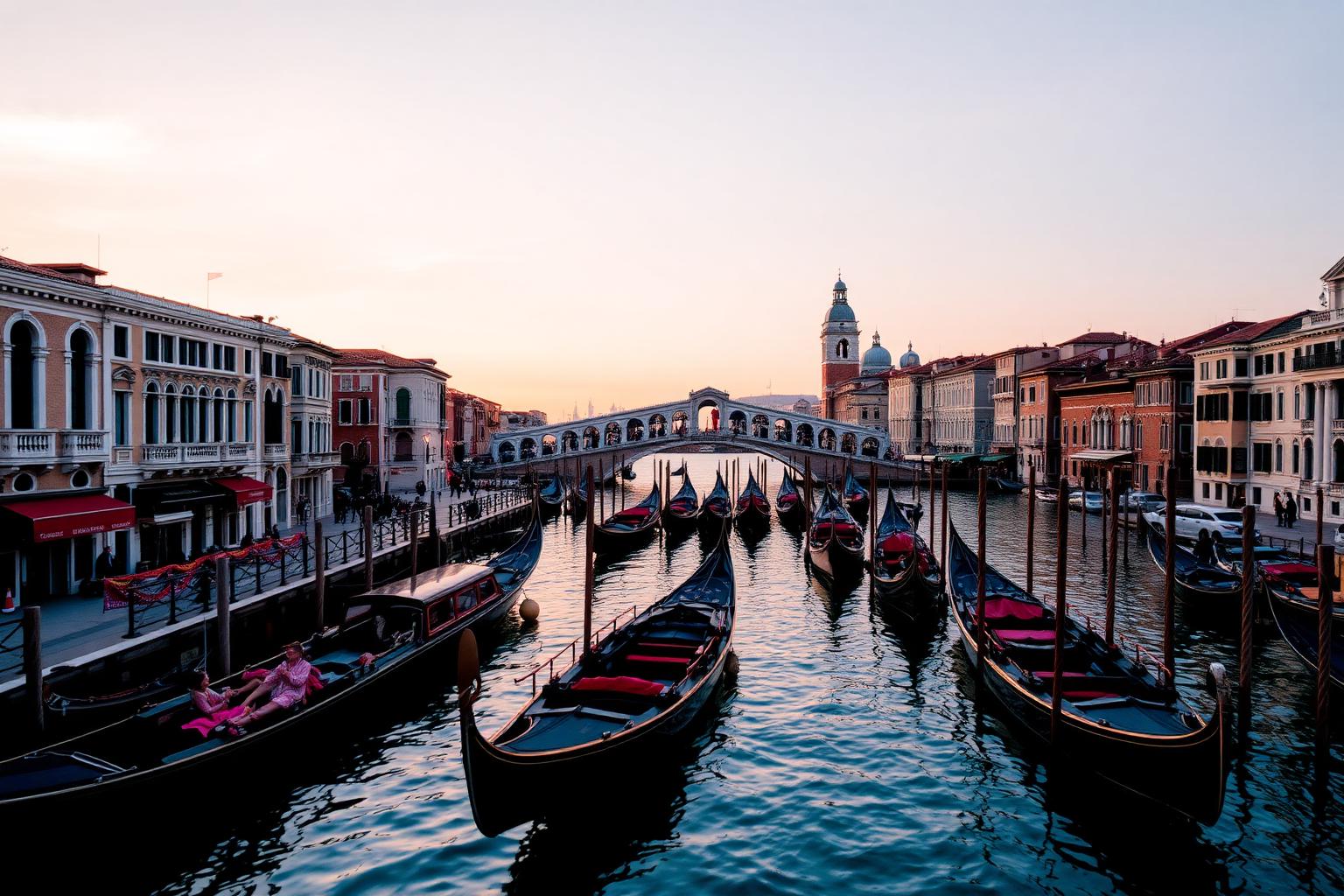
The fog rolls off the Grand Canal and settles into the narrow arteries of San Polo, turning the red-brick facades of the 14th-century palazzos into a monochrome stage set. Inside Antichità Zanco, the atmosphere is considerably warmer. Here, the light of the lagoon is filtered through heavy cylinders of pulegoso glass and refracted by the razor-sharp edges of sommerso vases. There are no plastic gondolas or mass-produced trinkets for the day-tripper. Instead, the shelves hold the heavy-hitting remnants of Venice’s golden age of industry: the 1950s and 60s, a period when the furnace masters of Murano abandoned the ornate baroque for something far more architectural.
The San Polo Repository
Located on Ruga Vecchia San Giovanni, Antichità Zanco functions less like a retail shop and more like a high-stakes library of Venetian craftsmanship. The proprietor, knowledgeable and notoriously discerning, avoids the glass-factory kickbacks typical of the Fondamenta Nove. The inventory is sourced almost exclusively from local estate liquidations—pieces that lived for decades on the mahogany sideboards of Italian families before coming to market.
Sourcing investment-grade glass here requires a tactical eye. Unlike the modern pieces sold in the San Marco boutiques, which are often signed with an electric stylus, vintage mid-century glass frequently lacks a permanent mark. It relied on paper or foil labels that vanished in soapy dishwater decades ago. At Zanco, the pedigree is determined by the "hand"—the weight, the pontil mark on the base, and the specific chemical brilliance of the mineral-tinted glass.
Decoding Archimede Seguso
If the goal is to acquire a piece that anchors a room, Archimede Seguso is the name to hunt. Seguso was the technician’s technician, responsible for the Merletto (lace) technique that defines the 1950s aesthetic. At Antichità Zanco, look for pieces that exhibit the Polvere d’Oro—a technique where gold leaf is shattered within the molten glass to create a subterranean shimmer.
Authentic Seguso from this era is characterised by its impossible lightness and the complexity of its internal patterns. When examining a vase in the shop, hold it to the natural light entering from the street. A true Seguso "ribbed" piece will show no internal bubbles or structural flaws; the symmetry should be absolute. These are not merely decorative objects; they are engineering feats disguised as vessels. Price points reflect this, typically starting in the mid-high hundreds for small bowls and scaling into the thousands for signed sculptural works.
The Venini Geometry
While Seguso represents the romantic heart of Murano, Venini represents its intellectual brain. Under the artistic direction of Carlo Scarpa and later Fulvio Bianconi, Venini moved toward a modernist, almost brutalist geometry. In the crowded corners of Zanco’s back room, one might find a Fazzoletto (handkerchief) vase, or the more sought-after Bottiglia Inciso.
The Inciso series is particularly relevant for the serious collector. These pieces are cold-cut with a lathe after the glass has cooled, resulting in a matte, frosted texture that feels more like stone than silica. Check the base for a three-line acid stamp: "Venini Murano Italia." This mark was used between 1946 and 1965 and serves as the gold standard for provenance. These pieces don’t shout; they murmur in tones of sage green, deep indigo, and amber, designed to sit quietly in a minimalist interior.
Identifying the Sommerso Technique
For those beginning a collection, the Sommerso (submerged) technique offers the most visible bang for your buck. Popularised by Flavio Poli at Seguso Vetri d'Arte, this method involves layering different colours of glass on top of one another without them mixing. The result is a solid block of transparent glass with a "floating" core of saturated pigment.
In the curated clutter of the shop, look for thick, heavy ashtrays or teardrop vases where a core of royal blue is encased in a layer of uranium yellow, creating a vibrant green transition at the border. The hallmark of a quality sommerso piece is the clarity of the lines. There should be no blurring or bleeding between the layers. If the glass appears cloudy or has a "sickly" iridescence, it is likely a later, inferior imitation from the 1980s. A genuine 1960s Poli piece should have the heft of a paperweight and edges sharp enough to catch the light like a diamond.
Cultivating the Dealer Relationship
Acquiring a masterpiece at Antichità Zanco is a process of curation, not a transaction. The shop is a temple to the passato, and the stock changes only when a notable estate comes to auction or a private door in the Dorsoduro closes for good.
Engaging with the dealer is essential. Ask for "vetro d'autore"—designer glass—rather than just "vintage." Specify a preference for specific masters like Dino Martens or Ercole Barovier. Often, the most significant pieces are not on the main display floor but are kept in the back, reserved for those who demonstrate an understanding of the furnace's history. This is how one moves from buying a souvenir to investing in a piece of Venetian industrial history.
If You Go
Antichità Zanco is located at San Polo 655, Ruga Vecchia San Giovanni. It is a short walk from the Rialto Market. Opening hours can be idiosyncratic; it is best to arrive between 10:30 and 12:30 or after 16:00 when the heat of the day has dissipated. Cash is accepted, but for high-value glass acquisitions, the shop is equipped for secure shipping and bank transfers. Do not expect heavy discounts; the prices here reflect the rarity of the stock and the difficulty of sourcing pristine mid-century pieces in a city where damp and decay are the primary enemies of preservation.