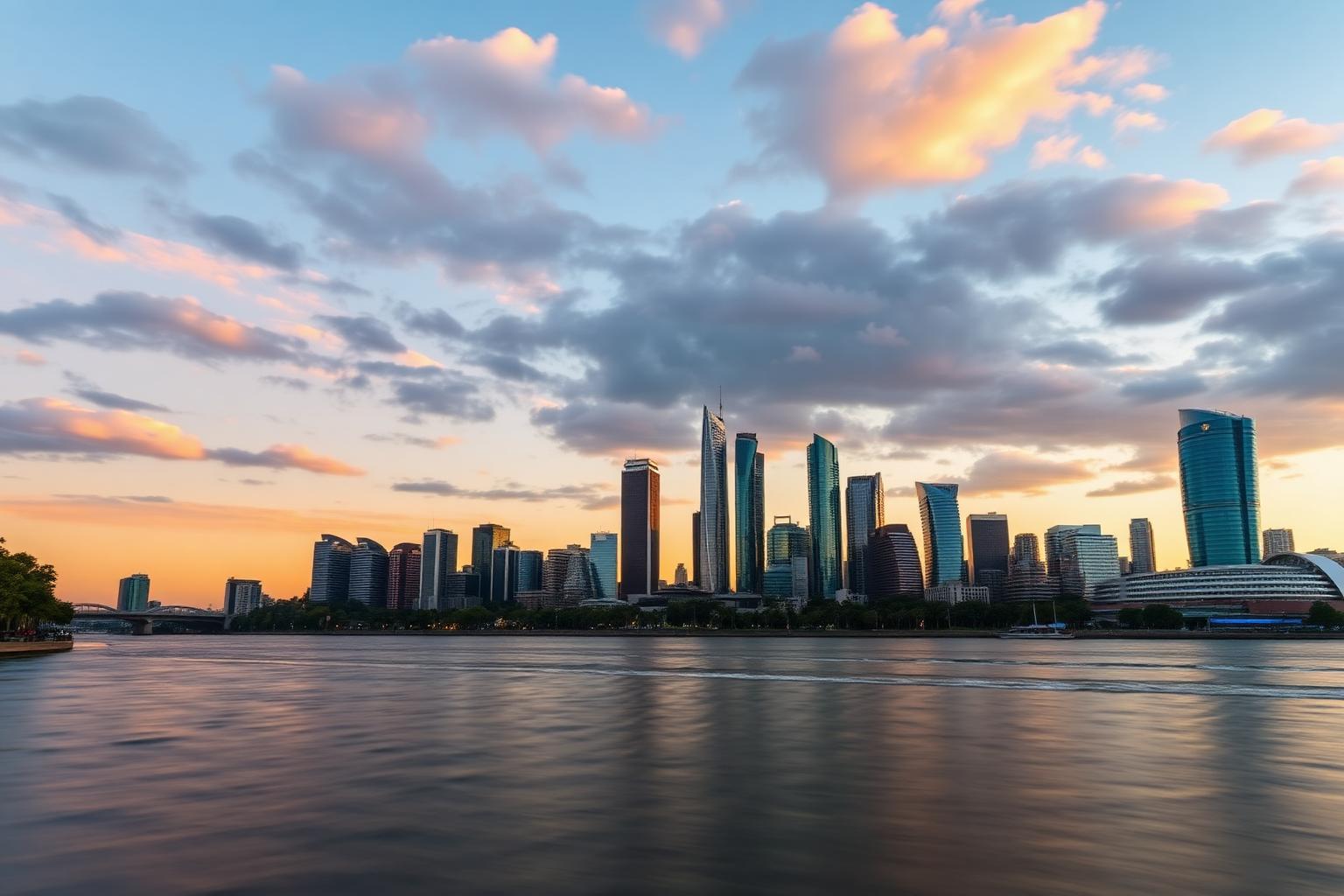
The Fremantle Line train doesn't rumble; it glides. It pulls out of Perth station, leaving behind the vertical glass of the CBD and the brick-and-mortar ghosts of Northbridge, tracing a path through the leafy western suburbs. By the time the carriages reach Swanbourne, the air inside the carriage changes. The AC struggles against the scent of sea salt and sunscreen. Commuters in tailored shirts sit shoulder-to-shoulder with teenagers clutching seven-foot surfboards. At Cottesloe station, the mass exodus begins. It is a three-minute walk from the platform down Forrest Street to the blue horizon, a ritualistic descent toward the most photographed shore in Western Australia.
The Architecture of a Coastline
The approach to Cottesloe beach is dominated by a single, singular silhouette: the Indiana Tea House. Often described as a colonial folly or a sand-castle-turned-monument, the building sits directly on the dunes. With its terracotta roof tiles, white stone facades, and Dutch-gable aesthetics, it looks less like a modern beach club and more like a grand relic of a forgotten empire.
Built in 1996 on the site of the original 1910 timber tea rooms, the Indiana is the focal point of the Fremantle Line commute. It serves as a visual compass. To its north, the "Groyne"—a stone breakwater—creates a sheltered pocket of turquoise water perfect for a 500-metre lap. To its south, the waves pick up near the sculptural arch of the pylon. For those arriving via the 7:15 AM train from the city, the Indiana is the locker room, the landmark, and the eventual reward.
The 8:00 AM Immersion
Perth’s relationship with the Indian Ocean is one of utility rather than just aesthetics. For the locals, the "morning dip" is a prerequisite for productivity. By 8:00 AM, the water is a crisp 20 degrees Celsius. The sand at Cottesloe is remarkably white, the result of ground-down shells and limestone, and it stays cool underfoot even as the sun climbs.
The swim ritual follows a strict geography. Enter the water directly in front of the SLSC (Surf Life Saving Club) towers. Swim out to the buoy, track south toward the pylon—a concrete remnant of a failed 1930s shark net—and back. The water is startlingly clear; it is common to glimpse a pod of bottlenose dolphins or a Port Jackson shark resting on the seafloor. This isn't a leisurely paddle; it’s a high-cadence salt-water baptism before the workday begins.
Breakfast Under the Gables
Once dried off, the crowds migrate toward the arched windows of the Indiana. While the building has seen various culinary iterations, its current life as a curated pop-up and cafe space excels in the high-summer breakfast rush. The interiors are airy, with high ceilings and slowly rotating fans that circulate the "Fremantle Doctor"—the stiff afternoon breeze that defines Perth’s climate, though it arrives as a gentle whisper in the morning.
The order here is non-negotiable: a flat white made with beans from local roasters and a serves of smashed avocado on wood-fired sourdough. For those wanting something more substantial after a heavy swim, the menu often features Shark Bay crab omelettes or local honeycomb atop thick-cut toast. The view from the terrace is uninterrupted. From this vantage point, the Indian Ocean looks like a sheet of hammered silver, stretching 8,000 kilometres west until it hits the coast of Africa.
The Pine-Shadowed Promenade
After breakfast, the heat begins to bake the asphalt of Marine Parade. This is the time to retreat to the shade of the Norfolk Island Pines. These towering, symmetrical trees were planted over a century ago and serve as the beach’s natural canopy. They line the tiered grass banks known as "The Terraces," where locals gather to read the morning paper or watch the first arrivals of the afternoon crowd.
A short walk south leads to the Sculpture by the Sea site (if visiting in March), but the permanent attraction is the heritage architecture. Take a detour down Napier Street to admire the limestone bungalows and Federation-era homes that have survived the modern glass-and-steel boom. It is a pocket of Perth that feels anchored in time, stubbornly refusing to trade its quiet, leafy dignity for high-rise density.
The Return to the City
The beauty of the Fremantle Line commute is the lack of friction. There is no hunting for parking bays along a crowded Marine Parade, no sand-clogged footwells in a rental car. The walk back up the hill to Cottesloe station allows the salt to dry on the skin—a badge of honour for the return journey.
The train ride back to Perth takes exactly 18 minutes. By 10:30 AM, you can be back in the heart of the city, sitting in a boardroom or a boutique hotel lobby, with the faint scent of the Indian Ocean still clinging to your hair. It is Western Australia’s greatest efficiency: the ability to access a world-class coastline with nothing more than a SmartRider card and a towel.
If you go
The Train: Take the Fremantle Line from Perth Station or Elizabeth Quay. Use a SmartRider card or tap-and-go for the roughly $4 AUD fare. The Timing: Aim to arrive at Cottesloe by 7:30 AM to beat the primary heat and the offshore wind. The Coffee: If the Indiana is at capacity, head to Vans on Napoleon Street—a local institution famous for its consistent espresso and bustling atmosphere. The Essentials: Bring a hat and high-SPF sunscreen. The Western Australian sun is fierce, even in the early hours. The Extension: If you have time, continue on the train to the end of the line (Fremantle) to explore the Walyalup Koort district and the historic Fremantle Markets.