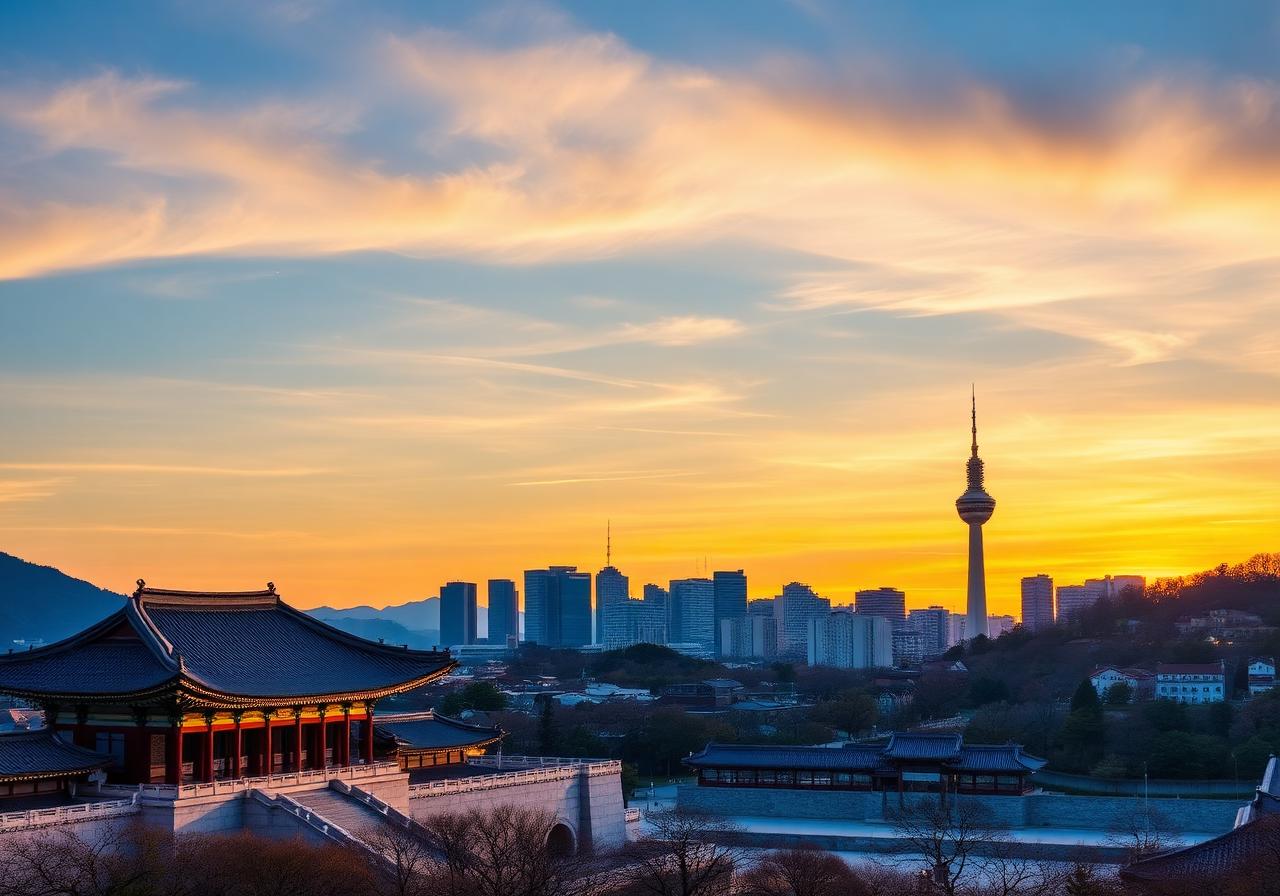
Cheonggyecheon Stream
Seoul’s Cheonggyecheon Stream is an 11-kilometre urban oasis that carves a verdant, sunken corridor through the relentless steel-and-glass grid of the city’s business district.
What to expect
Descending the stone staircases from street level, the roar of Seoul’s traffic instantly fades, replaced by the rhythmic white noise of cascading water. The stream serves as a lush pedestrian artery that allows you to traverse the city center without crossing a single signalized intersection. You will walk on smooth stone paths flanked by shallow, clear water, reeds, and artistic tiling. Highlights include the Cheonggye Plaza waterfall at the western start, the colorful Palseokdam (eight-stone basin) representing the provinces of Korea, and the evening light installations. The atmosphere is deeply democratic; you’ll see salarymen untying their ties for a barefoot stroll, students sketching, and local elderly residents leaning on balustrades to watch the koi swim in the deeper pools.
History & significance
For decades, the Cheonggyecheon was a polluted waterway covered by an elevated concrete highway, a symbol of post-war industrialization. In the early 2000s, the city undertook a radical urban renewal project—demolishing the highway and daylighting the stream. Today, it stands as one of the most successful urban reclamation projects in the world. It is a testament to sustainable city planning, effectively cooling the surrounding downtown temperature by several degrees during the sweltering humid summers.
Practical tips
- Access: The stream is a public space, open 24/7, and completely free of charge. No tickets are required.
- Best time to visit: Arrive at dusk. The stream is transformed by dramatic LED lighting, and the humidity drops, making the walk significantly more comfortable.
- Walking strategy: If you wish to walk the entire 11km, start at Cheonggye Plaza near Gwanghwamun and head east toward the Dongdaemun area. Note that some sections become less "nature-focused" and more industrial as you move further east.
- Accessibility: Most entry points feature stairs, but look for elevators at major cross-streets (like Sejong-daero or Mukjeong-gyo) if you are traveling with a stroller or require accessibility assistance.
Getting there
The stream runs east-west across the Jongno-gu and Jung-gu districts. The most accessible starting point is Cheonggye Plaza, located steps away from Gwanghwamun Station (Line 5) or City Hall Station (Line 1/2). Because the stream cuts through the entire center, you can access it at almost any bridge spanning the waterway—simply look for the marked staircases leading down from the sidewalks of major thoroughfares like Jong-no or Eulji-ro.
Nearby
- Gwangjang Market: Located near the eastern end of the stream, this is Seoul’s premier spot for street food. Try the bindae-tteok (mung bean pancake) or mayak gimbap in a bustling, authentic setting.
- Insadong: A short walk north from the western section of the stream, this neighborhood is the center of traditional Korean crafts, tea houses, and art galleries lining narrow, pedestrian-friendly alleys.
- Seoul City Hall: Located at the western headwaters, the modernist "Wave" building contrasts sharply with the nearby historic Deoksugung Palace.