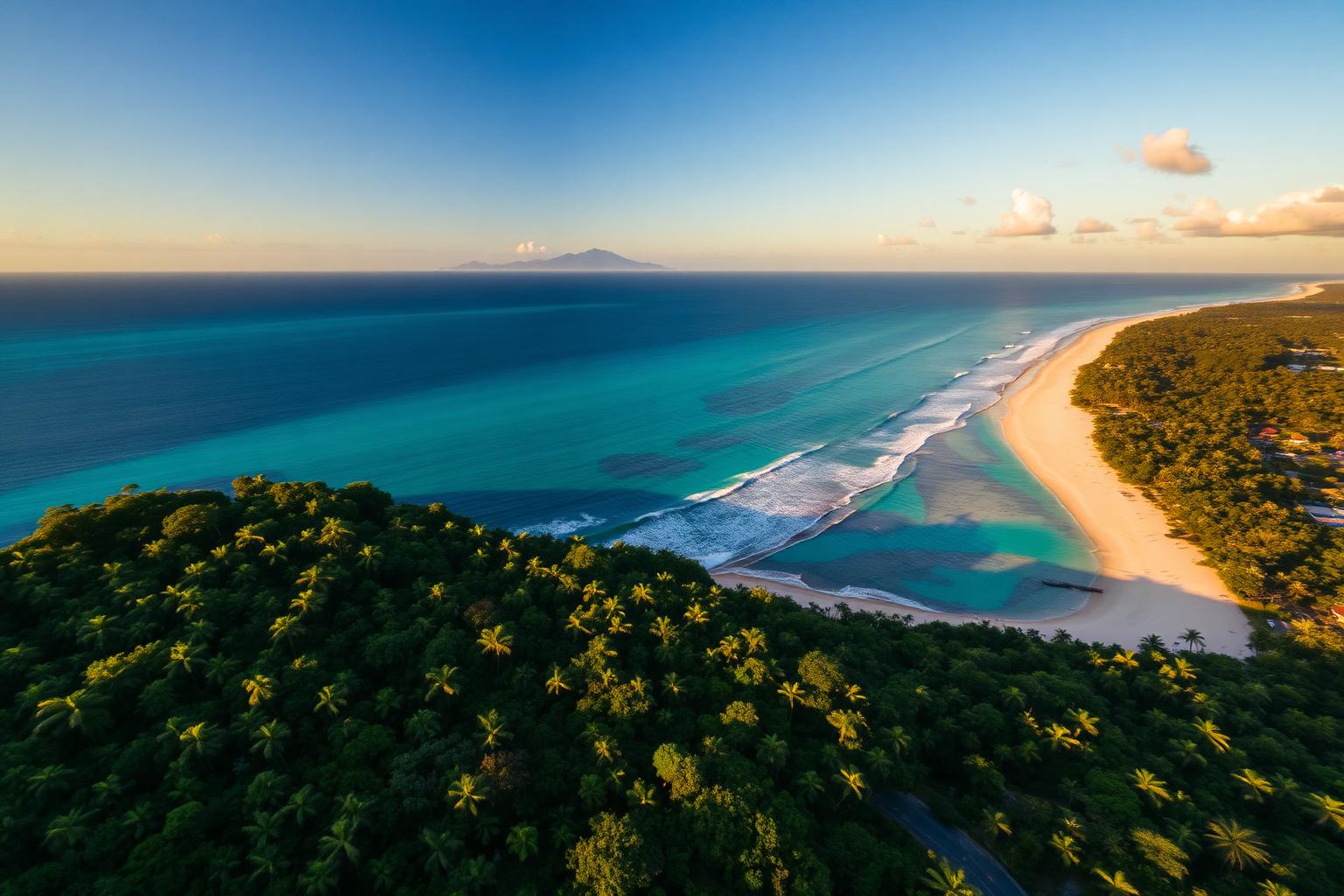
The roar of heavy machinery has long since been replaced by the prehistoric croak of the Great Egret. Thirty years ago, the ground at Smithfield, just north of Cairns, was a kinetic industrial zone—a sand and gravel quarry stripped of its topsoil to feed the construction hunger of Far North Queensland. Today, the 80-hectare Cattana Wetlands serves as a masterclass in ecological patience. Where excavators once clawed at the earth, a complex mosaic of lowland rainforest and ephemeral lagoons now thrives. It is a place of heavy humidity, tea-coloured waters, and a density of birdlife that makes it the premier destination for serious twitchers in the Wet Tropics.
The Industrial Ghost in the Garden
To understand Cattana is to acknowledge its scarred history. Between the 1950s and the 1990s, the site was a primary source of silica and river stone. When the extraction ended, the landscape was a series of deep, sterile pits and compacted tracks. The transformation began in earnest in the mid-2000s when the Cairns Regional Council undertook a massive revegetation project, planting over 100,000 local trees to knit the fragmented ecosystem back together.
The result is a curious topography. The "pits" are now distinct water bodies, each with its own character. The Jabiru Lake and Coot Lake are the largest, flanked by Feather Palm forests that feel remarkably ancient despite their relatively recent planting. Unlike many manicured city parks, Cattana retains a ragged, wild edge. The air smells of decomposing leaf litter and damp earth, and the silence is frequently broken by the frantic, metallic clicking of cicadas.
The Architecture of the Jabiru
The undisputed sovereign of these wetlands is the Black-necked Stork, better known locally as the Jabiru. Standing nearly 1.5 metres tall with a massive black bill and iridescent green-black neck, these birds are the definitive prize for photographers. They are frequent residents of the appropriately named Jabiru Lake, where they can be seen stalking the shallows with a slow, deliberate gait that suggests a high-stakes chess match.
Observers should look for the Jabiru’s distinctive "clattering"—a rhythmic snapping of the beak used during displays. While the birds are tolerant of the boardwalks, they command a wide berth. These are apex predators of the swamp, capable of dispatching large fish and eels with a single, lightning-fast strike. Their presence is the ultimate litmus test for the site’s health; an apex wader requires a robust food chain of frogs, fish, and invertebrates, all of which have returned to Cattana in abundance.
Life on the Lily Pads: The Comb-crested Jacana
While the Jabiru provides the drama, the Comb-crested Jacana provides the whimsy. Also known as "Lilly Trotters," these birds possess grotesquely long toes that allow them to distribute their weight evenly across floating vegetation. In the Coot Lake section, look for the flash of their red fleshy head-combs amongst the expansive carpets of water lilies.
The jacana’s existence is a feat of evolutionary engineering. They seem to walk on water, flickering between lily pads in search of insects. During the breeding season, the males assume the role of primary caregiver, often seen "carrying" their chicks tucked under their wings—an absurd visual where only the tiny, dangling legs of the infants are visible beneath the father’s feathers.
Navigating the Palm Forest and Boardwalks
The infrastructure at Cattana is designed to be as unobtrusive as possible. A 420-metre boardwalk winds through a remnant stand of Feather Palms (Archontophoenix alexandrae), a species that once dominated the coastal plains of the Cairns region before sugar cane farming cleared the land. This is the coolest part of the park, where the canopy closes in and the light filters through in bruised shades of green.
Walking the 2.5-kilometre perimeter circuit takes visitors through several distinct zones. The transition from the open, sun-baked edges of the lakes to the deep shade of the forest occurs in an instant. Along the way, keep an eye out for the Orange-footed Scrubfowl, identifiable by their massive nesting mounds—giant heaps of mulch that can reach heights of two metres. These birds are the "architects of the undergrowth," constantly raking the forest floor and ensuring the nutrient cycle remains fluid.
The Twilight Chorus and Rare Sightings
The best time to witness the wetlands is in the pale light of dawn or the gold-soaked hour before sunset. As the heat of the day breaks, the activity levels spike. The Paperbark forest on the western edge becomes a landing strip for Cattle Egrets and Wood Ducks returning to roost.
For the dedicated birder, Cattana offers more than just the charismatic giants. The Double-eyed Fig-parrot, Australia’s smallest parrot, is a frequent visitor to the fruiting trees along the entrance road. Overhead, the White-bellied Sea Eagle and the Whistling Kite patrol the thermal currents, looking for a lapse in concentration from the water birds below. In the murky depths of the ponds, Freshwater Crocodiles (distinct from their larger, saltwater cousins) occasionally surface, though they are shy and pose little threat if left undisturbed.
If You Go
Getting There: Cattana Wetlands is located on Dunne Road in Smithfield, roughly a 20-minute drive north of the Cairns CBD. There is no public transport that drops you at the gate, so a rental car or taxi is essential.
Timing: Gates are open daily from 6:00 am to 6:00 pm. Visit during the "Green Season" (December to March) for the most dramatic bird activity, though be prepared for high humidity and torrential afternoon rain. The "Dry Season" (May to September) offers cooler temperatures and clearer skies.
Gear: Binoculars are non-negotiable. The boardwalks provide excellent viewpoints, but many of the more timid species stay toward the centre of the lagoons. Wear sturdy, closed-toe shoes and carry a high-quality insect repellent containing DEET; the mosquitoes here are as prolific as the birds and far less welcoming.
Etiquette: Stay on the marked paths and boardwalks. The ecosystem is fragile, and the margins of the lakes are vital nesting grounds. Entry is free, making it one of the best value ecological experiences in Queensland.