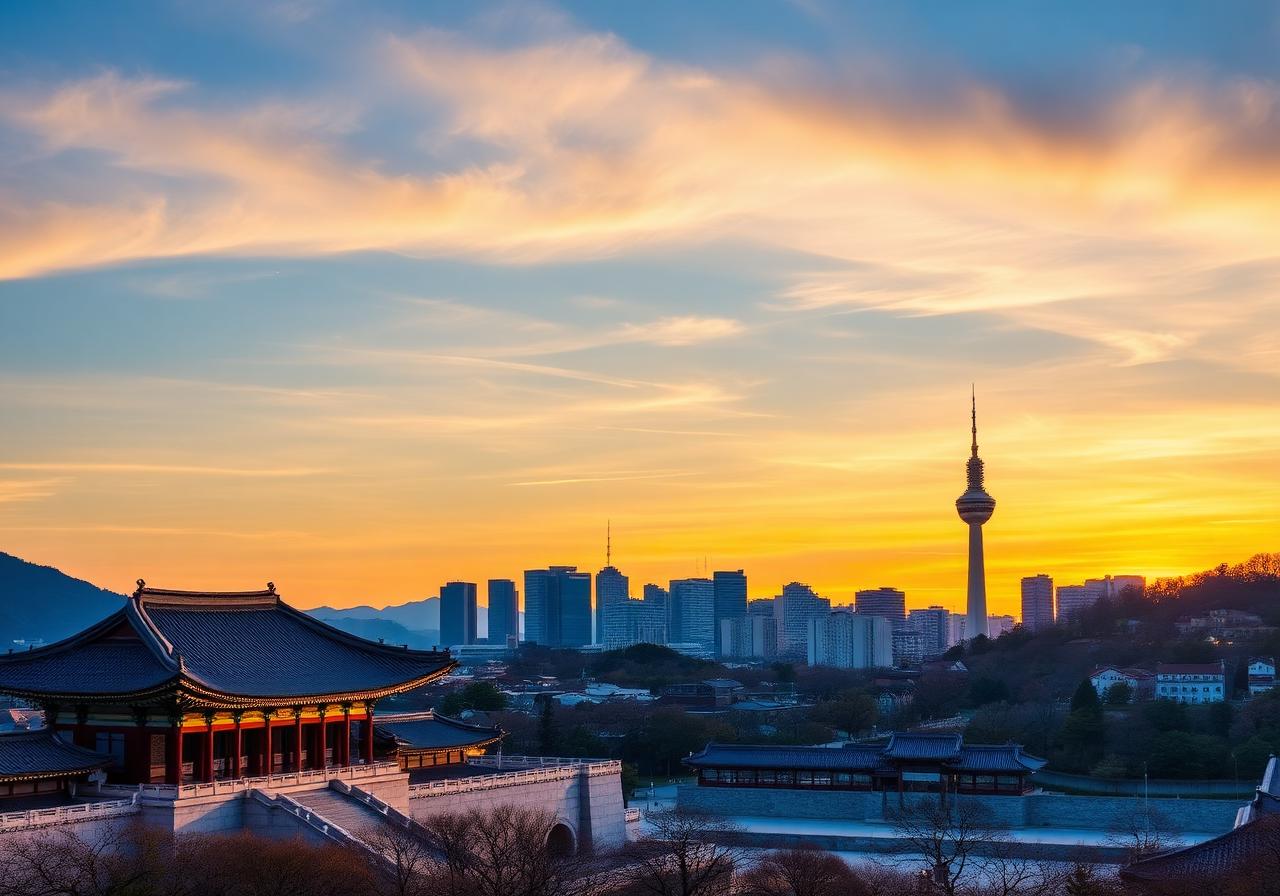
Bukhansan National Park
Bukhansan National Park is the "lungs of Seoul," a rugged, granite-ridged massif that dominates the city’s skyline and serves as the ultimate urban escape for millions of residents. It is one of the only national parks in the world accessible entirely by subway, offering a stark, vertical contrast to the glass towers of the metropolis below.
What to expect — what visitors actually see/do
The park is defined by massive granite peaks—Bukhansan (Baegundae), Insubong, and Mangyeongdae—that require scrambling over smooth stone surfaces with the help of steel handrails. Hikers can expect a mix of steep, well-maintained stone staircases and exposed granite slopes. The hike to the Baegundae Peak summit (836m) is the most popular, rewarding the effort with a panoramic, bird's-eye view of the sprawling Seoul cityscape. Shorter, less intense options include the Bukhansanseong Fortress trail, which follows a winding stone wall through dense forests, and the easier Dule-gil paths that hug the park’s perimeter, perfect for those seeking gentle elevation and temple visits.
History & significance — brief background
Designated a national park in 1983, the area is historically anchored by the Bukhansanseong Fortress. Built across various eras—with major renovations during the Joseon Dynasty in the early 18th century—the 12.7-kilometer fortress wall once protected the capital from invaders. Within the park boundaries, you will encounter numerous Buddhist temples, most notably Seunggasa and Jingwansa, which have served as centers of spiritual life for over a millennium. The park is a microcosm of Korean history, bridging the transition from ancient defensive fortifications to modern meditative retreat.
Practical tips — opening hours norms, tickets, queues, best time of day
Admission to the park is free. The trails open at 4:00 AM (to allow for sunrise hikes) and officially close at sunset; park rangers will discourage entry mid-afternoon on longer routes. Weekends are exceptionally crowded; if you visit on a Saturday or Sunday, expect to be part of a slow-moving procession of hikers. To avoid the crush, target a weekday morning, starting your ascent by 7:00 AM. Wear sturdy, high-grip hiking boots—the granite can be slippery even in dry conditions—and carry more water than you think you need, as local kiosks are sparse once you are deep on the ridgeline.
Getting there — neighbourhood, transport
The park is massive, with multiple entry points depending on your goal. For the main summit (Baegundae), take the Seoul Subway Line 3 to Gupabal Station and board bus 34 or 704 to the "Bukhansanseong Entrance" stop. For the scenic Bukhansan Dule-gil / Ui-dong area, take the Ui-Sinseol Light Rail to Bukhansan Ui Station; from here, it is a short walk to the Baekundae Exploration Support Center trailheads.
Nearby — 2-3 sights or eats within walking distance
- Makgeolli and Pajeon: The area immediately outside the major trailheads, specifically in the Ui-dong and Bukhansanseong neighborhoods, is famous for pajeon (scallion pancakes) and makgeolli (rice wine). Joining the local post-hike tradition at a communal seating restaurant is essential.
- Jingwansa Temple: Located at the western edge of the park, this 1,000-year-old temple is famously quiet and offers a tea service. It is a contemplative alternative to the high-traffic summit trails.