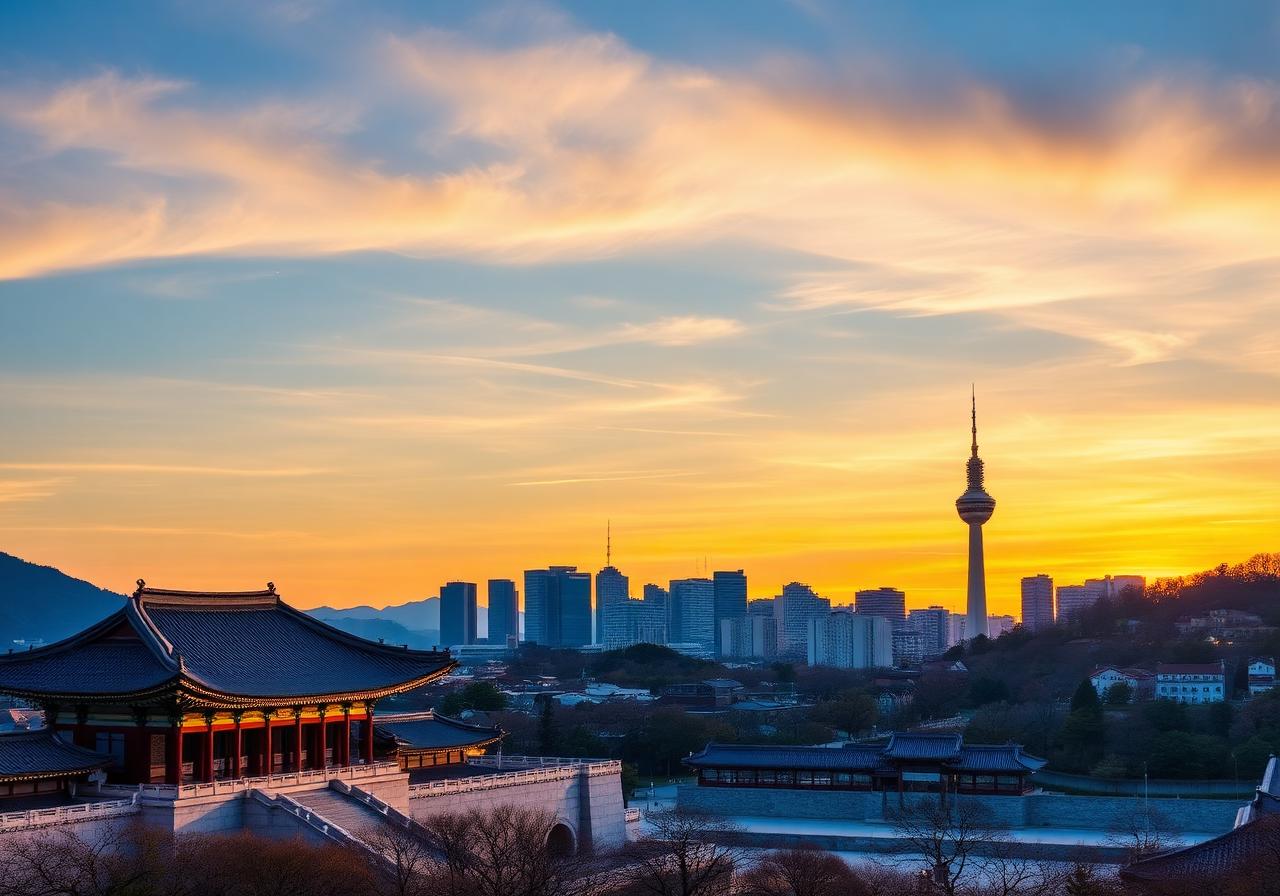
Bukchon Hanok Village
Nestled between the royal palaces of Gyeongbokgung and Changdeokgung, Bukchon Hanok Village offers a rare glimpse into the Joseon Dynasty while serving as a living, breathing neighborhood in the heart of modern Seoul.
What to expect
Bukchon is not an open-air museum, but a labyrinthine residential district defined by hanoks—traditional Korean houses characterized by tiled roofs (giwa), wooden frames, and stone foundations. As you navigate the steep, narrow alleyways, you will see delicate dark-wood latticework and sliding doors that open into hidden inner courtyards. The primary draw is the visual contrast: stand at the "Bukchon Observatory" or along the uphill slopes of Bukchon-ro 11-gil to see the sweeping, curved silhouettes of historic rooftops framed against the sharp, glass-and-steel skylines of downtown Seoul. Visitors primarily walk the designated "Bukchon 8 Views," a series of photography vantage points that highlight the neighborhood's unique architectural geometry.
History & significance
Historically, this area was the residence of high-ranking government officials and nobility during the 14th-century Joseon Dynasty. The word "Bukchon" translates to "Northern Village," denoting its position north of Cheonggyecheon Stream. While many hanoks were demolished or modernized during the 20th century, the city of Seoul designated this an "Architectural Asset" zone in the early 2000s. Today, it remains one of the few places in the capital where the traditional ondol (underfloor heating) and maru (wooden veranda) architecture is preserved in a dense, functional urban setting.
Practical tips
- Respect the "Quiet Zone": This is a lived-in residential area. Signage clearly asks for silence; avoid shouting, using loudspeakers, or peering into private windows.
- Timing: Arrive by 8:30 AM to beat the massive tour bus crowds and capture the soft morning light. The village is busiest between 12:00 PM and 4:00 PM.
- Tickets & Cost: Access to the village streets is free. Some privately owned hanoks now function as museums, cafes, or workshops, which may charge an entry fee or require reservations.
- Footwear: Expect significant inclines and uneven stone or paved paths. Wear reliable walking shoes.
Getting there
The village is located in the Jongno-gu District. Take the Seoul Subway Line 3 to Anguk Station. Exit through Exit 2 and walk north for approximately 500 meters toward the main Bukchon Information Center. From there, the village is best navigated on foot; the signage for the "8 Views" is clear and will guide you through the primary alleys.
Nearby
- Samcheong-dong: Located just to the west, this trendy, artsy neighborhood is filled with artisanal coffee shops, local designer boutiques, and minimalist galleries housed in renovated hanoks.
- Changdeokgung Palace: Located just east of Bukchon, this UNESCO World Heritage site is famous for its "Secret Garden" (Huwon). Book a guided tour in advance to see its stunning ponds and pavilions.
- Onnumi Seolnongtang: For an authentic local meal within walking distance, head toward the main road for a bowl of seolnongtang (ox bone soup), a staple Seoul comfort food that perfectly balances the experience of traditional culture with traditional flavors.