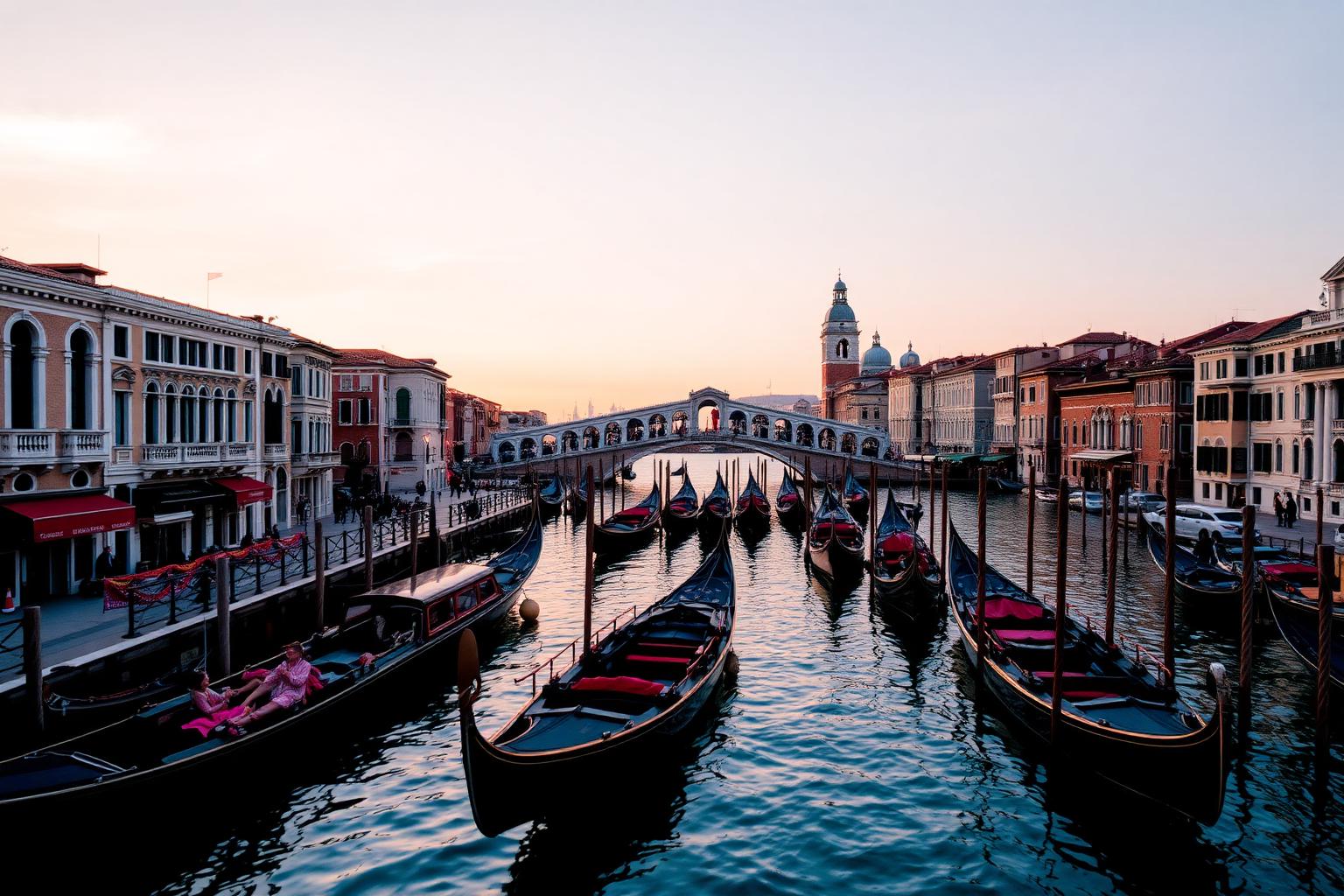
The morning humidity clings to the Istrian stone of the Cannaregio foundations, smelling faintly of algae and roasted espresso. Most arrivals in Venice immediately funnel towards the Accademia or the glittering shops of the San Marco district, chasing a version of the city that exists primarily on postcards. However, follow the Fondamenta Nove far enough away from the tour-group currents, and the architecture shifts. The marble facades give way to the red-brick functionality of former industrial warehouses. Here, tucked behind heavy iron doors and nondescript signage, lies a version of Italy that exists in the collective memory of the Anni di Piombo—the 1970s and 80s era of street tension, radical design, and the birth of modern Italian cool.
The hunt isn’t for Murano glass or lace. It is for the "Paninari" leftovers and the neon-soaked debris of Elio Fiorucci’s revolution. Venice, despite its museum-city reputation, hides some of the most concentrated mainland-style thrift warehouses in the Veneto region, provided one knows which canal to cross.
The Warehouse Aesthetic of Mercatino dell’Usato
While the name Mercatino dell’Usato is a franchise found across Italy, the Cannaregio branches operate with a specific Venetian grit. Unlike the curated vintage boutiques of Milan, these are true warehouses where discovery requires physical effort. At locations like the one on Via S. G. Crisostomo or the satellite spots nearer the mainland bridge, the inventory is a chaotic timeline of Italian domestic life.
The air inside is thick with the scent of old paper and mothballs. To find the 1970s streetwear, one must bypass the stacks of Ginori porcelain and heavy walnut wardrobes. In the clothing bins at the back, the rewards are specific: heavy-duty corduroy trousers from defunct Venetian textile mills and the kind of high-waist denim that defined the Italian disco era. This is not "pre-loved" luxury; this is the industrial surplus of a generation that transitioned from post-war austerity to the excess of the eighties.
Hunting for Fiorucci and the Paninari Spirit
In the late 1970s and early 80s, Italian youth culture was colonised by the Paninari—the affluent, sandwich-bar-frequenting teenagers of Milan who obsessionally wore Americana-inspired brands. This subculture trickled into Venice via the mainland, and the remnants are still surfacing in Cannaregio’s thrift stalls.
Look for the "Made in Italy" labels that pre-date global outsourcing. Specifically, keep an eye out for deadstock pieces from Fiorucci. Founded by Elio Fiorucci, the brand was the Italian answer to Warhol’s Factory. At Mercatino dell’Usato, one might pull a crumpled poster featuring the signature twin cherubs or a pair of fluorescent spandex leggings from a 1982 collection. These aren't just clothes; they are artefacts of a time when Italy stopped looking back at its Renaissance history and started looking toward a plastic, pop-art future.
The Deadstock Puffer and the Moncler Precursors
Before Moncler became a status symbol for international ski resorts, it was the unofficial uniform of the Italian street kid. In the back corners of these Venetian warehouses, among the moth-eaten wool coats, the prize is the "piumino"—the heavy, high-gloss puffer jacket.
Brands like Ciesse Piumini and Best Company are the holy grails here. These were the staples of the Milanese Piazza San Babila scene, often paired with Timberland boots and Burlington socks. Finding a 1984-era Ciesse Piumini in a muted teal or a burnt orange is a victory of endurance. These jackets were built for the damp Venetian winters, stuffed with genuine down and cut with the boxy, aggressive silhouette that current high-street designers are still trying to replicate.
Beyond the Bins: Calle della珍藏
While the warehouses provide the quantity, the smaller, more eccentric shops in the northern reaches of Cannaregio offer the curation. L'Armadio di Coco on Calle de la Testa is a sharp departure from the warehouse chaos. Here, the focus shifts to the more refined 1970s Italian silhouette: silk scarves from the archives of Roberta di Camerino—the Venetian designer who famously invented the "trompe l'oeil" dress—and structured leather handbags that pre-date the logo-mania of the 1990s.
The contrast between the dusty bins of the Mercatino and the polished hangers of these small boutiques illustrates the two speeds of Venetian vintage. One is a gamble; the other is a history lesson. Crossing the bridge from a gritty warehouse full of 80s tracksuits to a refined shop selling 70s velvet capes is the quintessential Venetian shopping experience.
The Soundtrack of the Search
Thrifting in Venice is rarely silent. In the Mercatini, there is usually a crackling radio playing Radio Italia, pumping out the synth-heavy pop of the eighties. The songs of Lucio Battisti or Alice provide the rhythm for the dig. It is a sensory immersion into a time when the "Made in Italy" tag was a radical new badge of quality.
This isn't just about the acquisition of objects; it’s about touching the textures of a period that felt infinitely more modern than the stone city it inhabited. A Fiorucci sticker on a 70s briefcase or a discarded 45rpm record of Italo-disco found in a crate of old cookbooks—these are the small, tangible links to a Venice that refused to be a museum.
If you go
Mercatino dell'Usato: Note that these warehouses often close for riposo (lunch break) between 12:30 pm and 3:30 pm. Bring cash, as mainland-style thrift stores are often hesitant with international cards for smaller totals.
Transport: Take the Vaporetto to the Guglie or Fondamenta Nove stops. The best finds are always located at the furthest points from the Rialto Bridge.
Packing: If you are hunting for puffer jackets, bring a vacuum-seal bag in your luggage. Those 1980s feathers take up more room than a dozen Venetian masks ever would.