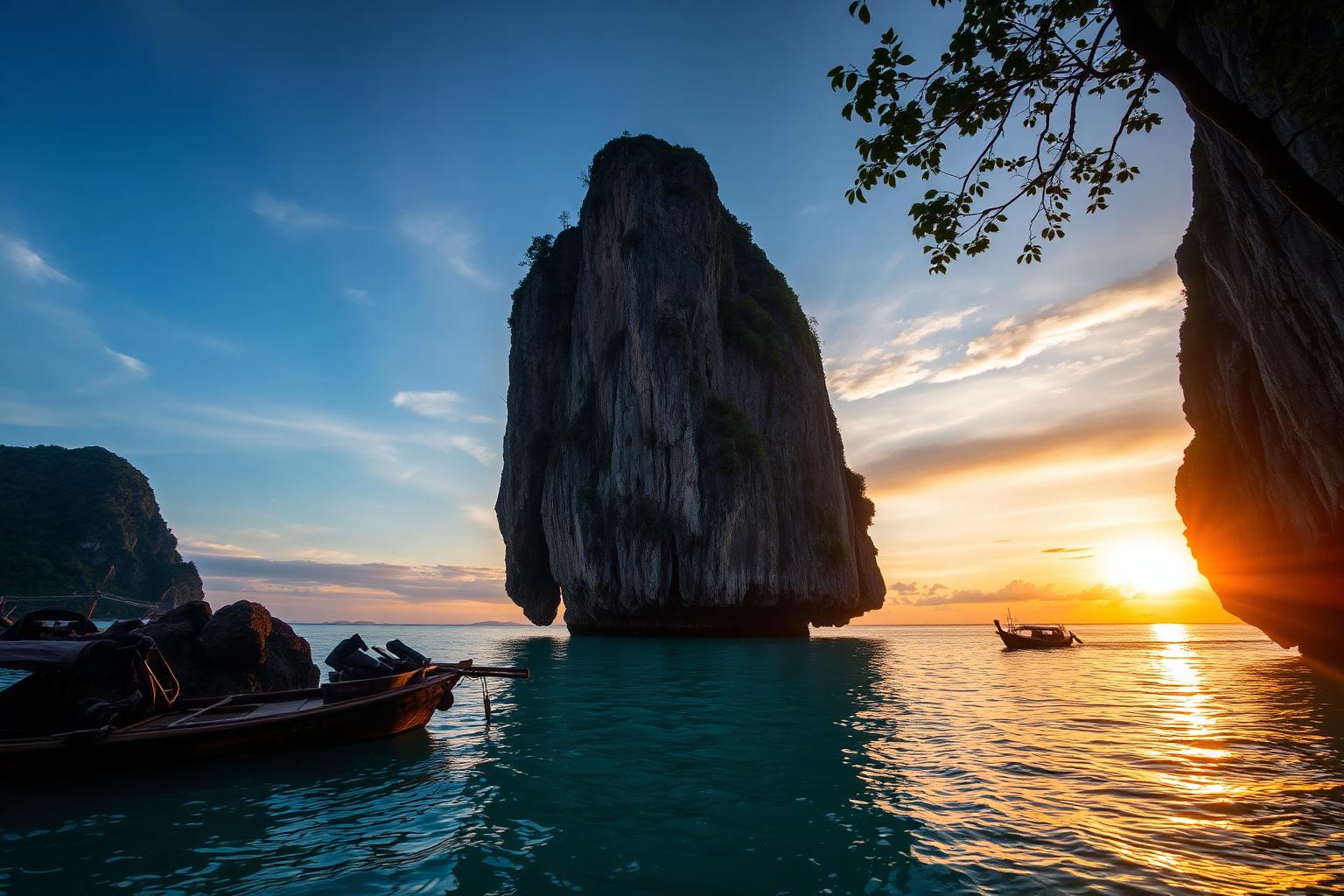
The shadow of Khao Khian hangs over the emerald water like a limestone axe, but the sound echoing off the rock face isn’t the usual outboard whine of a longtail boat. It is the rhythmic, mechanical hiss of a milk frother. On Koh Panyi, a village of 1,600 souls built entirely on wooden and concrete stilts in the mouth of Thailand’s Phang Nga Bay, the tide dictates the tempo of life. For centuries, this meant the timing of the fishing nets and the prayer calls from the gold-domed mosque. Today, it also dictates the bloom of a geisha roast.
Koh Panyi has long been a casualty of the 'lunch stop' tourism circuit—a place where speedboats drop day-trippers from Phuket or Krabi for a 45-minute buffet before whisking them back to the mainland. But a new generation of the Moken (sea nomad) community is reclaiming the boardwalks. By rejecting the mass-market instant coffee of their parents, these young baristas are creating a buoyant café culture that pairs a thousand-year sea-faring heritage with the exacting standards of Bangkok’s third-wave scene.
The Architecture of the Stilted Pour-Over
To find the heart of Panyi’s coffee shift, one must navigate the labyrinth of gangways behind the souvenir stalls selling dried shrimp and shell necklaces. The village is a floating grid of narrow alleys where houses share walls and every footfall resonates through the planks. Here, space is the ultimate luxury, and the new wave of cafés has adapted.
Kopi Panyi is the pioneer of this movement. Constructed on a platform that shudders slightly when a heavy tide rolls in, the interior is a study in tropical minimalism: polished driftwood benches, white-washed walls, and large windows that frame the limestone karsts of the Andaman. There is no air conditioning; the breeze is pulled off the water through louvered shutters. The menu here isn't a list of sugary frappes, but a sophisticated map of Northern Thai beans sourced from the hills of Chiang Rai, roasted to a medium profile that cuts through the humidity. Ordering a V60 pour-over here feels like a quiet act of rebellion against the ticking clock of the tour guides outside.
Beans, Boats, and the Moken Spirit
The tension between global coffee trends and local tradition is resolved in the cup. At The Sea Nomad Lab, a tiny corner stall draped in blue fishing nets, the signature drink is a ‘Salted Sea Foam Latte.’ The baristas use locally harvested sea salt to balance the natural acidity of the Doi Chang beans.
The process is slow. While the mainland rushes toward automation, Panyi’s coffee scene is intentionally sluggish. A cold drip here takes eight hours, the ice melting drip-by-drip as the sun moves across the bay. The local youth, many of whom have returned from universities in Bangkok or Phuket, view this craft as a way to preserve their village without selling its soul to the souvenir trade. They speak of 'traceability' not just in terms of coffee cherries, but in the lineage of the village itself—tracing their ancestry back to the three Indonesian families who first staked their claims in these waters two centuries ago.
The Floating Pitch and Post-Caffeine Drifts
Beyond the caffeine, the cafés serve as the new community hubs, replacing the old tea houses where the elders once sat. These spaces overlook the village’s most famous landmark: the floating football pitch. Inspired by the 1986 World Cup, the original pitch was built from scrap wood and rusty nails; the modern version is a sleek, buoyant arena where local kids play with a frantic, technical skill born from the fear of kicking the ball into the brine.
Watching a match from the deck of Point View Café with a cold-brew in hand offers the best vantage point in the village. The café sits at the southern edge of the settlement, away from the docking piers. It is here that the acoustics of the village become clear: the slap of the water against the drums, the distant clatter of a Muay Thai gym, and the clack of ceramic cups on wooden tables. The coffee isn’t an accessory to the view; it is the reason to stay long after the last tour boat has vanished toward the horizon.
A Menu of Marine Influence
While the coffee is global, the snacks remain stubbornly, deliciously Panyi. You will not find sourdough toast or avocado mash here. Instead, the cafés work in tandem with the village kitchens. At Sa-Nee Coffee & Bakery, the espresso is served alongside Khanom Khrok—custard-like coconut pancakes cooked in dimpled iron pans.
The highlight of the village’s culinary evolution is the 'Panyi Affogato'. A double shot of dark-roasted robusta is poured over a scoop of artisanal coconut ice cream, then topped with toasted sesame seeds and a sprig of mint grown in a hanging pot over the water. It is a dish that tastes of the village’s dual identity: the bitterness of the heavy-roast tradition and the creamy, tropical lightness of the modern Andaman.
If you go
Getting there: Hire a private longtail boat from Surakul Pier in Phang Nga or Ao Nang in Krabi. To avoid the crowds and experience the cafés at their best, arrive before 10:00 or after 15:30 when the day-trip groups depart.
What to drink: The 'Dirty Coffee' at Kopi Panyi is a standout—chilled high-fat milk topped with a ristretto shot of Thai Arabica.
The Etiquette: Koh Panyi is a Muslim community. While the café culture is relaxed, visitors should dress modestly (shoulders and knees covered) when exploring the residential boardwalks and avoid bringing alcohol into the village.
Timing: Visit during the dry season (November to April) for the clearest water and the most consistent coffee bean supply from the northern harvests.