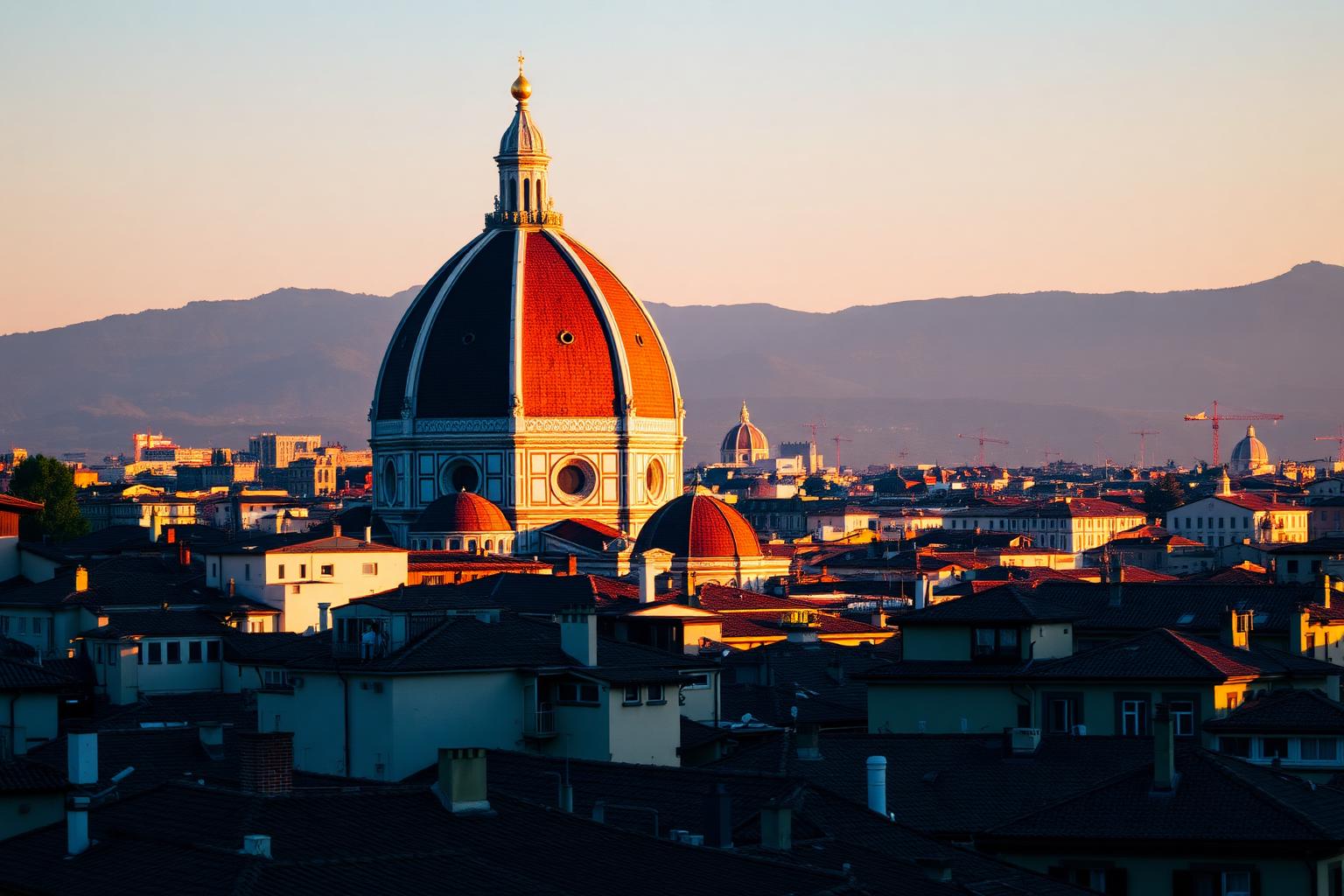
Basilica of Santa Croce
Known as the "Temple of the Italian Glories," the Basilica of Santa Croce is where Renaissance genius meets spiritual austerity, housing the final resting places of history’s most influential figures beneath a soaring, wood-trussed ceiling.
What to expect
Entering the basilica is a lesson in Italian high culture. The nave is vast and monastic, flanked by sixteen chapels adorned with frescoes by Giotto, Agnolo Gaddi, and Donatello. The floor is a mosaic of centuries-old marble tombstones. Look for the funerary monuments of Michelangelo, Galileo Galilei, Niccolò Machiavelli, and Rossini lining the walls. Beyond the main church, the complex includes two cloisters. The Pazzi Chapel, designed by Brunelleschi, is a masterclass in geometric Renaissance proportion. Tucked into the back of the monastery is the Scuola del Cuoio (Leather School), where you can watch artisans hand-tooling gold leaf onto Florentine leather—a quiet, tactile counterpoint to the monumental art in the church.
History & significance
Construction on this Franciscan basilica began in 1294, likely designed by Arnolfo di Cambio. It was intended to be a grander, more artistic answer to the nearby Dominican Santa Maria Novella. Over the centuries, it became the preferred burial site for Florence’s elite—not just the Medici, but the intellectuals and artists who defined Western philosophy and science. It survived the devastating flood of 1966, which damaged many of its priceless artworks, leading to significant restoration efforts that visitors can still see reflected in the preserved state of the frescoes today.
Practical tips
General entry tickets are required and can be purchased online to bypass the often-lengthy queue at the Piazza di Santa Croce entrance. The basilica typically opens Monday–Saturday from 9:30 AM to 5:30 PM, and Sunday/holy days from 1:00 PM to 5:30 PM (last entry 45 minutes prior). Aim for an arrival at 9:30 AMsharp to experience the space before the tour groups arrive, or visit in the late afternoon when the low light filters through the stained glass, illuminating the nave's terracotta tones. Note the modest dress code: shoulders and knees must be covered.
Getting there
The basilica is located in the Santa Croce district, an easy 15-minute walk from the Duomo. If arriving by bus, multiple lines stop near the Lungarno della Zecca Vecchia. For those walking, head east from the Piazza della Signoria down Via de' Neri; you will spot the distinctive white, green, and red marble facade as you emerge into the expansive square.
Nearby
- Vivoli: Often cited as one of the best gelato shops in Florence, this tiny, historic parlor on Via dell'Isola delle Stinche is just a three-minute walk away.
- Biblioteca Nazionale Centrale: One of Italy’s most important libraries, located just around the corner on the banks of the Arno, offering impressive 19th-century architecture.
- Sant'Ambrogio Market: For a more local vibe, walk five blocks north to this neighborhood market to find authentic food stalls and fresh produce.