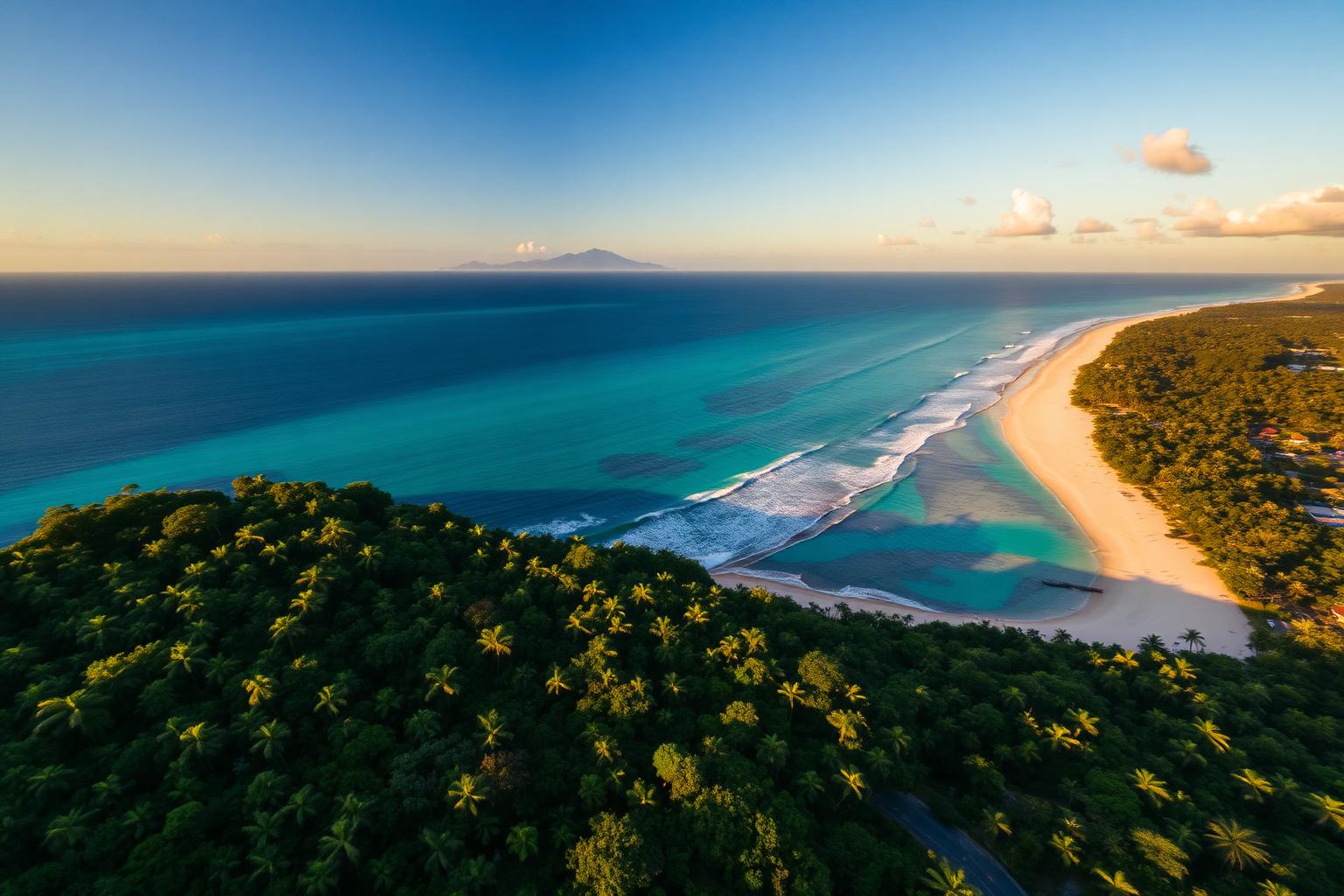
The sky over the Far North doesn’t just darken; it bruises into deep shades of violet and indigo before the canopy begins to shriek. At the edge of the Cairns Botanic Gardens, where the manicured lawns of the Flecker Garden give way to the primal, sodden floor of the Centenary Lakes, a shift occurs. The air becomes heavy with the scent of damp earth and the sweet, fermenting musk of overripe fruit. Then comes the sound: a rhythmic whump-whump-whump of leather hitting humid air.
High in the melaleuca trees, the Spectacled Flying Foxes are waking up. Outlined against the fading light, these megabats—endangered, misunderstood, and vital to the rainforest ecosystem—unfurl wingspans that can reach a metre across. As they drop from their roosts to begin the nightly "fly-out," they transform the sky into a moving tapestry of silhouettes, heading toward the Daintree and the Atherton Tablelands to perform the silent, essential work of pollination.
The Paperbark Cathedral
The Paperbark Forest Boardwalk is a short, circular track that punches deep into a remnant swamp forest. It is a place of haunting geometry. Huge Melaleuca leucadendra trees stand like skeletal pillars, their trunks wrapped in layers of white, papery bark that peels away in thick strips. On a humid Cairns evening, the swamp water beneath the boardwalk is still as glass, reflecting the twisted roots of the climbing pandanus.
Walking this path at dusk is an exercise in sensory immersion. This isn’t a place for power-walking; it’s a place for standing still. Between September and December, the humidity can be oppressive, but this is also when the forest is most alive. The screeching from the canopy is the soundtrack of a colony in flux. The Spectacled Flying Fox (Pteropus conspicillatus) is so named for the rings of pale fur around its eyes, giving it a perpetually startled, scholarly expression. In the dim light of the boardwalk, you can see them jostling for position, fanning themselves with their wings to stay cool in the tropical heat.
The Great Sunset Fly-Out
The spectacle begins in earnest as the last orange sliver of sun disappears behind the Whitfield Range. This is the fly-out, a mass exodus of thousands of bats departing for their feeding grounds. Unlike the smaller, insect-eating microbats that navigate via echolocation, flying foxes are visual creatures with a sense of smell that rivals a bloodhound’s. They are looking for the flowering hardwoods and fruiting trees of the Wet Tropics.
Standing on the edge of the Freshwater Lake, the scale of the colony becomes apparent. They stream overhead in a continuous black ribbon, a river of mammals navigating by the stars and the scent of eucalyptus. It is a primeval sight that predates the city of Cairns itself. While some locals find the noise and smell of the urban colonies a nuisance, here at Centenary Lakes, the bats are in their rightful element. They are the gardeners of the rainforest; without them, the genetic diversity of the North Queensland jungle would collapse, as they are the only animals capable of carrying large seeds over vast distances.
The Strange Residents of the Swamp
While the flying foxes dominate the skyline, the boardwalk level belongs to a different set of nocturnal protagonists. As the bats depart, the ground-level ecosystem shifts gear. The White-lipped Tree Frog, Australia’s largest frog, often makes its appearance on the handrails of the boardwalk. Glossy, emerald-green and reaching the size of a man’s hand, they emit a deep, barking call that echoes through the paperbarks.
Keep a torch—ideally with a red filter to avoid distressing the wildlife—aimed toward the water’s edge. This is the territory of the Northern Water Dragon. While they are common during the day, sunning themselves on rocks, at night they become statuesque, frozen against the trunks of the trees. In the darker corners of the swamp, you might spot the reflective glint of a Saltwater Crocodile’s eyes in the Freshwater Lake. Despite the lake's name, "salties" are known to inhabit these systems, and the warning signs posted along the banks are not mere suggestions.
Floral Architecture and Ghostly Blooms
The flora of the Centenary Lakes is as dramatic as the fauna. The park is home to the Bulbophyllum fletcherianum, one of the world’s largest orchids, though it is the more common night-blooming species that command the air after dark. The heavy, cloying scent of the "Queen of the Night" (Epiphyllum oxypetalum) occasionally drifts through the humid air—a flower that opens for one night only, white and waxy, designed to attract nocturnal pollinators like hawk moths and bats.
The boardwalk also showcases the aggressive beauty of the strangler figs. These trees begin life as a seed dropped by a bird or a bat high in the canopy. The roots grow downwards, eventually encasing the host tree in a wooden lattice that slowly chokes it to death. At night, these hollowed-out trunks become high-rise apartments for nocturnal birds like the Papuan Frogmouth. Unlike an owl, the frogmouth is a master of camouflage, sitting perfectly still on a broken branch, looking exactly like a piece of dead wood until it opens its massive, gaping yellow maw to catch a passing beetle.
If You Go
Timing: Arrive at the Paperbark Forest Boardwalk approximately 30 minutes before sunset to watch the colony wake up. The fly-out typically lasts for 20 to 40 minutes.
Location: The boardwalk entry is located on Gribble Street, a short walk from the main Cairns Botanic Gardens visitor centre on Collins Avenue.
Gear: Wear long trousers and a shirt treated with insect repellent; the mosquitoes in the melaleuca swamp are formidable. Bring a torch with a red light setting to observe the bats and frogs without causing them stress.
Etiquette: Stay on the boardwalks. These are sensitive breeding grounds for both the flying foxes and several species of ground-nesting birds. Do not attempt to touch any grounded bats; while rare, they can carry Lyssavirus, and should only be handled by vaccinated wildlife carers.
Transport: The 131 bus runs from the Cairns CBD to the Botanic Gardens, or it is a flat 4km cycle from the Esplanade. Parking is available along Collins Avenue and Greenslopes Street.