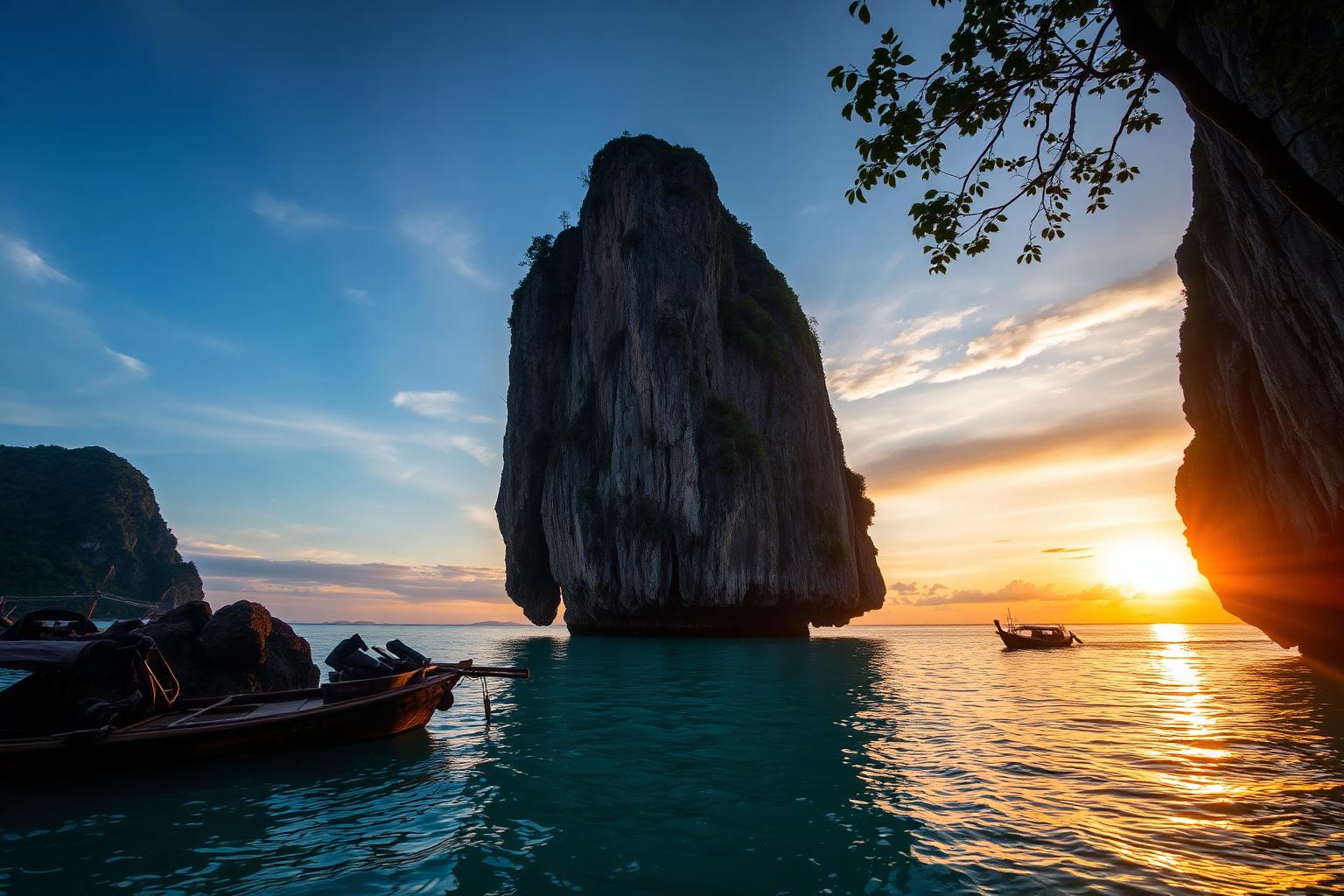
The humidity in Krabi doesn’t lift so much as it thickens at dawn, a heavy, tropical blanket that smells of salt spray and damp jungle floor. At Phra Nang Beach, the limestone karsts rise like jagged teeth from the Andaman Sea, their orange and grey faces scarred by the chalk-dusted fingerprints of those who spend their lives looking up. Before the first carabiner clicks or the first rope uncoils, there is the ritual. It starts with the hiss of a portable stove and the rhythmic, hollow crunch of a hand-cranked burr grinder. In the half-light of the morning, among the tangled roots of banyan trees, the scent of high-altitude Arabica begins to wrestle with the brine.
The Vertical Café Culture of Tonsai and Railay
Railay is an anomaly: a peninsula accessible only by boat, where the lack of motorised vehicles creates a silence perfect for the focused preparation of coffee. The climbing community here, a transient tribe of dirtbags and professionals, treats caffeine as both a social lubricant and a performance enhancer. While the day-trippers from Ao Nang are still nursing hangovers or boarding longtail boats, the climbers are at the base of the "1000 Horsepower" wall, settling into the dirt.
The gear is minimalist but precise. You will see more AeroPresses here than espresso machines. The AeroPress is the climber's darling—virtually indestructible, lightweight, and capable of producing a concentrated shot that provides the necessary kick for a 7a lead climb. The ritual is communal. Someone brings the beans, often sourced from the mountain plantations of Chiang Mai or Chiang Rai; someone else provides the filtered water. It is a slow, deliberate preamble to a day of explosive physical exertion.
Northern Beans on Southern Shores
The coffee of choice for the Railay elite rarely comes from a supermarket tin. Most climbers carry beans from Akha Ama, a socially conscious roastery based in northern Thailand. Their "Strong" blend, known for notes of dark chocolate and smoke, is a local favourite for cut-through when brewed with the softer, local water.
For those who haven't packed their own kit, the morning pilgrimage leads to The Coffee Station near Railay East. It is a no-frills wooden shack where the baristas understand the specific requirements of a climber’s morning: double shots, minimal milk, and no unnecessary frills. They serve a drink known locally as the "Thai Dirty"—chilled milk topped with a heavy, oily layer of espresso that isn't stirred, but sipped through the temperature gradient. It provides the cold shock needed to wake the nervous system before the sun hits the rock faces and turns the limestone into a vertical oven.
Phra Nang Cave: Brewing in the Shadow of Shrines
By 8:00 AM, the action shifts to the base of the Phra Nang Cave walls. This is perhaps the most surreal place on earth to enjoy a cup of coffee. To your left is a fertility shrine overflowing with carved wooden lingams and incense; directly above is a massive overhang of stalactites where climbers are already performing gravity-defying gymnastics.
The "Es-Yen" (Thai-style iced espresso) at Railay Coffee serves as the fuel for these early sessions. Unlike the western iced latte, a true Es-Yen is shaken with sweetened condensed milk until it achieves a frothy, Guinness-like head. It is sweet, thick, and brutally strong. In the intense heat of Railay, where climbers lose litres of fluid to sweat, this sugar-and-caffeine bomb is the standard fuel for tackling the classic "Candlestick" route. The sound of the shakers at the beach kiosks blends with the rhythmic clack-clack of quickdraws hitting harnesses.
The Art of the Resting Heart Rate
The intersection of coffee and climbing is a matter of chemistry. Climbers seek a "flow state," a balance between high alertness and a calm heart rate. Too much caffeine leads to the "sewing machine leg"—that uncontrollable tremor when a climber is gripped by fear on a difficult pitch. Too little, and the mental focus required to read a complex sequence of holds evaporates.
At Flame Tree Bay, a popular haunt on the Railay West sunset strip, the afternoon transition from coffee to Singha beer is a celebrated event. But the serious technicians stay with the bean. They opt for the "Cold Brew"—steeped for 12 hours—which offers a smoother caffeine release. Watching a climber study a guidebook over a glass of black, ice-cold brew is to witness a tactician at work. They trace the "Tiger Wall" routes with their fingers, memorising the crimps and jugs while the caffeine sharpens their spatial awareness.
Evening Debriefs at Tonsai
Just over the jungle path lies Tonsai, the grittier, cheaper cousin to Railay. If Railay is for the honeymooners, Tonsai is for the lifers. Here, the coffee ritual takes on a more bohemian edge. At Legacy Bar, the morning starts late. The coffee is often brewed in Moka pots over open flames.
The conversation here isn't about the views; it’s about the friction of the rock. The beans used are often the "Catimor" variety, grown in the shade of the Thai highlands. It has a high acidity that cuts through the humidity. As the smell of charcoal smoke from the breakfast fires mingles with the coffee, the "Tonsai morning" becomes a sensory anchor. It is the quiet before the storm of a multi-pitch ascent, a moment of stillness where the only thing that matters is the temperature of the water and the verticality of the world.
If You Go
Getting There: Take a longtail boat from Ao Nang or Nam Mao Pier. There are no roads into Railay; the journey takes roughly 15 minutes and costs 100 THB.
Where to Drink:
- The Coffee Station (Railay East): For the best technical espresso and a "Thai Dirty."
- Flame Tree Bay (Railay West): The best spot for a cold brew while watching the climbers on the West Beach walls.
- Akha Ama Coffee: While their flagship is in Chiang Mai, look for their beans in local Krabi specialist shops or bring a bag from Bangkok to brew at the crag.
Essential Gear: If brewing at the base of the wall, an AeroPress Go paired with a Porlex Mini II hand grinder is the gold standard for the Krabi climbing community.
When to Climb: The best weather is from November to March. Aim to be at the rock by 7:00 AM to beat the heat and the crowds, with your coffee ritual completed by 7:30 AM.