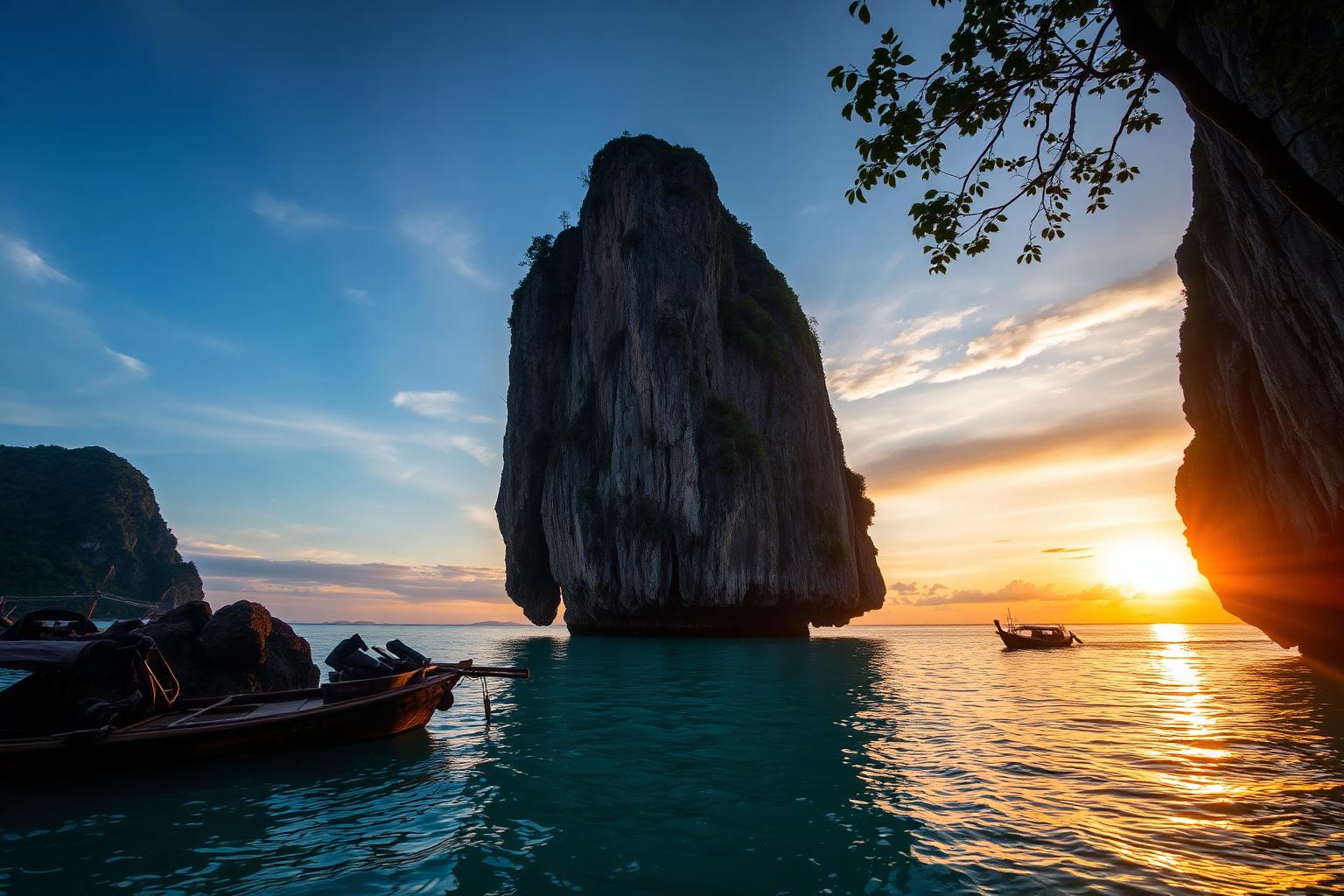
The sun hasn't yet cleared the karst peaks of the Phra Nang Peninsula, but the humidity is already a physical weight. On the white sands of Railay East, the Thai morning is defined not by the sound of the Andaman Sea, but by the rhythmic, metallic shirr-shirr of a Porlex hand grinder. Here, at the base of a 200-metre limestone monolith, coffee is not a casual convenience; it is a technical prerequisite. A climber sits cross-legged on a weathered rope bag, precisely weighing beans on a digital scale while a small butane stove hisses nearby. This is the ritual of the first ascent: a shot of concentrated caffeine before the first dip into the chalk bag.
In Krabi, the world’s elite sport climbers have traded the instant Nescafé sachets of old for specialized brewing kits that fit into the brain of a rucksack. As the light hits the stalactites hanging from the Thaiwand Wall, the aroma of freshly ground Ethiopian Yirgacheffe cuts through the salt air, signaling the start of the vertical day.
The Vertical Alchemist’s Kit
For the community that migrates to Railay and Ton Sai every winter, the AeroPress has become as essential as a Petzl Grigri. The reasons are pragmatic. It is indestructible, lightweight, and capable of producing a clean cup that highlights the citrus notes of high-altitude beans. The ritual usually begins around 7:00 AM at the base of the 1-2-3 Wall.
Climbers like "Jungle" Somchai, a local guide who has spent two decades on these walls, often lead the way. While tourists at the nearby luxury resorts are still asleep, the climbers are obsessing over water temperature. Too hot, and the bean burns; too cool, and you lack the kick needed to navigate a 7a overhang. They use filtered water hauled in 1.5-litre canisters and beans sourced from the mountainous North around Chiang Mai—specifically roasts from Akha Ama, which bring a chocolatey depth that survives the tropical heat.
Basecamp Brews at Railay East
While many brew their own at the crag, the social heart of the morning beats at the small, independent stalls lining the walkway of Railay East. This isn't the land of white tablecloths. It is a strip of weathered wood and corrugated iron where the coffee is served in mismatched ceramic mugs.
Railay Coffee (tucked behind the Diamond Cave area) has become a cult favourite. Unlike the beach bars that focus on sunset cocktails, this spot opens early for the pre-climb crowd. They serve a "Dirty Latte"—cold milk topped with a double ristretto—that provides a temperature shock necessary for the climbing humidity. The soundtrack is rarely pop music; usually, it’s the clinking of quickdraws and the low hum of climbers discussing "the beta" for Humanality, one of the most famous multi-pitch routes in the region.
The Hidden Roasts of Ton Sai
To find the true aficionados, one must walk the jungle path—or wait for low tide to scramble over the rocks—to Ton Sai Beach. Ton Sai is Railay’s grittier, more bohemian sibling, where the electricity is intermittent but the coffee is surprisingly sophisticated.
Legacy Art Café is the epicenter of this scene. It is a space built from driftwood and recycled timber, adorned with climbing topo maps and hand-painted art. The owner, a local climber himself, understands that a climber’s palate has evolved. They serve "Cold Brew Krabi Style," steeped for 16 hours and served over large blocks of ice. It’s a slow-release fuel for those planning to spend six hours hanging from bolts on the Fire Wall. On a lucky Tuesday, you might catch a specialized "unplugged" brewing session where guest climbers share beans they’ve brought from Melbourne or Berlin.
Salt, Chalk, and Espresso
High-noon at the Phra Nang Cave provides a different perspective on the ritual. Here, deep water soloists—those who climb the sea cliffs without ropes—take a final espresso before paddling out in longtail boats. The adrenaline of falling 15 metres into the ocean requires a specific kind of mental clarity.
Small vendors like Coffee@Railay provide the transportable fuel. Their "Thai Iced Coffee" is the traditional fallback: a dark, syrupy roast filtered through a cloth "sock," sweetened with condensed milk, and poured over crushed ice. It is unapologetically bold and provides a sugar-and-caffeine spike that counters the physical exhaustion of a day spent fighting gravity. It’s a drink designed for the heat, meant to be finished before the ice melts into a pool of Andaman salt water.
Sunset Sips and Project Planning
As the sun dips behind the karst towers, the coffee ritual shifts from preparation to reflection. The "Abyss" isn't just the height of the walls; it’s the physical fatigue that sets in after a "project"—a route a climber has been trying to finish for days.
The community gravitates toward The Last Bar at the northern end of Railay East. While it eventually turns into a fire-show and Muay Thai venue, the late afternoon is reserved for "recovery coffee." Here, climbers spread out their guidebooks, marking the routes they’ve conquered with a red pen. The drink of choice is often a simple French Press, shared between three or four people as they watch the longtail boats shuttle the last of the day-trippers back to Ao Nang. The conversations here are granular: the precise angle of a crimp on Phares, the friction of the limestone after a rain shower, and where to find the best beans for tomorrow’s 6:00 AM grind.
If you go
Best time for climbing: November to March, when the humidity is lowest and the rock is driest. Gear: If you are a coffee purist, bring a collapsible silicone dripper or an AeroPress Go. Quality beans can be hard to find in local supermarkets; buy them in Bangkok or Chiang Mai before heading south. Getting there: Railay is only accessible by boat. Take a longtail from Ao Nang (100 THB) or Nam Mao Pier. Pro tip: Visit The Grotto at Rayavadee for a luxury coffee experience under an ancient limestone overhang, but book ahead—it’s the most exclusive "crag-side" seat in Thailand.